

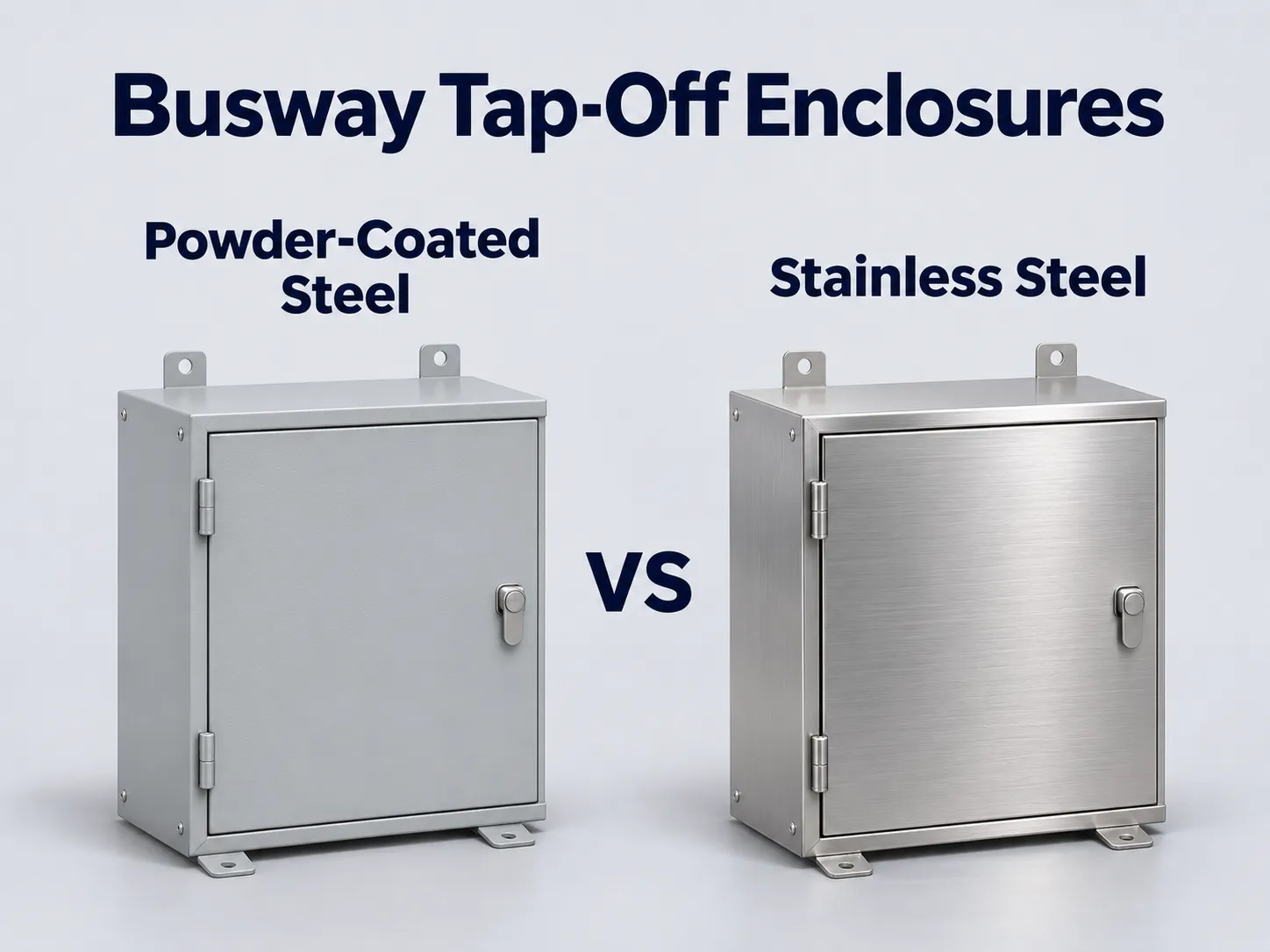
Powder-Coated Steel vs Stainless Steel: Key Differences
Compare the proposed constructions against the same service requirements.
| Comparison point | Powder-coated carbon steel | Unpainted stainless steel |
|---|---|---|
| Initial budget | Often lower for comparable service requirements | Usually higher material and fabrication costs |
| Appearance | Specified powder color and texture | Specified brushed or other bare-metal finish |
| Custom cutouts | Generally easier on cutting and punching tools | More demanding tooling and surface handling |
| Protection basis | Coating system, adhesion, and coverage | Alloy grade, surface condition, and fabrication quality |
| Surface damage | Damage exposing carbon steel breaks the coating barrier and requires an approved repair | Clean metal can reform its passive film with sufficient oxygen; deep scratches, contamination, and aggressive exposure still need assessment |
Powder-Coated Carbon Steel: Control the Complete Finish
Carbon steel relies on its applied finish to limit contact with corrosive surroundings. Surface preparation, pretreatment, powder chemistry, curing, and coverage must work together. Two boxes with the same gray color can have different coating systems and suitability.
Give edges, welds, recessed areas, and cable-entry holes specific attention. Powder can pull back from sharp edges during curing, reducing protection at those locations. A zinc-coated substrate or an additional primer changes the protective system and should be stated in the quote. For outdoor exposure, specify a finish with documented weathering suitability; an indoor epoxy finish should not be assumed suitable for prolonged sunlight.
Complete planned component cutouts and welds before final coating where practical. For openings made afterward, specify how exposed steel will be protected and inspected, whether the work is done at the factory or on site.
Stainless Steel: Control the Grade and Fabricated Surface
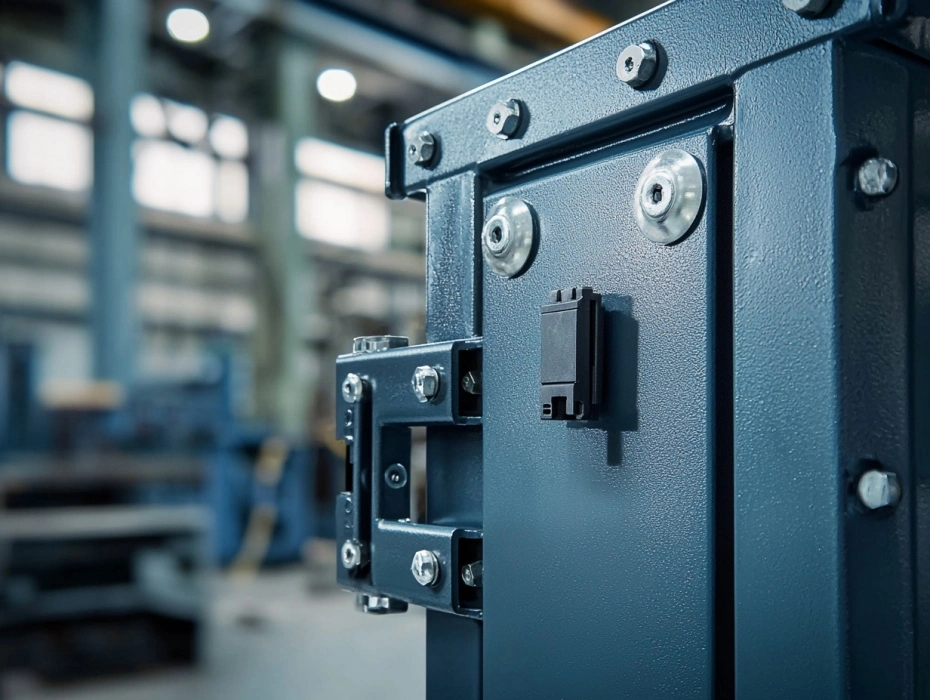
Stainless steel resists corrosion through a thin, chromium-rich passive surface film. For stainless steel grade selection, specify the alloy and fabricated surface condition. Grade 304 serves many mild environments. Grade 316 contains molybdenum, improving resistance to chloride-related pitting and crevice corrosion. Salt deposits, retained liquid, temperature, and chemical concentration still affect suitability.
The “L” in 316L means lower carbon, used to limit a form of corrosion associated with welding. It does not guarantee better resistance to every chemical or service environment.
Where welding leaves heat tint or a chromium-depleted surface layer, specify appropriate removal. Routine chemical passivation is not a substitute for removing weld scale. Keep carbon-steel particles off the surface during fabrication and handling, and define the required finished condition.
Also check stainless panels against brackets, fasteners, and adjoining metals. Galvanic corrosion requires an electrical connection, a conductive liquid, and a sufficient difference in potential. A dry mixed-metal joint is a different exposure from one holding salty condensate. The joint design must coordinate corrosion control with the required protective bonding path.
Choose by Exposure and Lifetime Cost
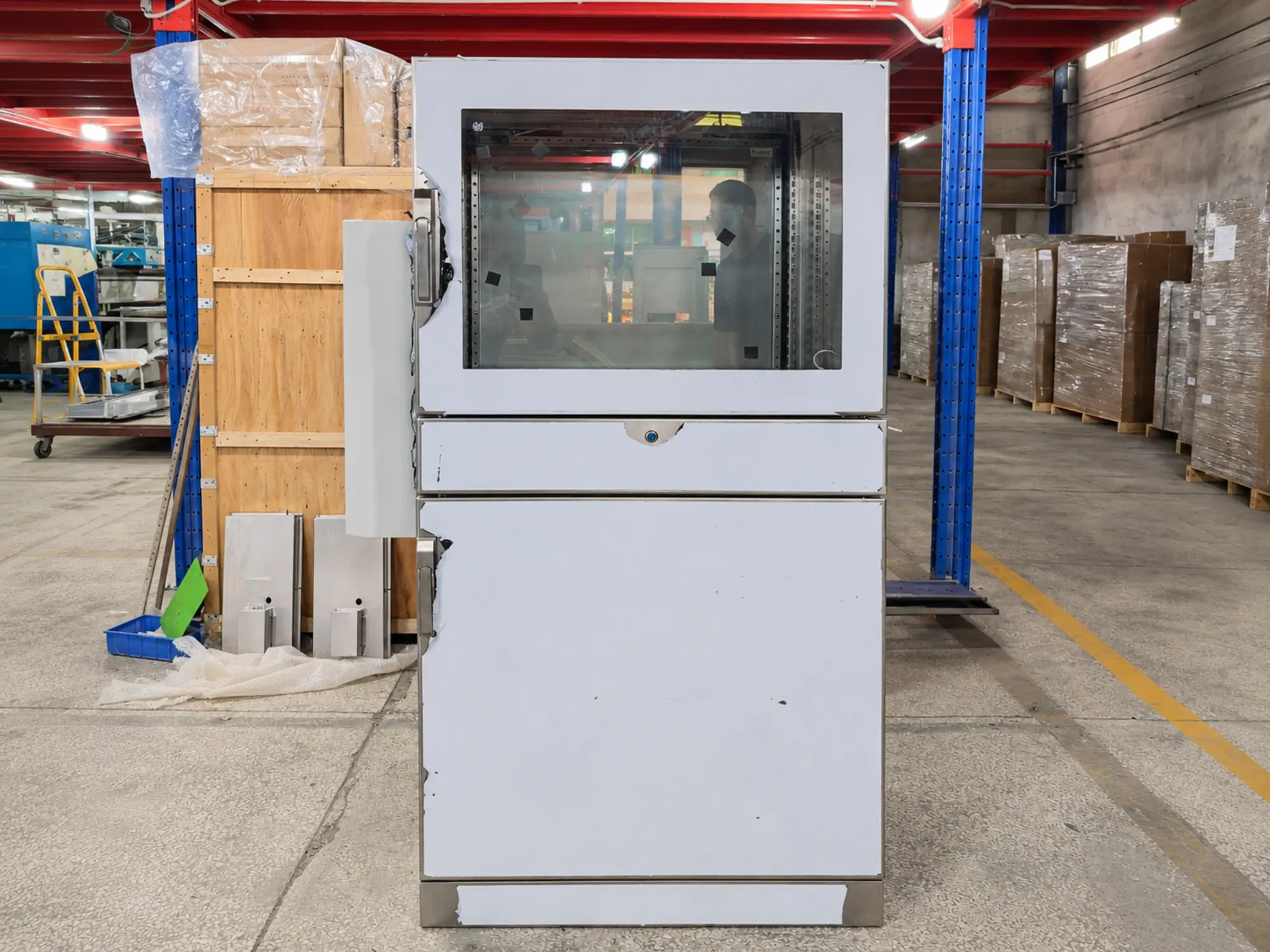
A facility name is too broad to determine material. Assess the position where the tap-off box will operate, then consider whether the chosen protection can be maintained there.
Match the Material to the Actual Exposure
| Actual exposure | Material to evaluate first | Conditions to confirm |
|---|---|---|
| Dry, conditioned data hall or electrical room | Properly specified powder-coated carbon steel | Handling damage, local moisture sources, and inspection access |
| Humid utility area with recurring condensation | Suitable coated steel or stainless, assessed with moisture control | Cause of condensation, deposits, wetting duration, and internal conditions |
| Regular washdown or cleaning-agent exposure | A stainless grade matched to the cleaning process | Chemical identity, concentration, temperature, rinsing, and gasket compatibility |
| Coastal air or chloride deposits | Assess 316/316L and whether a more resistant grade is needed | Salt accumulation, sheltered crevices, retained moisture, and cleaning access |
These are candidate materials. Changing an indoor unit’s housing to stainless steel does not establish washdown or outdoor suitability; the complete assembly needs the appropriate protection.
Include storage and installation before the room reaches its operating conditions. For an unfinished building, agree on temporary protection and responsibility for damage before handover, rather than selecting solely for the final room environment.
Chloride salts and chlorine-based disinfectants pose different corrosion risks. Specify the cleaner’s contact time as well; a “chemical resistant” label alone does not establish suitability.

Decide Whether the Stainless Premium Is Justified
Compare enclosure quotes for the same duty, mounting and space limits, and supply scope, with each design’s thickness and reinforcement stated. Include purchase, fabrication, installation, verification, maintenance, and replacement access in the total; a fixed stainless-to-carbon-steel price multiplier cannot capture these project costs.
For a box above an active production area, include planned electrical isolation and any special access equipment needed for repair or replacement. Base downtime allowances on the site’s actual operating requirements.
For powder-coated steel, budget for inspections and manufacturer-approved coating repairs; for stainless, deposit removal and compatible cleaning. Include expected cutouts, finish restoration, and drawing revisions in future modification costs.
A stainless premium is most defensible when the selected grade reduces a real corrosion or maintenance burden, especially where access is difficult. In a dry, accessible room, a compliant powder-coated enclosure provides a useful cost baseline.
Confirm the Enclosure Design Before Ordering
Verify the Finished Protection Rating
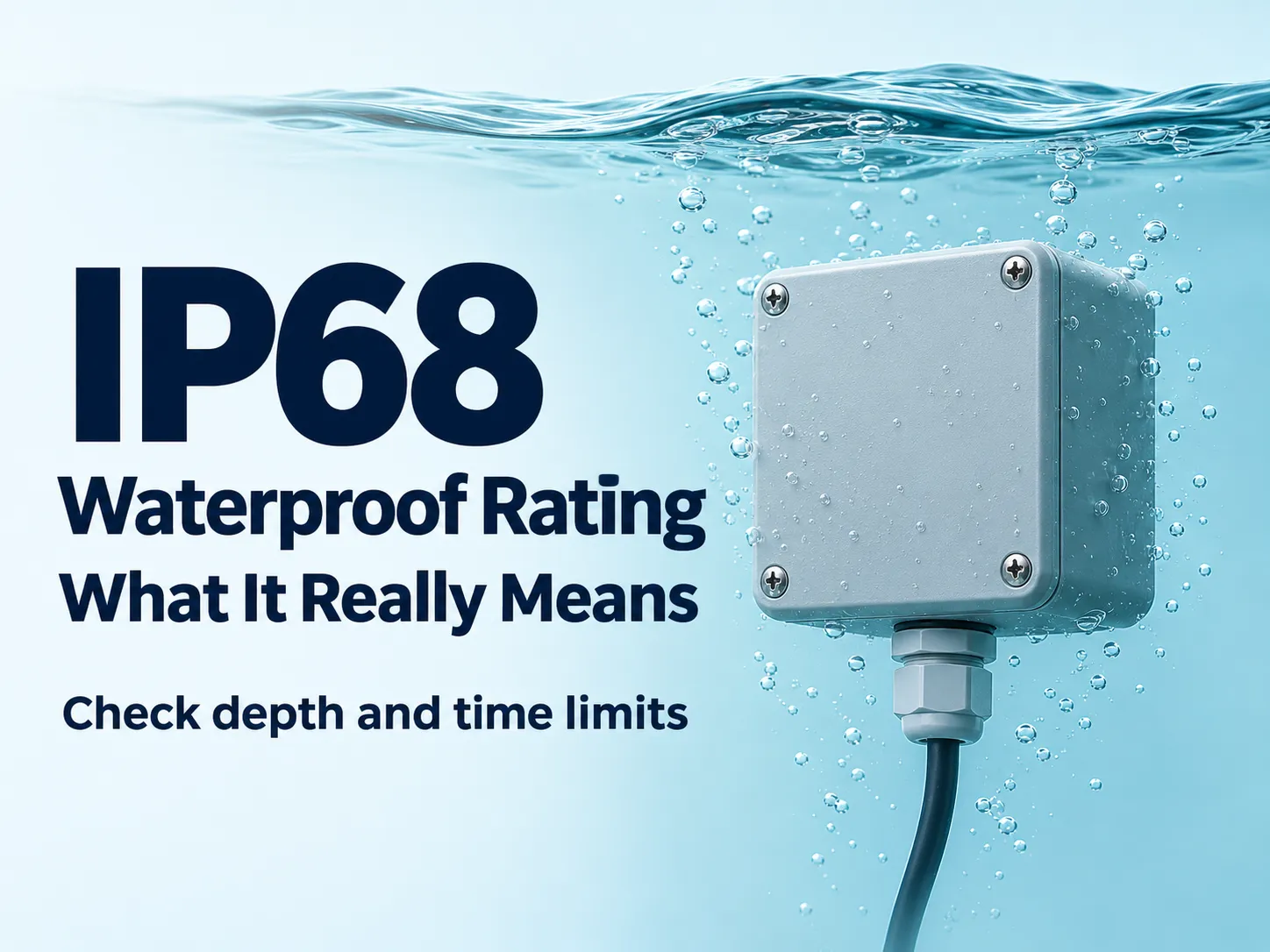
An IP rating describes protection against access to hazardous parts and ingress of solids and water. It does not establish corrosion resistance. IP66 and NEMA Type 4X are not interchangeable ratings. For NEMA Type 4X enclosures, confirm the rating of the specific finished construction; the material name alone does not establish it.
Type 4X does not prove compatibility with every cleaning chemical. Check the gland plate, seals, handles, cable entries, and exposed hardware against the intended exposure. A stainless shell with an unsuitable fitting remains vulnerable, so identify these parts on the approved drawing or bill of materials.
For washdown, specify water pressure, temperature, nozzle distance, and exposure duration alongside the cleaning chemicals. Type 4X alone does not establish suitability for every high-pressure cleaning process. The October 2025 revision of UL 50E added ancillary ratings for power wash. Ask the assembly manufacturer to confirm that the documented ratings and cleaning instructions cover the actual procedure, including installed fittings.
Internal condensation and moisture entering through conduit or unsealed openings need separate assessment. UL 50E does not cover protection of devices against these conditions; changing the housing material does not eliminate them.

Confirm Busway Fit and Certification Scope
Check the revised interface drawing for mounting points, tolerances, and clearances. A material change must preserve the specified mating geometry and operating space.
If material, thickness, or reinforcement changes, confirm the assembled weight and approved support method. Do not assume the plug-in connection carries the entire load. Panel and door stiffness must still allow seals, hinges, and latches to work as designed.
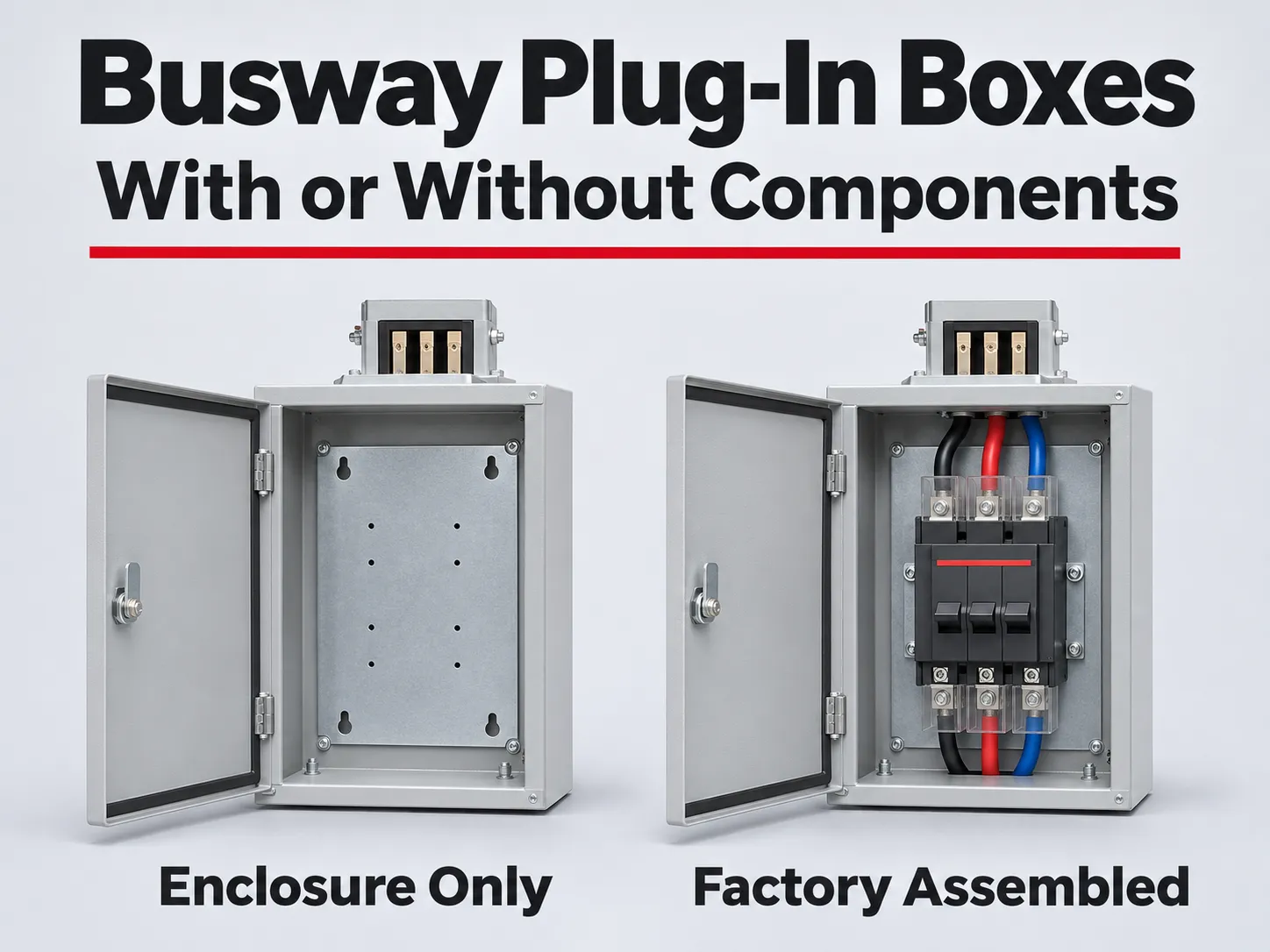
State whether the order covers an enclosure, component installation, or a complete tap-off unit, and identify who owns the finished assembly’s design and compliance documentation.
In North American projects, UL 857 covers busways and associated fittings, including tap boxes and plug-in devices. Enclosure documentation under UL 50/50E does not replace the applicable evaluation of the complete product. Ask the assembly manufacturer whether the existing verification and certification cover the revised construction or whether further review is needed.
Review Temperature Rise and Protective Bonding
Assess the intended load, component losses, internal layout, ambient temperature, enclosure size, and surface finish together. Thermal conductivity alone does not predict the operating temperature of a complete box. Confirm the temperature-rise basis for the proposed configuration rather than assuming a material change permits a higher current rating.
Specify protective bonding for conductive parts, including the door where required. Use manufacturer-approved details for electrical contact preparation and corrosion protection. Any necessary coating removal or field modification must follow those instructions; powder coating must not be relied on as the protective bonding path.

Put the Agreed Construction in the RFQ
E-abel’s custom enclosure options include steel and stainless steel housings. Use the request for quotation (RFQ) to define the following requirements:
- Metal: Exact carbon-steel or stainless grade, actual thickness, and material documentation traceable to the supplied batch.
- Finish: Specified pretreatment, powder product, and dry-film thickness range, or stainless finish and weld-treatment requirements, with acceptance criteria.
- Openings: Final cutout drawing, processing sequence, and responsibility for protecting later modifications.
- Fittings: Hinge, latch, fastener, and gasket specifications, including compatibility with the stated exposure.
- Integration: Busway interface, support details, and the boundary between enclosure-only and assembled-product supply.
- Evidence: Required rating and assembly documents, applicable inspection records, and corrosion-test reports tied to the construction offered.
For stainless steel, agree whether the mill’s material certificate is sufficient or whether positive material identification (PMI) is needed. Appearance and a magnet cannot establish a 304 or 316 grade: forming can make these steels partly magnetic. If confirmation of the low-carbon “L” grade matters, specify a method that measures carbon rather than assuming every alloy analyzer can verify it.
For coated steel, request the agreed film-thickness and cure-verification records, then inspect vulnerable areas against the approved finish specification. A satisfactory thickness reading on a flat panel does not establish adequate edge coverage. Agree on the repair procedure and rejection criteria before shipment, so damaged finishes are handled consistently.
Check the tested substrate, pretreatment, coating, specimen condition, and acceptance criteria. A coating-panel test can support that coating system’s qualification; it does not, by itself, verify the finished enclosure’s seams, cutouts, accessories, or ingress protection.
ASTM B117 defines salt-spray test conditions. It does not assign a universal exposure time, product pass/fail criterion, or service life. Compare reports within their stated scope, and do not convert test hours directly into years outdoors.

FAQs About Tap-Off Box Enclosure Materials
Conclusion
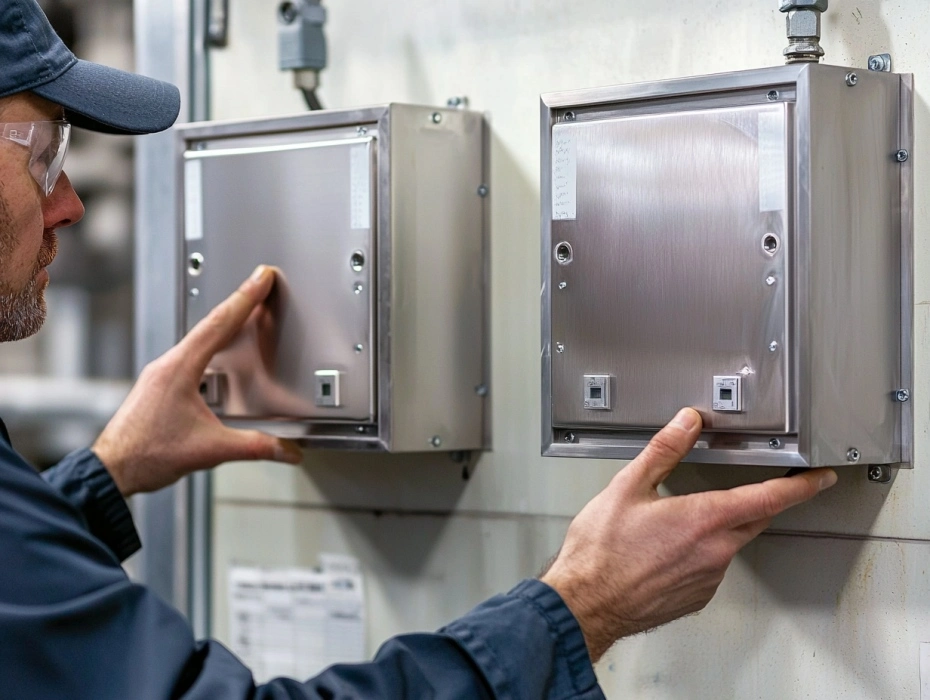
The right choice is the enclosure construction that suits the actual exposure and can be maintained at that location. A well-specified powder-coated steel housing can offer good value in controlled conditions. Stainless steel earns its premium when a suitable grade addresses a real corrosion or maintenance need. Compare complete proposals, including surface treatment, fittings, and the agreed supply scope, so the lower purchase price does not hide missing work.
Contact E-abel to discuss the material and drawing requirements for your busway tap-off box enclosure. Share the busway interface drawing, installation location, and expected moisture or cleaning exposure, along with any proposed changes to an existing design. These details help turn a broad material preference into a clear enclosure specification, giving your project a sound basis for comparing finishes, fabrication requirements, and quotations.
Related Reading
Tap-Off Box Enclosures: A Buyer’s Guide
How to Choose Electrical Enclosure Coating
How to Prevent Rust in Electrical Enclosures
How Electrical Enclosures Are Made: Buyer Guide




 EN
 ES
 FR
 AR
 JA
 KO
 RU
 DE
 PT
 IT
 ZH
 TH
 VI
 HI
 MS
