

What Is an Electrical Overload, and Why Is It Dangerous?
A circuit’s capacity depends on its wiring, protective devices, equipment, and installation conditions. An overload can affect a branch circuit serving outlets or equipment, or the supply feeding several circuits.
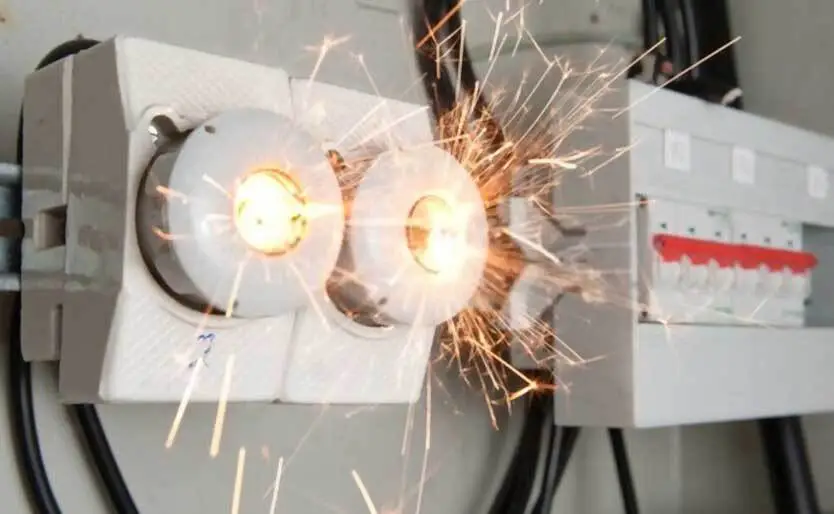
Excess current generates heat. If it continues long enough, it can damage insulation and connections, increasing the risk of fire. A shutdown can also interrupt refrigeration, office work, or production, even when the protective device prevents further damage.
Both fuses and circuit breakers provide overcurrent protection when correctly selected and installed. Their response depends on the amount of current and how long it flows. Exceeding a marked rating does not mean an immediate trip.
An overload differs from a short circuit, where current takes an unintended low-resistance path. A ground fault involves an unintended path to ground. A power surge is a brief voltage rise.

What Causes Electrical Overloads?
- Several high-power devices operating together: Heaters, cooking appliances, and other large loads can exceed a shared circuit’s capacity.
- Unrecognized shared circuits: Outlets in different rooms can be connected to the same breaker, hiding the combined demand.
- New equipment added without assessment: A workspace or room may gain appliances while its original wiring arrangement remains unchanged.
- Equipment drawing abnormal current: Certain faults or mechanical problems, such as a stalled motor, can increase current demand.
Loose connections can overheat at normal circuit current. A motor’s brief starting current must also be distinguished from a sustained overload.
Warning Signs of an Overloaded Circuit and What to Do
These warning signs can indicate overloads or other electrical faults. Symptoms alone do not establish the cause.
If you see smoke, flames, or sustained arcing, leave the building and call emergency services from outside. Do not approach the panel or handle affected plugs to investigate. Stay outside until emergency responders say it is safe to return.
| What You Notice | What It May Indicate | What to Do Next |
|---|---|---|
| A breaker trips when several appliances run together | Their combined demand may exceed the circuit’s capacity. | Stop using that combination. Review the shared loads before considering restoration. |
| A breaker trips as one device starts, or lights repeatedly dim or flicker | Starting current, a faulty device, wiring trouble, or excessive demand may be involved. | Stop using suspect equipment. Have unexplained trips or repeated flickering assessed; do not recreate the event to test it. |
| An outlet or plug has a burning smell, discoloration, unusual heat, or crackling sounds | Overheating or a failing connection may exist even without a trip. | Stop using the affected equipment. Keep clear of damaged parts and seek urgent electrical help. |
| Tripping continues after loads are removed | The original cause has not been resolved, or another fault is present. | Leave the circuit off and call a qualified electrician. |
If the trip has been traced to excessive demand, reduce that demand and follow the manufacturer’s cooling and reset instructions. Do not reset a breaker after an unexplained trip or with signs of equipment or wiring damage.
Tell the electrician which breaker tripped, what lost power, which devices were running, and whether the event happened at startup or later. Note recent equipment additions.
Renters should notify the property manager; employees should report the issue to their electrical maintenance contact.
How to Estimate the Load on a Circuit
The example below uses a U.S. 120 V household circuit. Basic arithmetic flags excessive demand; it cannot verify wiring condition or replace an inspection.
Identify the Circuit and Read Equipment Ratings
Use the panel’s circuit directory to identify outlets and fixed equipment sharing a circuit. If these labels are missing or doubtful, have them verified. Do not remove the panel cover or expose wiring to identify a circuit.
Read each appliance’s input rating. Amps are useful directly; watts need to be considered with the supply voltage. A microwave’s advertised cooking output, for example, is not its electrical input power.
Include lights and less obvious equipment on the same circuit. Count the devices expected to run together, including equipment that starts automatically. Nameplate figures support an initial estimate, but they do not describe every moment of actual operation.
Check power strips and cords against their own ratings. A power strip’s electrical limit can be lower than the supplying circuit’s; the breaker rating does not override it.
Estimate the Simultaneous Load
For a simple resistive load, such as a heating element, current can be estimated as:
Current in amps ≈ input watts ÷ supply volts
Assume a heater draws 1,500 W and a toaster draws 1,200 W, both at 120 V. If they operate together on the same circuit:
(1,500 W + 1,200 W) ÷ 120 V = 22.5 A
That exceeds the rating of an assumed 15 A branch circuit before any other loads are counted. This example explains the calculation; it is not a combination to test. Use the actual equipment labels for your own assessment.
For motors and some electronics, dividing watts by volts can understate running current because of power factor. Starting current can be higher still. Use the manufacturer’s input-current data and have an electrician assess these loads.
Understand Continuous Loads and the 80% Rule
Under the U.S. National Electrical Code, a continuous load is one whose maximum current is expected to continue for three hours or more. Some equipment must follow continuous-load sizing rules even when it cycles on and off.
For standard-rated breakers, a wholly continuous load is generally limited to 80% of the breaker rating: 12 A on a 15 A breaker, for example. This is an application limit, not the current at which the breaker must trip.
For ordinary branch circuits, the general minimum breaker rating is 100% of noncontinuous load plus 125% of continuous load. The continuous-load multiplier is a sizing allowance; it does not mean the equipment draws 25% more current.
Exceptions require a properly listed 100%-rated assembly used under its specified conditions. Shorter operating times do not remove other equipment or circuit limits. Have an electrician apply the locally adopted code and equipment instructions.

How to Prevent Electrical Overloads
Plan Loads Around Circuits, Not Rooms
Use the circuit directory and load estimate to separate high-demand activities. For occasional portable appliances, running one after another can reduce simultaneous demand. Moving a plug helps only when the new location has a suitable, different circuit.
Update the circuit directory after electrical work. Before adding equipment, record its input rating and expected operating time. Use a dedicated circuit where the equipment instructions or local code require one.
For permanent equipment or a system expansion, have the design checked before installation. A promise to avoid using devices together is not a substitute for a code-compliant design or an approved load-management system.
Use Outlets, Power Strips, and Extension Cords Correctly
Plug electric space heaters directly into a suitable wall outlet, never into a power strip or extension cord.
For equipment that permits power-strip use, follow the strip’s instructions. Never plug one power strip into another. Extra sockets provide more connection points, not more electrical capacity; surge protection does not increase that capacity.
Use extension cords only for temporary needs where the equipment permits them. Never use them with major appliances or as a substitute for permanent wiring. Keep cords uncovered and protected from damage. Replace damaged cords, and have loose wall outlets repaired.
Add Capacity Only After a Professional Assessment
Have an electrician identify whether the limitation is the branch circuit, the feeder supplying the panel, or the building’s electrical service. Each requires a different solution.
When determining electrical panel size, distinguish between breaker space and supply capacity. A larger cabinet alone does not increase the power available.
Never install a higher-amp breaker or fuse simply to stop interruptions. The protective device must suit the conductors, equipment, and approved assembly. Replacements and circuit changes belong with qualified electrical personnel.
Housing size, component spacing, and heat management must suit the installed equipment. An enclosure’s environmental protection rating does not provide overload protection or confirm the electrical rating of the complete assembly.
Eabel enclosures include wall-mount, free-standing, and modular options. When comparing models, provide the component layout, heat-loss data, installation environment, and mounting needs so the enclosure can be checked against the electrical design.

FAQs About Electrical Overloads
Conclusion

Preventing electrical overload starts with understanding circuit demand, respecting equipment ratings, and addressing warning signs promptly. For new installations or system expansions, enclosure selection should support the electrical design and installation environment.
Contact Eabel with your project voltage, load list, component layout, and enclosure requirements to discuss suitable options for your planned installation.
Related Reading
Feeder vs Branch Circuit: NEC Sizing & Protection
How to Size a Panelboard Correctly: Step-by-Step
Main Panel vs Sub Panel: Key Differences Explained







 EN
 ES
 FR
 AR
 JA
 KO
 RU
 DE
 PT
 IT
 ZH
 TH
 VI
 HI
 MS
