

Qu'est-ce qu'un boîtier de panneau de contrôle industriel ?

An industrial control panel enclosure is the protective cabinet used to house electrical control components. It is common in machines, production lines, utilities, automation systems, and outdoor industrial projects.
It usually protects PLCs, HMIs, VFDs, circuit breakers, contactors, relays, terminal blocks, power supplies, communication modules, and other composants du panneau de commande électrique.
The control panel is the complete electrical assembly. The enclosure is the protective housing around it. This difference matters when you ask for documents, ratings, and compliance support.
If you order an empty enclosure, the focus is usually rating, material, size, finish, and construction. If you order a complete enclosed industrial control panel, you may also need wiring documents, SCCR marking, and panel-level compliance.
Why Enclosure Selection Matters
A control panel enclosure is more than a metal box. It can affect worker safety, machine uptime, maintenance cost, and project approval.
The right enclosure helps reduce exposure to dust, moisture, oil, impact, short circuits, and accidental contact with live parts. It also helps prevent unauthorized operation.
Poor selection can create real field problems. Water ingress may stop production. Condensation may damage terminals. Corrosion can shorten service life. Overheating can reduce the life of VFDs and power supplies.
If you are still comparing Panneaux de contrôle industriels ouverts ou fermés, remember that enclosed designs usually offer stronger protection in dusty, wet, outdoor, or high-traffic areas.
Electrical equipment should be selected and installed with safety in mind, because poor protection can increase exposure to electrical safety hazards such as shock, fire, and equipment damage.
Project approval can also depend on the enclosure. You may need drawings, rating proof, material documents, test reports, or market-specific certification support before installation.

Commencez par l'environnement d'installation
The best electrical control panel enclosure starts with the real site conditions. A clean control room, a dusty workshop, a washdown area, and an outdoor pump station need different protection.
For clean indoor areas, a powder-coated steel enclosure may be enough. The main needs are basic contact protection, organized wiring, and easy service access.
For dusty or oily workshops, check the door seal, gasket quality, filter maintenance, and cable entry design. Dust and oil can build up slowly and cause long-term reliability issues.
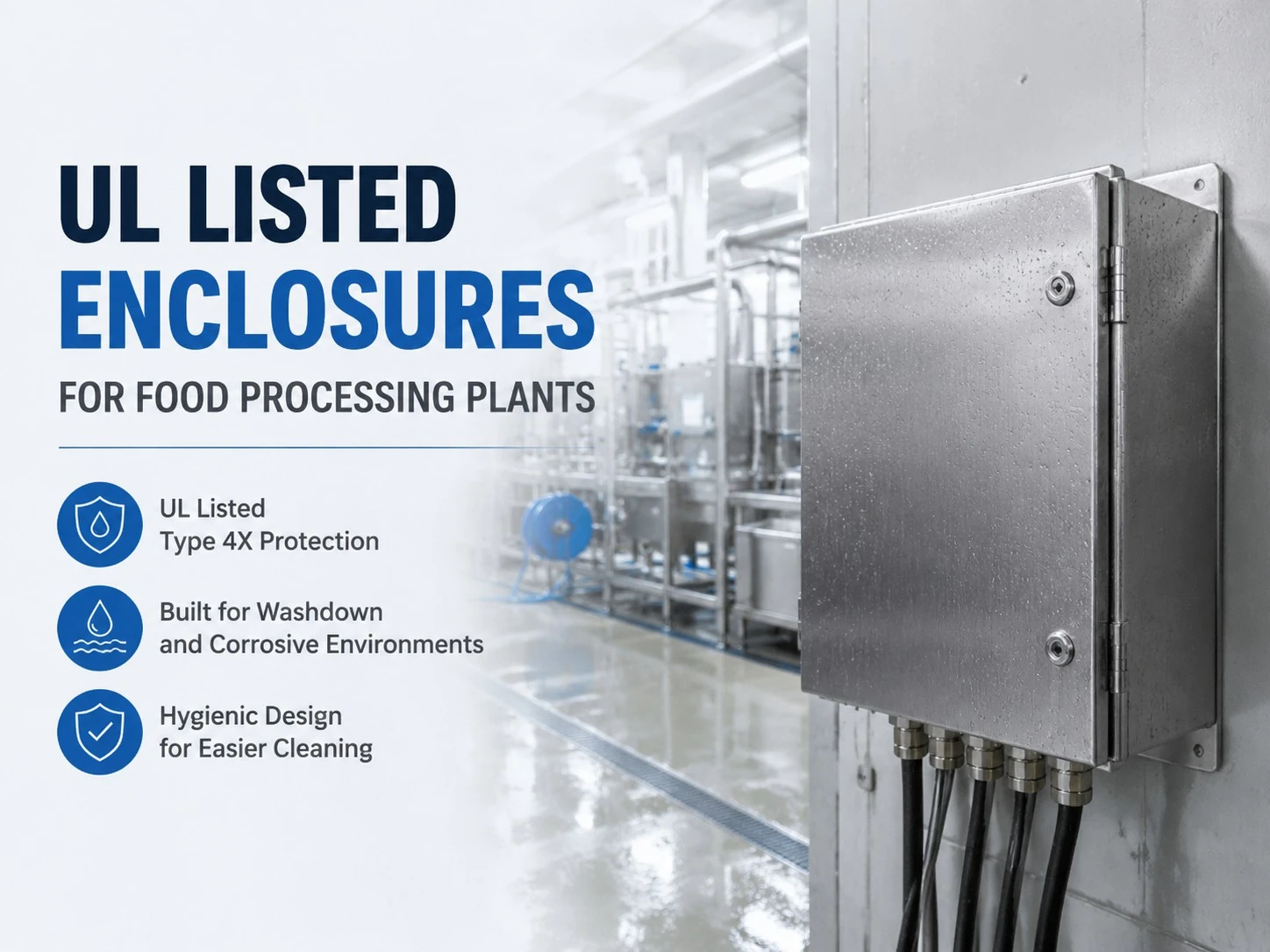
For wet or washdown areas, choose stronger water protection. Stainless steel, sealed accessories, rated cable glands, and easy-clean surfaces are often important.
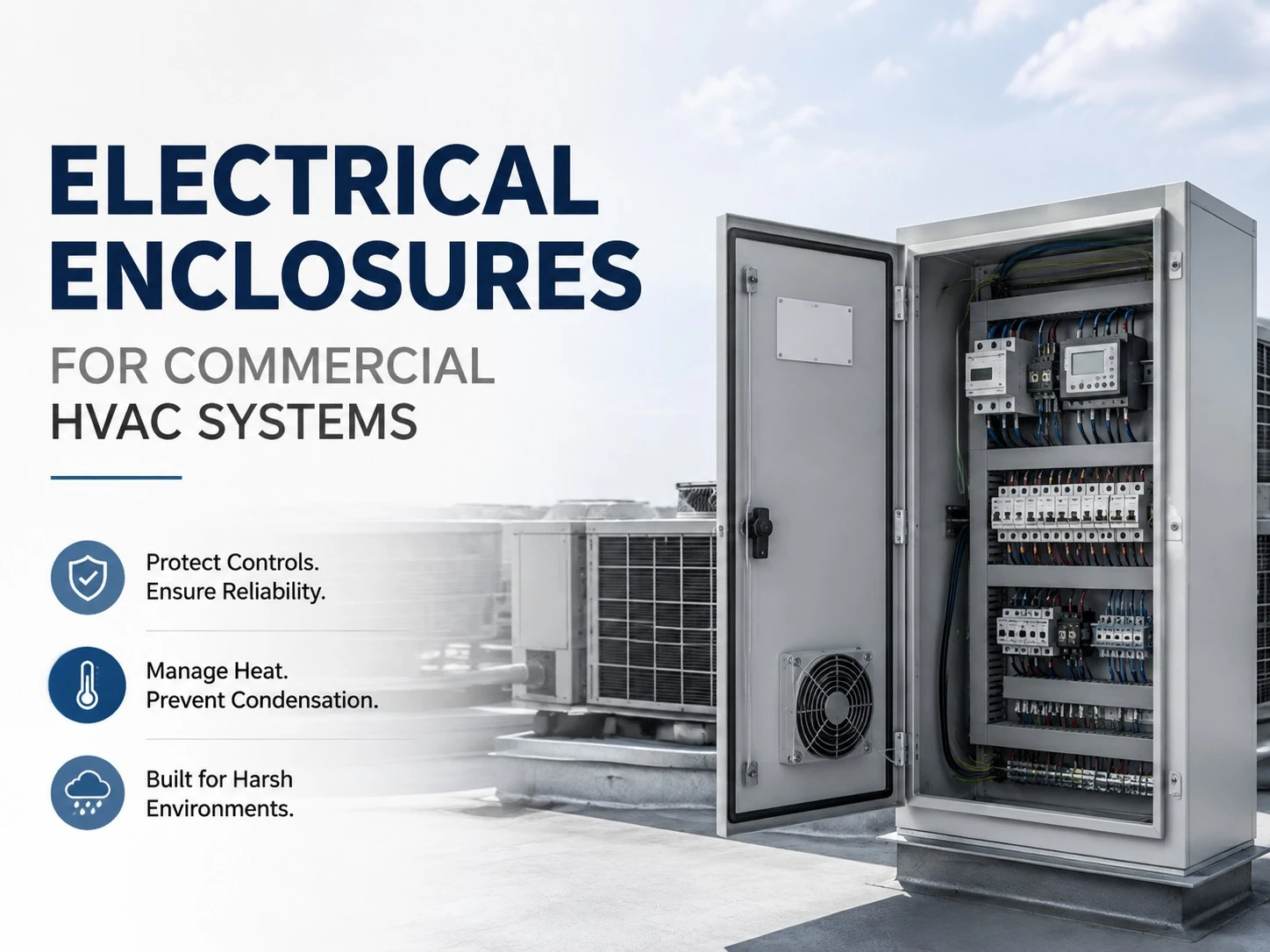
For outdoor control panel enclosures, water protection alone is not enough. You also need to consider UV exposure, humidity, temperature swings, condensation, sunlight heat load, and corrosion.
For coastal, marine, or chemical sites, corrosion may be the main risk. Stainless steel 316, fiberglass, or special surface treatment may be safer than painted carbon steel.
Choose the Right NEMA or IP Rating
Words like waterproof, dustproof, or outdoor use are too vague for industrial projects. A clear NEMA, UL Type, or IP rating makes your specification easier to quote and inspect.
NEMA and IP ratings are useful, but they are not exact copies. IP ratings focus mainly on protection against solids and liquids. NEMA ratings may include broader site risks, depending on the enclosure type.
For water and dust protection, you can use Indices de protection IP IEC to understand how the first and second digits describe protection against solids and liquids.
For North American projects, Types de boîtiers NEMA can help you compare indoor, outdoor, washdown, and corrosion-resistant enclosure requirements.
| Notation | Utilisation courante | Note de l'acheteur |
|---|---|---|
| NEMA 1 | Protection de base à l'intérieur | For clean and dry indoor areas |
| NEMA 12 | Indoor dust and dripping liquid | Usually without knockouts; confirm if Type 12K is needed |
| NEMA 3R | Outdoor rain and sleet | Good for rain, not washdown |
| NEMA 4 | Washdown and hose-directed water | Useful in wet industrial areas |
| NEMA 4X | Washdown plus corrosion resistance | Better for coastal or corrosive sites |
| IP65 | Protection étanche à la poussière et aux jets d'eau | Common for industrial electrical enclosures |
| IP66 | Dust-tight and strong water jets | Often practical for harsh outdoor use |
| IP67 | protection temporaire contre l'immersion | Not always better than IP66 for outdoor cabinets |
NEMA 4X is often used when hose-directed water and corrosion resistance are both important. It is common in washdown, coastal, and harsh industrial sites.
IP67 protects against temporary immersion. For many outdoor control panel cabinets, IP66 may be more practical because the main risk is strong water jets, rain, dust, UV, heat, and condensation.
The highest rating is not always the best choice. A tightly sealed enclosure can still fail if internal heat and condensation are not controlled.

Select the Best Material for the Jobsite
Material choice affects cost, weight, corrosion resistance, cleaning, impact strength, and service life. A material that works indoors may fail quickly in a coastal or washdown site.
Powder-coated carbon steel is common for indoor industrial panels. It is strong and cost-effective, but it is not ideal for high-corrosion environments.
Stainless steel 304 is better for wet, washdown, food processing, and general corrosion-prone areas. It gives stronger corrosion resistance than painted steel.
Stainless steel 316 is a better choice for coastal, marine, chemical, or highly corrosive applications. It costs more, but it can reduce long-term replacement risk.
Aluminum works well when weight matters. It is easier to handle and offers moderate corrosion resistance, but impact strength should be checked.
Fiberglass or polycarbonate enclosures are useful for corrosion resistance, electrical insulation, and some outdoor or chemical environments. They may not be as rigid as steel.
| Matériel | Idéal pour | Principal avantage | Buyer Risk |
|---|---|---|---|
| Acier au carbone | usines intérieures | Coût inférieur | Poor corrosion resistance |
| acier inoxydable 304 | Wet or washdown areas | Good corrosion resistance | Coût plus élevé |
| Stainless steel 316 | Coastal or chemical sites | Stronger corrosion resistance | Premium price |
| Aluminium | Lightweight projects | Easy handling | Lower impact resistance |
| Fibre de verre | Environnements corrosifs | Non-metallic protection | Less rigid than steel |
The best material is not always the most expensive one. It should match your site risk, expected service life, cleaning method, and project budget.

Size the Enclosure for Wiring, Heat, and Service
A common mistake is choosing an enclosure only by component size. This can create problems during wiring, cooling, inspection, and future repair work.
A good control panel enclosure should leave room for wire ducts, DIN rails, terminals, cable bending, airflow, and safe service access.
Plan space for future upgrades. Extra room may be needed for I/O modules, relays, communication parts, terminals, or power expansion.
Door-mounted devices also need space. HMIs, push buttons, indicator lights, emergency stops, switches, locks, inner doors, and viewing windows all affect layout and door clearance.
Mounting style should match the site. Common options include wall-mount, floor-standing, modular, bayable, pole-mount, and machine-mounted enclosures.
A smaller cabinet may look cheaper at first. But if it blocks airflow, makes wiring difficult, or leaves no room for upgrades, it can cost more over the full project life.
Think of the Enclosure as a Protection System
An enclosure is not just a cabinet body. It is a full protection system made of the housing, gasket, hinge, lock, mounting plate, cable glands, gland plates, cooling parts, and documents.
This is also why the rôle des boîtiers dans l'automatisation industrielle is not limited to housing components. A good enclosure helps protect uptime, safety, wiring quality, and maintenance efficiency.
The gasket is one of the most important parts. Poor gasket quality, weak compression, or poor door alignment can reduce sealing performance over time.
Door hardware also matters. Strong hinges, reliable latches, proper locks, and good door alignment help keep protection stable and maintenance easier.
Internal accessories can improve installation quality. Mounting plates, DIN rails, brackets, grounding bars, and wire ducts help organize components and wiring.
Environmental accessories may include rain hoods, sun shields, drain plugs, breather vents, filter fans, heaters, thermostats, and air conditioner cutouts.
When you only focus on the cabinet body, you may miss the parts that protect the panel in daily operation.

Plan Cooling and Condensation Control
Heat is one of the most common risks inside control panel enclosures. VFDs, transformers, power supplies, relays, and high ambient temperatures can all raise internal cabinet temperature.
If heat is not controlled, components may age faster, fail more often, or shut down during operation. This can lead to downtime and higher maintenance cost.
Common cooling options include natural ventilation, filter fans, heat exchangers, air conditioners, vortex coolers, and outdoor sun shields.
The right choice depends on heat load, enclosure rating, ambient temperature, and site conditions. Cooling parts should not weaken dust or water protection.
Condensation is another risk, especially for outdoor panels and sites with large temperature changes. Moisture inside the enclosure can damage terminals, circuit boards, and metal parts.
To reduce condensation risk, you may need enclosure heaters, thermostats, drain plugs, breather vents, humidity control, or better outdoor placement.
Protect the Rating at Cable Entry and Cutouts
Cable entry is one of the most common failure points in control panel enclosures. A well-rated cabinet can lose protection if glands, gland plates, or cutouts are poorly designed.
Wrong holes, loose glands, unsealed cable entries, and rough field changes can allow dust, water, oil, or insects to enter the cabinet.
Plan cutouts before production. This includes HMI openings, push button holes, switch holes, fan openings, AC openings, connector positions, and cable entry locations.
Unplanned field modification should be avoided when possible. Cutting holes after delivery can affect sealing, corrosion protection, and compliance documents.
Internal cable routing also matters. Separate power wiring, control wiring, communication cables, and shielded signal cables to reduce EMI risk and improve panel reliability.

Match the Enclosure to Common Applications
Different applications create different risks. Match the enclosure to the actual control panel use, not only to a general rating.
| Application | Main Risk | Que vérifier |
|---|---|---|
| Panneau de commande PLC | Dust, wiring complexity, signal stability | Layout, wiring space, grounding, service access |
| VFD control panel enclosure | Heat, EMI, cable routing | Cooling, airflow, shielding, cable separation |
| Outdoor control panel enclosure | Rain, UV, condensation, corrosion | Rating, material, sun shield, drainage, heater |
| Food and beverage panel | Washdown, cleaning chemicals | Stainless steel, NEMA 4X/IP66, easy-clean design |
| Water treatment panel | Humidity, corrosion, outdoor exposure | Sealing, stainless/fiberglass, cable glands |
| Warehouse panel | Dust, impact, unauthorized access | Lock, protection rating, location, service access |
For PLC control panels, clean layout and easy wiring are important. For VFD panels, heat and EMI control are often more critical.
For food and beverage panels, stainless steel, washdown protection, smooth surfaces, and easy cleaning are usually important.
For water treatment and pump control panels, humidity, corrosion, cable sealing, and outdoor protection should be checked carefully.
Standard vs Custom Control Panel Enclosures
A standard control panel enclosure may work well for simple indoor projects. It can reduce cost, shorten lead time, and simplify replacement.
Standard models are usually suitable when the size, material, rating, and mounting style already match your project.
If your project needs special cutouts, non-standard dimensions, stainless steel, outdoor protection, branding, or export documents, a boîtier de panneau de commande personnalisé can reduce design mistakes before production starts.
Custom design may also be safer for harsh sites with heat, water, corrosion, cable routing, or inspection requirements.
If your application is simple and the environment is clean, a standard model may be enough. If the site has several risks, custom engineering can reduce mistakes before production starts.

Check Compliance and Documentation
Compliance depends on what you order and where the product will be used. An empty enclosure and a complete enclosed industrial control panel may have different requirements.
For an empty enclosure, focus on enclosure rating, material, construction, drawings, surface treatment, and test documents.
For a complete enclosed industrial control panel, you may also need panel-level compliance, SCCR marking, wiring diagrams, overcurrent protection details, grounding details, and inspection support.
For complete enclosed industrial control panels, UL 508A control panel requirements may also affect wiring, marking, component selection, and inspection support.
Possible requirements may include NEMA or UL Type rating, IP rating, UL 508A for complete control panels, SCCR for complete panel assemblies, CE, UKCA, CSA/cUL, SAA, RCM, or local documents.
Not every project needs all of these. Requirements depend on the destination market, product scope, application, and local inspection rules.
If your team works with control panel builders, clear drawings, component lists, enclosure ratings, and documentation can make scalable production easier.
Before placing an order, request useful documents such as 2D drawings, 3D files, material specifications, surface treatment details, rating proof, test reports, installation instructions, and packing details.
If the supplier provides a complete panel, you may also need wiring diagrams, BOM details, labels, and inspection records.
Avoid Costly Enclosure Selection Mistakes
Many enclosure problems happen because the choice is based only on price, size, or a simple rating. A better process can prevent expensive rework.
Choosing only by the lowest price can lead to corrosion, overheating, failed inspection, leakage, or short service life.
Choosing the highest rating without checking heat is also risky. A highly sealed enclosure can still fail if internal heat cannot escape.
Undersizing the cabinet makes wiring harder, blocks airflow, increases service time, and leaves no room for upgrades.
Using the wrong material can shorten service life. Painted steel may not last in coastal, washdown, chemical, or humid environments.
Ignoring cable entry can ruin water and dust protection. Poor glands or gland plates can weaken the whole enclosure system.
Forgetting service access can also increase long-term cost. If a panel is hard to open, inspect, or repair, every maintenance task becomes slower.

Industrial Control Panel Enclosure RFQ Checklist
A clear RFQ does more than speed up pricing. It helps your supplier check risks before production starts.
Before asking for a quote, prepare the key project details below.
- Project information: application, installation environment, indoor or outdoor use, target market, quantity, lead time, and standard or custom design.
- Enclosure requirements: dimensions, material, thickness, NEMA/IP rating, mounting style, door type, lock type, finish, color, and cable entry position.
- Electrical and thermal details: main components inside, estimated heat load, cooling method, heater needs, grounding requirements, wiring space, and internal layout.
- Customization needs: HMI cutout, push button holes, viewing window, fan or AC opening, mounting plate, DIN rail, branding, labels, and packaging.
- Required documents: drawings, rating proof, material certificate, surface treatment details, test report, compliance documents, and installation guide.
The more complete your RFQ is, the easier it is to quote the right industrial control panel enclosure. It also helps avoid wrong materials, missing cutouts, poor cable entry, and delayed approval.

FAQs About Industrial Control Panel Enclosures
Conclusion

The right industrial control panel enclosure should match the site environment, rating needs, material requirements, internal heat load, cable entry design, service access, and compliance documents.
A well-selected enclosure can improve safety, reduce downtime, extend component life, and make long-term maintenance easier.
If you need standard or custom industrial control panel enclosures, contactez notre équipe with your drawings, rating needs, application details, and target market.
We can help you choose a practical control panel enclosure solution for safer installation, longer service life, and smoother project delivery.
Lectures connexes
Boîtiers de panneau de commande personnalisés et standards : une comparaison détaillée
Indices de protection NEMA et IP : Choisissez le bon boîtier
Active vs Passive Enclosure Cooling Guide
How to Seal an Electrical Enclosure: IP Guide
Accessoires pour boîtiers électriques : types, normes et guide de sélection
Sécurité des boîtiers électriques : risques, normes et bonnes pratiques



 FR
FR  EN
EN  ES
ES  AR
AR  JA
JA  KO
KO  RU
RU  DE
DE  PT
PT  IT
IT  ZH
ZH  TH
TH  VI
VI  HI
HI  MS
MS 