

Why Enclosures Matter in Industrial Automation

Industrial automation systems depend on stable control signals, safe power distribution, clean wiring, and reliable component protection. The enclosure protects the control center of the machine or production line.
A typical automation control cabinet may house PLCs, VFDs, HMIs, relays, contactors, power supplies, circuit breakers, terminal blocks, I/O modules, network devices, and field connection terminals. If you need a deeper control cabinet reference, this guide des boîtiers de panneaux de contrôle industriels explains key types, materials, and selection points.
If these parts are exposed to dust, water, heat, chemicals, vibration, or accidental contact, the whole automation system may become unstable. A single loose wire or overheated drive can stop production.
A well-designed control panel enclosure helps reduce unplanned failure, improve operator safety, extend component life, and make troubleshooting easier. OSHA also reminds users that electrical equipment should be suitable for its installed use and free from recognized hazards that could cause serious harm.
In short, the enclosure is not only a housing. It is part of the reliability strategy for the whole automation system.
What Happens When You Choose the Wrong Enclosure?
Choosing the wrong enclosure may look like a small purchasing mistake. In daily operation, it can create repeated service problems and expensive production stops.
| Problème | Possible Result | Que vérifier |
|---|---|---|
| Dust enters the cabinet | Fan blockage, contact failure, overheating | Sealing, filter, IP or NEMA rating |
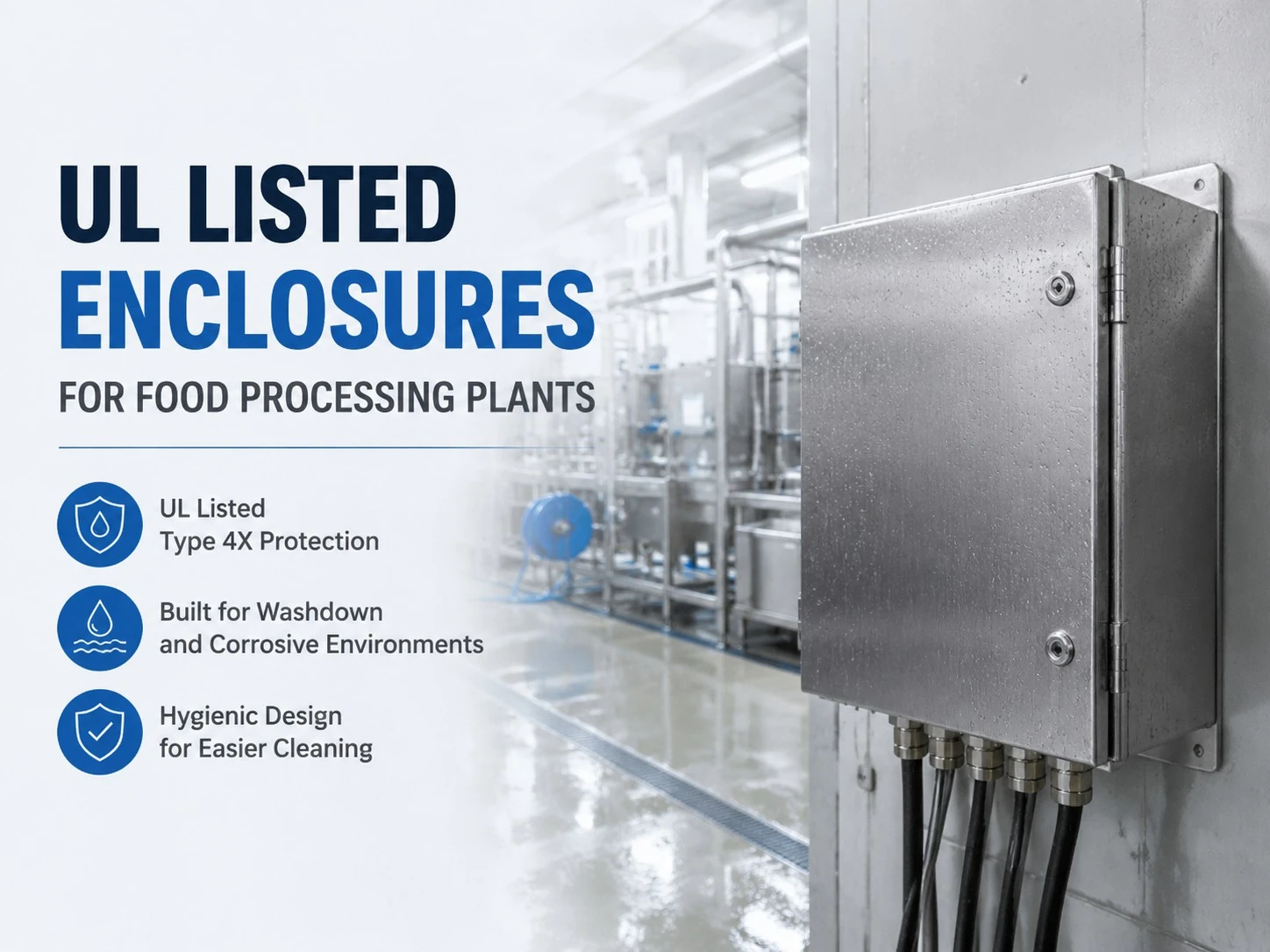
| Water or washdown exposure | Corrosion, short circuit, insulation damage | Gasket, cable gland, IP66 or NEMA 4X |
| Heat buildup | PLC or VFD faults, shorter component life | Heat load, airflow, cooling method |
| Vibration | Loose terminals, unstable signals | Mounting strength, internal layout |
| Corrosive air | Rust, seal damage, cabinet failure | Stainless steel or fiberglass |
| Poor wiring space | Slow troubleshooting, wiring mistakes | DIN rail, wire duct, spare space |
| Unauthorized access | Safety risk and tampering | Lock, disconnect, access control |
A low-cost enclosure may save money at the beginning. If it cannot protect the automation system, it may increase repair cost, service delay, and replacement cost later.
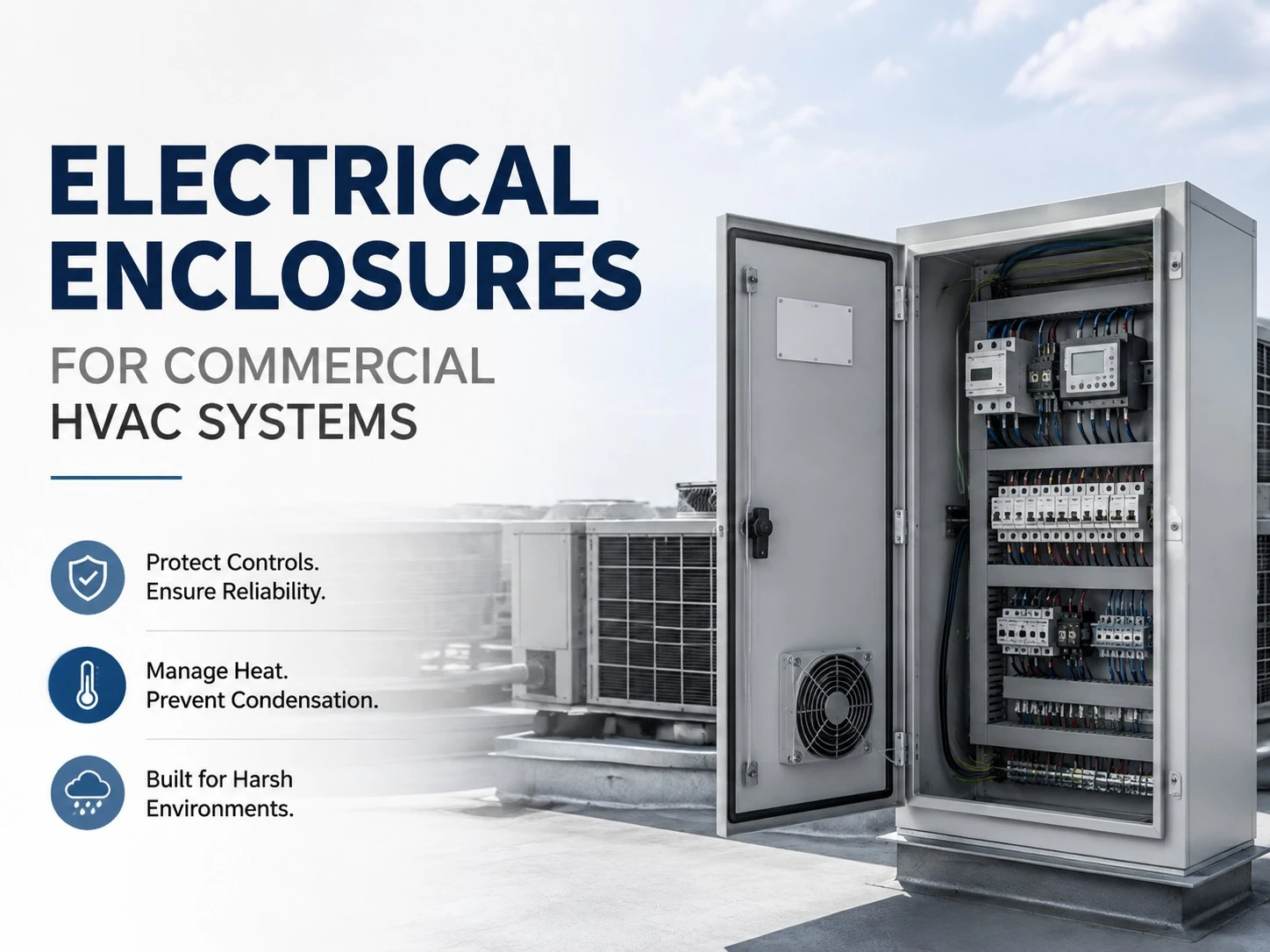
Heat is one of the most common hidden risks. PLCs, VFDs, servo drives, contactors, and power supplies all produce heat. Without proper airflow or cooling, components may age faster or shut down unexpectedly.
Water and dust are also common risks. Even a strong cabinet can fail if cable glands, door gaskets, filters, or cutouts are not sealed correctly.
For projects that need durable wall-mount, floor-standing, modular, or custom cabinet options, Eabel’s enceintes industrielles can help match automation hardware with the right structure, rating, and environment needs.

Automation Enclosure vs Ordinary Electrical Enclosure
An ordinary electrical enclosure mainly protects electrical parts from dust, water, contact, and physical damage. It is often used for power distribution, terminals, switches, or simple wiring systems.
An industrial automation enclosure has a more complex role. It must protect sensitive control, communication, and power devices while supporting stable operation.
Automation enclosures also need to consider PLC and VFD heat, HMI access, signal wire protection, power and control wire separation, network device space, EMC control, grounding, service access, and future I/O expansion.
This difference matters. A cabinet that works for simple wiring may not fit a PLC control panel, VFD cabinet enclosure, robotic cell, conveyor line, or outdoor automation project.
How to Choose an Industrial Automation Enclosure
A good selection starts with the working site. A clean indoor workshop may only need a basic industrial enclosure, while a food plant, chemical site, or outdoor control system may need stronger protection.
Check whether the enclosure will face dust, rain, washdown cleaning, high humidity, high ambient temperature, UV exposure, chemicals, coastal air, vibration, or impact.
Protection ratings help define what the enclosure can resist. For a broader standards overview, you can compare IP, NEMA, and UL enclosure standards before choosing the final cabinet design.
IP ratings are widely used in international projects. The IEC explains that IP ratings grade how well an enclosure resists the intrusion of dust or liquids. Learn more from the official Guide des indices de protection IP de la CEI.
For example, IP54 may suit basic indoor dust and splash protection. IP65, IP66, or IP67 may be needed for stronger water and dust protection.
NEMA ratings are common in North American industrial control panel projects. NEMA provides enclosure type guidance for different indoor, outdoor, dust, water, and corrosion conditions through its Types de boîtiers NEMA reference.
NEMA 12 is often used for indoor industrial control panels. NEMA 4 suits wet or outdoor environments. NEMA 4X is often selected for wet, washdown, outdoor, or corrosive environments where corrosion resistance is required.
UL 508A may matter when the enclosure is built into an industrial control panel for the North American market. UL describes UL 508A as the Standard for Industrial Control Panels in its UL 508A requirements summary.
ATEX or IECEx may be needed for hazardous locations with explosive gas or dust risks. Do not treat IP and NEMA ratings as exact one-to-one equivalents. Your project requirement, testing scope, target market, and site risks should guide the final choice.

Choose the Right Material and Surface Finish
The enclosure material should match corrosion risk, impact risk, hygiene needs, installation site, and budget. The cheapest material is not always the lowest-cost choice over time.
| Matériel | Idéal pour | Principal avantage |
|---|---|---|
| Acier au carbone | Standard indoor factories | Solide et rentable |
| Acier inoxydable | Food, washdown, outdoor, coastal, chemical sites | Résistance à la corrosion |
| Aluminium | Lightweight outdoor panels | Light and rust-resistant |
| Fibre de verre | Corrosive or non-conductive applications | Non-corrosive and non-conductive |
| Polycarbonate ou ABS | Small control boxes | Léger et facile à installer |
Carbon steel is a practical option for many indoor automation panels. It still needs a suitable coating and should not be used blindly in wet or corrosive locations.
Stainless steel is better for food plants, washdown zones, coastal sites, chemical areas, and outdoor projects. Fiberglass can work well in corrosive or non-conductive applications.
If the site has salt air, chemicals, washdown cleaning, or outdoor exposure, corrosion resistance should be planned from the start. Waiting until rust appears usually costs more.

Plan Thermal Management Before Installation
A sealed enclosure protects against dust and water, but it may also trap heat. Protection and cooling must be planned together.
You should consider heat from VFDs, PLCs, power supplies, relays, contactors, network devices, and communication modules. Ambient temperature and solar heat also matter for outdoor cabinets.
Common enclosure thermal management methods include fans, filters, vents, heat exchangers, enclosure air conditioners, larger cabinet size, component spacing, and sun shields.
For simple indoor panels, natural airflow may be enough. For high-load control cabinets, sealed VFD panels, or outdoor automation systems, active cooling may be needed. This active vs passive enclosure cooling guide can help compare common cooling choices.
Ignoring heat load can shorten component life. A suitable enclosure should keep contaminants out while helping the automation system stay within a safe temperature range.
Improve Cable Entry and Wiring Layout
Cable entry design affects sealing, maintenance, and long-term reliability. Poor cable entry can break the real protection level of an IP rated enclosure for automation.
Check cable gland position, gland plate design, wire duct space, DIN rail layout, power and signal wire separation, grounding, bonding, labeling, spare wiring space, and future expansion space.
In systems with VFDs, servo drives, or network modules, grounding, bonding, shielding, and wire separation can help reduce electrical noise and signal problems.
A clean wiring layout also makes service faster. When terminals, labels, cable routes, and spare space are clear, technicians can find faults more quickly and reduce shutdown time.

Common Types of Automation Enclosures
Different automation projects need different enclosure types. The best choice depends on equipment size, installation space, wiring method, operator access, and site conditions.
Wall-mounted enclosures work well for compact PLC panels, machine-side controls, and limited-space installations.
Floor-standing control cabinets provide more room for PLCs, VFDs, breakers, terminals, cooling units, and complex wiring.
Junction boxes and terminal boxes help connect field sensors, actuators, distributed I/O points, and local wiring.
HMI and operator console enclosures protect displays, buttons, switches, and machine interface devices while improving operator access.
Modular enclosures are useful for production lines, conveyor systems, robotics, and automation projects that may expand later.
Hidden Details That Affect Enclosure Performance
A strong enclosure is not only about material and rating. Real performance also depends on sealing, installation quality, cable entry, thermal design, and maintenance access.
Important details include door gasket quality, cable gland sealing, cutout sealing after modification, filter maintenance, condensation control, sun shields, door opening direction, mounting plate strength, and clear labels.
These details are easy to ignore during purchasing, but they affect daily operation. A poorly sealed cutout can allow water to enter. A dirty filter can block airflow and cause overheating.
For outdoor or high-humidity sites, condensation can be as damaging as water spray. Breathers, heaters, drainage, or climate control may be needed.
A good automation enclosure should also leave space for future I/O modules, network switches, monitoring devices, and cable changes.

Smart Enclosures for Modern Automation
Modern automation systems use more sensors, remote I/O, gateways, network devices, and connected controls. This makes enclosure monitoring more valuable in many projects.
Smart enclosure features may include temperature sensors, humidity sensors, door sensors, fan failure alarms, remote status monitoring, power monitoring modules, and predictive maintenance alerts.
These features help detect problems before they cause shutdowns. A temperature alarm can warn your team before a VFD overheats. A humidity sensor can help reveal condensation risk.
Smart monitoring is useful for remote automation sites, outdoor control cabinets, high-value production lines, energy systems, harsh environments, and factories where downtime is expensive.
Not every project needs a smart enclosure. For simple indoor panels, a well-designed standard enclosure may be enough.
Standard, Modified, or Custom Enclosure?
You do not always need a fully custom industrial automation enclosure. The best choice depends on the project requirement, budget, lead time, and operating environment.
Standard enclosures are suitable for simple projects with common size, rating, and layout needs. They are usually lower cost, faster to deliver, and easy to replace.
Modified enclosures work well when your project needs cutouts, gland plates, windows, fans, filters, brackets, mounting holes, special locks, or internal panels.
This option gives a better fit than standard models while keeping cost and lead time lower than full custom production. For many automation projects, it offers the best balance.
Custom enclosures are best for harsh environments, special component layouts, high heat loads, outdoor control systems, washdown areas, OEM machinery, brand-specific designs, or non-standard dimensions.
A custom solution can improve structure, component layout, environmental fit, and long-term reliability when standard sizes cannot meet the project needs. If your project requires deeper customization planning, this guide to coffrets électriques sur mesure explains design, standards, thermal planning, and cost factors.

How Enclosure Design Affects Long-Term Cost
The purchase price is only one part of enclosure cost. A cheaper cabinet may increase service time, repair frequency, component replacement, and production loss later.
Poor layout makes troubleshooting slower. Weak cooling shortens component life. No spare space makes future upgrades harder. Poor sealing can lead to repeated repair.
A well-planned automation control cabinet design can reduce lifecycle cost. In many cases, a modified or custom enclosure is more cost-effective than replacing a failed standard cabinet later.
Erreurs à éviter
Many enclosure problems happen because the selection process focuses only on size and price. Automation enclosure selection needs a wider view.
- Using indoor enclosures outdoors
- Ignoring heat load from VFDs and power supplies
- Treating IP and NEMA ratings as exact equivalents
- Forgetting cable gland sealing
- Choosing the wrong material for corrosive sites
- Leaving no space for future expansion
- Making maintenance access difficult
- Mixing power and signal wiring without planning
- Assuming water-resistant means suitable for washdown
- Adding fans, cutouts, or windows without checking the final protection rating
A better selection process can prevent many failures before they happen. The enclosure should support safe installation, stable operation, easy service, and future upgrades.

Industrial Automation Enclosure Applications
Industrial automation enclosures are used across many factory and infrastructure systems. Each application has different protection, cooling, wiring, and maintenance needs.
| Application | Main Enclosure Requirement |
|---|---|
| Production lines | PLC, VFD, relay, and wiring protection |
| Conveyor systems | Motor control, sensor wiring, and safety circuit layout |
| Robotics cells | Control device, HMI, and communication module protection |
| Food and beverage plants | Washdown resistance and corrosion protection |
| Water treatment plants | Humidity, chemical, and outdoor protection |
| Outdoor control systems | UV, rain, dust, and temperature resistance |
| Usines chimiques | Corrosion-resistant materials and reliable sealing |
| Warehouse automation | Distributed wiring, drives, and local control protection |
| OEM machinery | Custom size, layout, branding, and maintenance access |
Across these applications, the goal is the same: protect the automation system, reduce shutdown risk, and support safer long-term operation.

FAQs About Industrial Automation Enclosures
Conclusion

Industrial automation enclosures protect the control hardware that keeps machines, production lines, and factory systems running. A suitable enclosure helps prevent water ingress, dust damage, overheating, corrosion, wiring faults, and unsafe access.
Your enclosure selection should match the real environment, protection rating, material, heat load, wiring layout, maintenance needs, and future expansion plan.
If you need an enclosure for PLC panels, VFD cabinets, HMI systems, outdoor automation, washdown areas, or custom industrial control projects, Contactez-nous with your application details.
Our team can help you choose a practical industrial automation enclosure solution that protects your equipment and supports stable long-term operation.
Lectures connexes
Armoire PLC vs armoire électrique : principales différences
Guide des armoires PLC : types, disposition, câblage et composants
Boîtiers PLC muraux vs boîtiers sur pied
Thermal Management in PLC Cabinets: Key to Reliability
9 erreurs courantes de conception d'armoires pour automates programmables et comment les éviter



 FR
FR  EN
EN  ES
ES  AR
AR  JA
JA  KO
KO  RU
RU  DE
DE  PT
PT  IT
IT  ZH
ZH  TH
TH  VI
VI  HI
HI  MS
MS 