

UL and Fire Pump Enclosure Requirements Explained
The first purchasing question should not simply be, “Is this enclosure UL Listed?” Buyers need to know what has been evaluated and what the certification applies to.
An electrical enclosure, an industrial control panel, and a complete fire pump controller perform different functions and fall under different product requirements.

Enclosure Certification vs. Fire Pump Controller Certification
UL 50 addresses general construction and non-environmental performance requirements for electrical enclosures. متطلبات الغلاف البيئي UL 50E add environmental construction and performance requirements for enclosure Types such as 1, 2, 12, 3R, 4, and 4X.
UL 50E also makes an important distinction: when the requirements of a specific end-product standard differ from UL 50E, the end-product standard takes precedence.
That matters for fire pump equipment.
An enclosure evaluated to UL enclosure requirements can provide the mechanical and environmental protection needed by a controller, but that enclosure evaluation alone does not make the finished assembly a certified fire pump controller.
UL 62091 specifically covers controllers intended to start, control, and stop stationary fire pumps, including controllers for AC electric motor-driven and diesel engine-driven pumps. Electric controllers can also include an integral power transfer switch.
An RFQ that says only:
“UL enclosure required.”
is therefore incomplete. It does not identify what certification is required for the finished controller.
Which Standards Matter?
Each standard addresses a different part of the system.
| Standard or Reference | الدور الرئيسي | Buyer Relevance |
|---|---|---|
| UL 62091 | Stationary fire pump controllers | Requirements for the complete controller |
| UL 218 | Earlier U.S. fire pump controller reference | Still encountered in legacy specifications and documentation |
| UL 50 / UL 50E | العبوات الكهربائية | Construction and environmental enclosure performance |
| NFPA 20 | Stationary fire pump installations | Fire pump controller and installation requirements |
| NFPA 70 Article 695 | Fire pump electrical systems | Power supplies, circuits, wiring, and electrical installation |
| UL 1008 | Transfer switch equipment | Includes requirements for transfer switches used in fire pump service |
UL Standards & Engagement identifies UL 62091 as the replacement for UL 218, effective September 30, 2020. UL 218 may still appear in legacy specifications and older manufacturer documentation, so buyers should confirm the current project requirements before carrying an older reference into a new specification.
This is more useful than automatically copying “UL 218” from an old specification into a new project.
NFPA 20 remains the main U.S. standard for stationary fire pump installations. The current published edition is the 2025 edition, but the newest edition is not automatically the edition adopted in every jurisdiction. Buyers should confirm the adopted code and requirements of the authority having jurisdiction for the project.
Where transfer equipment is involved, UL 1008 is also relevant. Its scope specifically includes transfer switches for fire pump service.
Why UL 508A Alone Is Not Enough
يو ال 508ا applies to industrial control panels, but an industrial control panel built under UL 508A should not be assumed to satisfy the certification requirements for a complete fire pump controller.
UL’s current UL 508 material distinguishes industrial control panels, which are addressed by UL 508A, from fire pump controllers, which are directed to the dedicated fire pump controller requirements. Some UL 508 text still references UL 218, reflecting the same standards-transition issue discussed above.
The practical rule is simple:
Verify the certification of the finished fire pump controller, not just the certification capability of the panel shop or enclosure supplier.
How to Choose the Right NEMA Enclosure Type
Once the controller requirements are clear, the next decision is environmental protection.
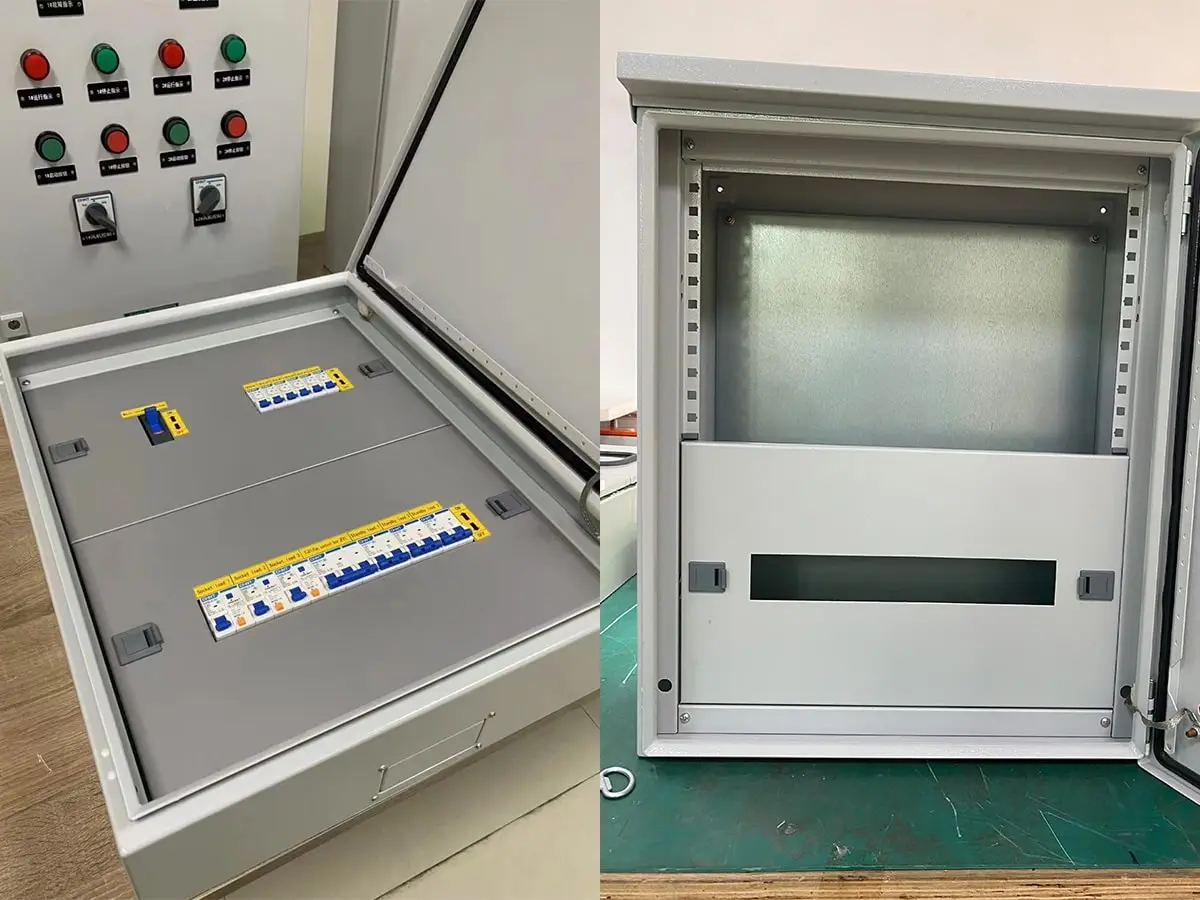
NFPA 20 requires the controller structure or panel to be mounted, at minimum, in a NEMA Type 2 dripproof enclosure or an enclosure with an IP31 rating. Where the equipment is outdoors or exposed to a more demanding environment, a more suitable enclosure is required.
From that baseline, choose according to the actual site conditions rather than simply selecting a higher NEMA number.
| نوع الغلاف | Typical Selection Direction | Main Environmental Concern |
|---|---|---|
| النوع 2 | Protected indoor pump rooms | Dripping and light moisture |
| اكتب 3R | المواقع الخارجية | Rain and outdoor weather |
| اكتب 4 | Wet indoor or outdoor locations | التعرض للماء |
| اكتب 4X | Wet or corrosive locations | Water and corrosion |
| اكتب 12 | Indoor industrial locations | Dust, dirt, and dripping liquids |
NEMA defines these Types around specific environmental protection characteristics rather than as a simple quality ranking. For a more detailed selection comparison, see this guide to تصنيفات حاوية NEMA.
The table is a selection starting point. The controller listing, project specification, adopted code, manufacturer requirements, and AHJ still govern the final choice.
Choose by Exposure, Not by Number
A common mistake is to think of enclosure Types as a simple progression:
Type 2 → Type 3R → Type 4 → Type 4X.
The better sequence is:
installation environment → required protection → enclosure Type → material and construction
A protected indoor pump room and an outdoor coastal installation face very different risks. Specifying Type 4X everywhere can add cost and design constraints without solving a project problem, while an enclosure designed only for protected indoor use may be inadequate at an exposed site.
“Outdoor” Is Not a Complete Specification
Outdoor service can involve much more than direct rainfall.
The enclosure selection should account for wind-driven moisture, sunlight and solar heating, ambient temperature, temperature cycling, condensation, salt exposure, industrial contaminants, conduit water migration, and mounting conditions.
A sheltered outdoor controller at an inland facility can therefore require a different solution from a controller installed beside a coastal industrial plant.
The useful question is not simply:
“Is it outdoors?”
It is:
“What will this enclosure actually be exposed to?”
Type 4X Is Not a Hazardous-Location Rating
Type 4X is commonly used where water and corrosion resistance are important, but it is not an explosion-proof or hazardous-location classification.
UL 62091 applies to equipment intended for non-hazardous locations and excludes special applications such as explosive atmospheres from its normal scope.
If the installation is in a hazardous or classified location, those requirements must be evaluated separately. A Type 4X enclosure cannot substitute for equipment specifically approved for that environment.
Enclosure Design Details That Preserve Performance
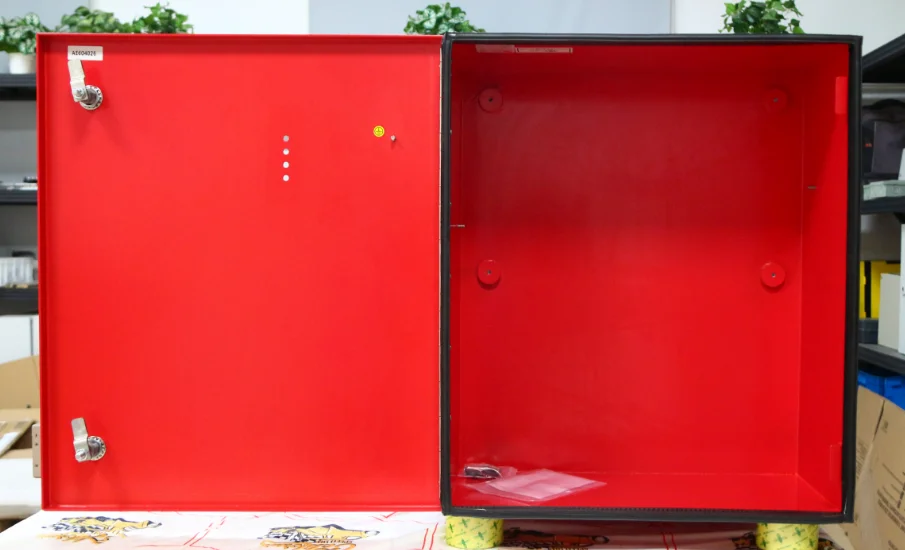
Selecting the enclosure Type establishes the protection target. The complete enclosure still has to maintain that performance after the material, doors, gaskets, cable entries, mounted devices, and accessories are added.
Material and Enclosure Type Are Separate Decisions
Painted carbon steel, 304 stainless steel and 316 stainless steel are common enclosure materials, but material alone does not establish an enclosure Type.
A 316 stainless steel enclosure, for example, is not automatically Type 4X.
Type 4X applies to the environmental performance of the complete enclosure. Construction, sealing, hardware, openings, mounted devices, and corrosion resistance all contribute to that performance. UL 50E treats enclosure Type as a construction and performance requirement, not simply a material designation.
Choose the required enclosure Type first, then select the material for the actual corrosive exposure. Painted steel can suit many protected indoor locations, while stainless steel becomes more appropriate where salt, moisture, cleaning chemicals, or other corrosive conditions justify it.
Gaskets, Doors, and Mounted Devices
An enclosure is only as effective as its completed openings and interfaces.
Door gaskets, hinges, latches, viewing windows, HMIs, selector switches, pilot lights, handles, and other mounted components become part of the enclosure system. A suitable cabinet shell can lose its intended protection if an opening or door-mounted device does not support the required enclosure Type.
The same applies to removable gland plates. They can simplify installation, but the plate, gasket, fasteners, hubs, and cable fittings must maintain the intended enclosure performance.
Plan Cable Entry Before Production
Fire pump conductors can require substantial termination and bending space, so cable entry should be planned before fabrication whenever practical.
Confirm conductor and conduit sizes, entry direction, terminal locations, gland or hub requirements, cable-bending space, door devices, and service clearance before drawings are approved.
This avoids an enclosure that fits dimensionally but is difficult to terminate. It also reduces unplanned field cutting or drilling that could affect the finished enclosure configuration.
Do Not Ignore Internal Condensation
A high enclosure Type does not eliminate every environmental risk.
UL 50E specifically states that it does not cover protection of devices against condensation, icing, corrosion, or contamination that occurs inside the enclosure or enters through conduit or unsealed openings.
That distinction is especially important outdoors and in humid environments.
A sealed enclosure can still experience internal condensation as temperature changes. Moisture can also migrate through conduit from another area.
Where these conditions are credible, the design review should consider ambient temperature, humidity, conduit routing, internal condensation risk, and any moisture-control measures permitted by the controller design.
Thermal Management and Service Access
Environmental sealing should not be considered independently from heat.
Controller components generate heat, and internal temperature depends on electrical configuration, enclosure size, ambient conditions, and location. A sealed enclosure exposed to direct sun has different thermal demands from the same controller in a conditioned pump room.
Fans, vents, heaters, air conditioners, or other thermal accessories should not be added casually because they can change the enclosure configuration and may affect the evaluated controller assembly.
Service access matters too. An enclosure that is made unnecessarily small can complicate conductor termination, inspection, and maintenance. Good design balances environmental protection, electrical clearances, cable access, heat, and maintainability.

How Installation Can Affect the Enclosure Rating
A correctly specified fire pump controller enclosure can still be compromised during installation.
Enclosure Type should not be used to compensate for poor equipment placement. Fire pump controllers and transfer switches should also be located or protected so that water escaping from pumps or pump connections cannot damage them. Site planning should therefore consider the controller’s position relative to pumps, piping, drainage, and potential water paths before relying on the enclosure rating alone.
Junction boxes, conduit hubs, cable entries, and later modifications also need to support the same installation requirements as the original controller.
Junction Boxes Must Match the Installation
NFPA 20 requirements for fire pump controller wiring make this especially important.
Where fire pump wiring is routed through a junction box, its installation must not violate the controller enclosure Type, controller integrity, or short-circuit rating. NFPA material also requires at least a Type 2 dripproof junction box and requires the enclosure to be listed to match the fire pump controller enclosure Type.
A standard junction box installed beside a Type 4 or Type 4X controller therefore does not automatically preserve the intended protection.
The box, fittings, penetrations, terminals, and installation method all matter. Raceway terminations should use listed conduit hubs with a Type rating that preserves the fire pump controller enclosure Type and follows the controller manufacturer’s installation instructions.
Treat New Openings as Design Changes
A field modification may look mechanically simple but still affect the finished equipment.
Conduit holes, rectangular device cutouts, cable glands, added pilot devices, external handles, ventilation openings, and auxiliary accessories can change sealing, clearances, conductor routing, corrosion protection, or the configuration under which the equipment was evaluated.
This does not mean every field-drilled hole automatically voids a UL certification.
The more accurate approach is to check the controller manufacturer’s instructions, the required enclosure Type, approved fittings and components, certification conditions, and AHJ requirements before modifying the assembly. For additional practical guidance, see how to modify NEMA enclosures safely.
Preserve Electrical Integrity Too
Enclosure modification is not purely a sheet-metal issue.
UL 62091 includes short-circuit protection requirements for electric motor-driven fire pump controllers, while NFPA fire pump requirements also address preserving the controller’s short-circuit rating when junction boxes and wiring are added.
Changes that affect conductor routing, terminals, spacing, connections, or the evaluated controller configuration may therefore require electrical as well as mechanical review.
Where special openings or accessories are known in advance, factory-planned modifications are generally easier to document and coordinate than uncontrolled field fabrication.

How to Specify and Buy a Fire Pump Controller Enclosure
A strong RFQ starts with the application and required finished equipment rather than a cabinet dimension alone.
1. Define the Installation Environment
State whether the controller will be installed indoors or outdoors and describe the actual exposure.
Instead of writing “harsh environment,” identify whether the concern is rain, washdown, dust, salt, chemicals, high humidity, temperature extremes, condensation, direct sunlight, or a combination of these conditions.
This gives the supplier a usable basis for enclosure Type and material selection.
2. Identify the Controller Configuration
Provide the information that affects the physical and electrical design of the enclosure, including the pump driver, motor horsepower where applicable, voltage, frequency, controller configuration, transfer-switch requirements, and whether the project is new construction or a retrofit.
UL 62091 covers multiple fire pump controller configurations, so the phrase “fire pump controller” alone does not fully describe the required assembly.
3. State the Certification Requirements
Avoid an RFQ that says only:
“Must be UL.”
Define the certification required for the complete fire pump controller and identify any other project-specific approval requirements.
If FM Approval or another approval is required by the owner, engineer, insurer, or project specification, state it separately rather than assuming it is included in the UL requirement.
4. Specify Enclosure Type and Material Separately
A specification such as:
“Type 4X enclosure, 316 stainless steel”
is much clearer than:
“Waterproof stainless cabinet.”
The first identifies an environmental performance requirement and a separate material requirement. Both can then be reviewed against the application.
5. Define Dimensions, Mounting, and Cable Entry
Provide the maximum available footprint, mounting arrangement, door-swing restrictions, conductor entry direction, conduit sizes, gland-plate requirements, device locations, service clearance, and nearby equipment that may restrict installation.
These details are especially important for retrofit work, where existing conduit, housekeeping pads, piping, walls, and room dimensions may limit the available design.
6. Provide Electrical and Short-Circuit Information
Do not treat the enclosure as a purely mechanical purchase.
Where applicable, provide voltage, phase, frequency, horsepower, controller rating, available fault-current information, required controller short-circuit rating, and transfer-switch configuration.
The enclosure must support the electrical assembly as well as fit the available space.
7. Verify the Finished Equipment
The final review should go beyond the sales quotation.
Compare the completed equipment with the approved drawings and specification. Check the enclosure Type, material, dimensions, cable entries, gland plates, electrical ratings, controller identification, required certification, markings, and supplied documentation.
The goal is to verify what was actually built, not just what was originally quoted.
When Does a Custom Enclosure Make Sense?
أ حاوية كهربائية مخصصة makes sense when a standard configuration cannot meet the project cleanly without awkward field changes—for example, because of restricted space, unusual conduit entry, large conductors, corrosive exposure, special mounting, transfer equipment, retrofit constraints, or non-standard door devices.
Define the controller certification, environment, electrical requirements, and installation constraints first, then design the enclosure around them.
The purpose of customization is to reduce installation compromises and uncontrolled field modifications, not simply to produce a different-sized cabinet.

FAQs About UL Electrical Enclosures for Fire Pump Controls
خاتمة

Selecting UL electrical enclosures for fire pump control systems requires more than choosing a metal cabinet with a UL mark or specifying the highest available NEMA Type. Buyers need to verify the requirements for the finished controller, match the enclosure Type to the actual environment, select material separately, plan cable entries and accessories, and protect both enclosure and electrical integrity during installation.
A strong specification connects certification, environment, enclosure performance, controller ratings, physical layout, and final documentation. That approach reduces late field modifications and makes the finished equipment easier to review, install, and maintain correctly.
If you are sourcing an enclosure for a fire pump control system, اتصل بنا with your required enclosure Type, material, controller configuration, dimensions, installation environment, cable-entry layout, electrical ratings, and certification requirements. Our team can review the enclosure specification before production and help identify practical design issues before they reach the installation site.
قراءة ذات صلة
Industrial Control Panel Enclosure Buying Guide
دليل كامل للمنشآت المغلقة في المواقع الخطرة
شرح غدد الكابلات: المعايير، وتصنيفات الحماية من دخول الماء والغبار، والتطبيقات



 AR
AR  EN
EN  ES
ES  FR
FR  JA
JA  KO
KO  RU
RU  DE
DE  PT
PT  IT
IT  ZH
ZH  TH
TH  VI
VI  HI
HI  MS
MS 