

What UL Listing Means for an Enclosure
The applicable electrical enclosure standards depend on the product category and intended use. UL 50 covers non-environmental construction and performance requirements; UL 50E adds environmental requirements. Under UL 508A, certification can identify an open industrial control panel, an enclosed panel, or an industrial control panel enclosure.
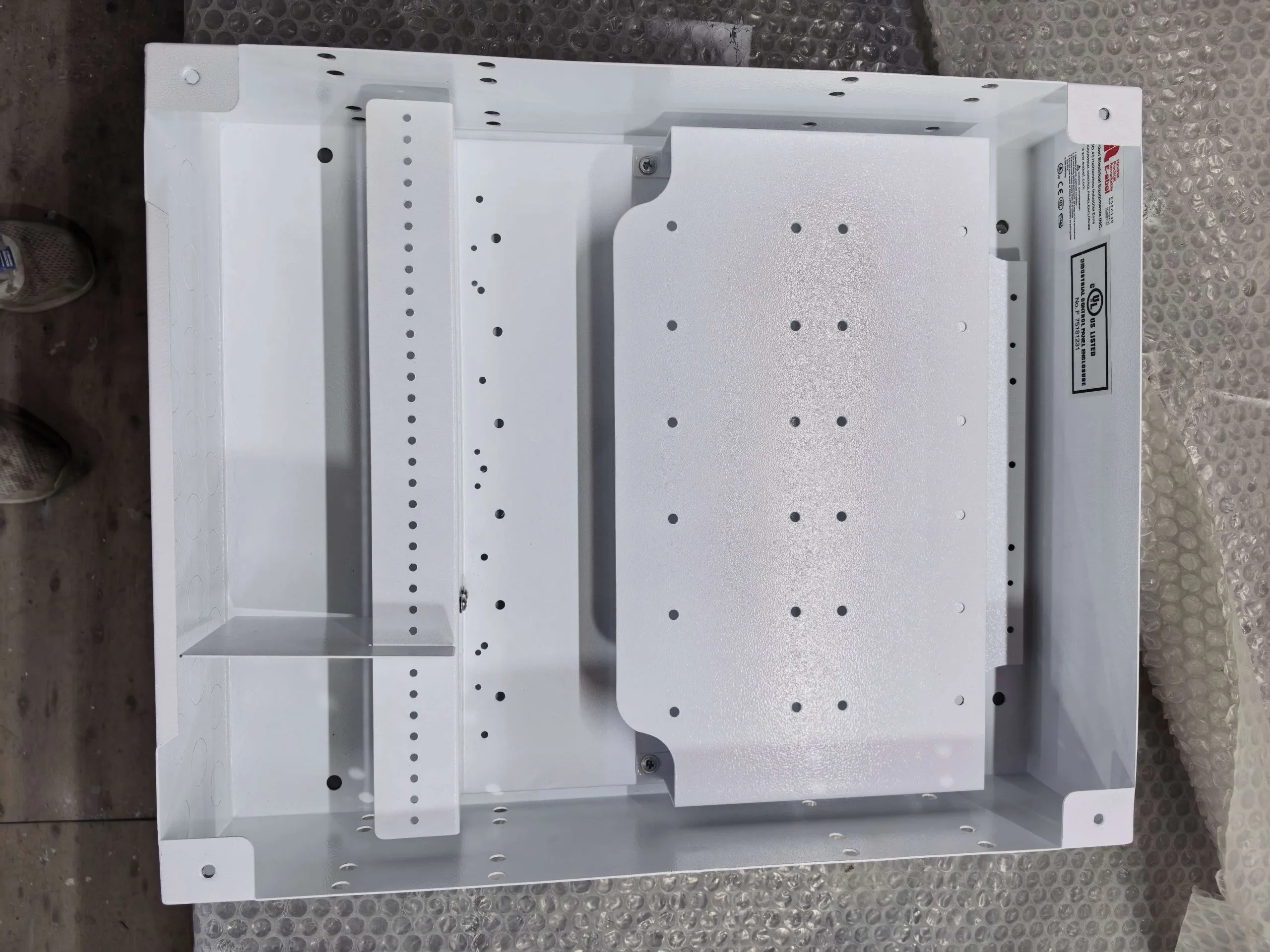
The product identity beside the certification mark tells you what is covered. Certification of an industrial control panel enclosure covers only the enclosure; installing components does not automatically create a UL Listed panel. Certification of an enclosed industrial control panel covers the supplied panel and enclosure, but not the machinery or loads it controls.
Read the actual UL certification mark and supporting record to distinguish these terms:
| Mark or claim | What it establishes | What it does not establish |
|---|---|---|
| UL Listed | Certification of the identified product under the applicable requirements. | Approval of every model or configuration in the supplier’s catalog. |
| Enhanced UL Certified mark | A valid mark used for Listed and Classified products. Classification evaluates specified properties, a limited range of hazards, or use under specified conditions. | The word “Certified” alone does not identify the product’s complete certification scope. |
| UL Recognized Component | Evaluation of a component for use within an end product, subject to applicable conditions. | Listing of the finished enclosure or assembly. Recognition is a different role, not a lower quality grade. |
| “UL compliant,” “tested to UL,” or a UL 94 material rating | A compliance claim or test result; a UL 94 rating addresses plastic material flammability. | Proof that the complete enclosure is UL Listed. |
For normal production, UL evaluates representative samples and uses Follow-Up Services to check continued compliance with certification requirements. This does not mean every cabinet receives the full certification test sequence. Specify any additional project acceptance tests and records separately.
OSHA recognizes multiple Nationally Recognized Testing Laboratories (NRTLs), each within a defined scope. A project contract can still require UL specifically. Another laboratory’s certification to a UL standard is not a UL Listing, so confirm which certification body the project accepts.
How to Verify a UL Listed Enclosure
Read the Mark and Search UL Product iQ
Start with a clear image of the product’s certification label. For a custom enclosure not yet built, request the proposed marking and certification reference for the quoted construction.
Search UL Product iQ using the file number or identifier. Review the certification record and product-category guide information. Compare the named company, product identity, ratings, and geographic scope with the quotation. A Category Control Number, or CCN, identifies the certification category, not an environmental Type rating.
For U.S. projects, verify U.S. certification coverage. If Canadian certification is also required, check that Canada is covered too; a general “UL” claim does not establish both. Ask the supplier to explain any mismatch between the quotation, proposed marking, and certification record.
Resolve Gaps Before Approving the Order
A missing model number is different from a missing certification record. Some public records do not display every covered model; ask the supplier to connect the quoted construction to the existing certification. If the file or relevant product category cannot be verified, request documentation from UL confirming current coverage, or verify the status directly with UL before approving the order.
A different supplier or brand name also needs context. Distributors can sell another manufacturer’s certified product, and an authorized Multiple Listing arrangement allows identical certified products to carry another brand. Establish which arrangement applies to the proposed marking.
A genuine file number for the wrong product is insufficient. For example, a Recognized gasket record does not prove that the complete cabinet is Listed. The evidence must cover the product being purchased.
A Certificate of Compliance alone does not authorize a manufacturer to apply the UL Mark. Check the current certification record and confirm coverage for the quoted construction. Neither a certificate’s age nor a new standard revision alone establishes current certification status. Resolve unclear coverage with UL before approving the order.
Confirm the Certification Scope in the Order
Carry the verified requirements into the purchase order and use them to check the delivery.
- Record the product identity, configuration, certification reference, required marking, Type rating, and supporting documents.
- At receipt, compare the delivered product and certification marking with the approved specification.
- Document missing markings, substitutions, or other discrepancies and resolve them before accepting the delivery as meeting the specified certification requirement.
Keep the approved drawings and purchasing records together.

Choose the Right Enclosure Type for Your Site
A valid listing does not make an enclosure suitable for every location. Select the marked Type rating for the actual exposure, then confirm that the construction and installation meet the project conditions.
These common ratings provide a starting point:
| Type | Main exposure conditions | Important limits |
|---|---|---|
| Type 1 | Indoor protection against contact with hazardous parts and falling dirt. | Does not establish dust-tight or rain protection. |
| Type 12 | Indoor circulating dust, falling dirt, and dripping or light splashing of noncorrosive liquids. | Does not establish suitability for outdoor weather or hose-directed cleaning. |
| Type 3R | Indoor or outdoor exposure to rain, sleet, and snow. | Does not establish protection against windblown dust or hose-directed water. |
| Type 4 | Indoor or outdoor exposure including windblown dust, splashing water, and hose-directed water. | Does not by itself establish the additional corrosion protection associated with Type 4X. |
| Type 4X | Type 4 protection with additional corrosion resistance. | Type 4X alone does not establish protection against submersion. |
An IP code cannot be treated as proof of an equivalent NEMA Type rating. Likewise, a manufacturer’s NEMA Type claim is not, by itself, proof of UL certification. Verify the performance designation and the certification evidence separately.
Type 4X does not require one particular material or establish resistance to every chemical. Check the material grade, finish, gasket compound, and temperature limits against the actual exposure. For outdoor use, confirm weathering and UV suitability.
Cleaning needs particular attention. The October 2025 revision of UL 50E includes ancillary ratings for power wash. Where high-pressure or high-temperature cleaning is planned, confirm the declared ratings and permitted cleaning conditions rather than relying on “Type 4X” alone.
Plan internal condensation control separately where humidity and temperature swings create risk. Environmental protection ratings do not eliminate moisture forming inside the enclosure. Ordinary-location ratings also do not establish explosion-proof, arc-resistant, or fire-rated performance.

How Customization Affects UL Certification
Factory Options
If you are considering a cabinet from E-Abel’s enclosure range, confirm the certification coverage for your planned cutouts, windows, door-mounted devices, cable entries, and cooling equipment before fabrication. Identify options requiring further review, record the agreed construction in the released drawing, and obtain approval before making substitutions.
Select enclosure accessories for their intended interface and installation conditions. A suitably rated device can still be installed in a way that compromises sealing, clearances, or grounding provisions. Confirm the required mounting surface, sealing method, hardware, and instructions.
Changes After Delivery
Before cutting an opening, replacing a seal, or adding equipment, check the manufacturer’s instructions and permitted configurations. Where coverage is uncertain, consult the manufacturer and certification body. Involve the authority having jurisdiction (AHJ), which approves the installation, when the change affects project acceptance.
Openings or accessories already permitted by the product’s certification and installation instructions do not automatically require a new evaluation. Changes outside that scope can require a field evaluation at the intended installation site. A field evaluation label is distinct from factory Listing.
Keep revised drawings, accessory instructions, and evaluation findings with the equipment records so maintenance teams can assess future work against the actual configuration.

FAQs About UL Listed Enclosures
Conclusion

Treat enclosure selection as a documented match between a product, an application, and the required certification scope. A valid listing is valuable evidence, but it does not replace checking the proposed configuration or agreeing how later changes will be handled. Resolve uncertain details while the specification can still be adjusted, rather than after the cabinet reaches the site.
Contact us to discuss an enclosure specification for your project. Share the installation environment, destination market, required Type rating, dimensions, equipment layout, and planned cutouts or accessories. These details give the discussion a clear basis for comparing configurations and identifying the certification documents needed before you approve an order.
Related Reading
How UL Certification Works for Industrial Enclosures
UL 508A vs UL 67 vs UL 891: Key Differences
NEMA vs IP Ratings: Choose the Right Enclosure



 EN
 ES
 FR
 AR
 JA
 KO
 RU
 DE
 PT
 IT
 ZH
 TH
 VI
 HI
 MS
