

1. What Is a Distribution Panel and How Does It Work?

A distribution panel sits between an upstream power source and the circuits that serve the final electrical loads.
The upstream source may be a utility service, transformer, generator, switchboard, or another power distribution panel.
Depending on the market, the same product may be called a distribution board, panelboard, breaker panel, load center, consumer unit, or DB box.
These terms often overlap. However, their exact meaning can vary by country, standard, construction, and application.
Power Source → Main Protection → Busbars → Branch Devices → Electrical Loads
Power enters through feeder conductors connected to a main breaker or main lugs.
A main-breaker panel includes incoming protection inside the assembly. A main-lug-only panel depends on an approved upstream protective device.
Phase busbars carry power from the incoming section to branch breakers or fuses. Each branch device then supplies a defined circuit.
During an overload or short circuit, the protective device should interrupt abnormal current before conductors or equipment suffer serious damage.
A downstream fault does not always trip only one breaker. Proper coordination is needed to reduce the risk of an upstream device disconnecting a larger part of the system.
Main Functions of a Distribution Panel
| หน้าที่ | Practical value |
|---|---|
| การจ่ายกระแสไฟฟ้า | Supplies several circuits from one incoming source |
| ระบบป้องกันกระแสไฟเกิน | Limits damage from overloads and short circuits |
| Fault isolation | Helps reduce unnecessary outages when devices are coordinated |
| Expansion and monitoring | Supports future loads and maintenance planning |
A reliable panel improves circuit organization, maintenance access, and system control. It also makes future expansion easier when spare capacity is planned from the start.
2. What Parts Are Inside a Distribution Panel?
Distribution panel components affect safety, current capacity, installation time, and service life.
A panel should be evaluated as a complete assembly rather than as a box containing several breakers.

Distribution Panel Components and Buying Checks
| ส่วนประกอบ | What it does | What you should check |
|---|---|---|
| Enclosure and dead front | Protect live internal parts | Material, construction, seals, and IP or NEMA rating |
| Main breaker or main lugs | Receive incoming power | Voltage, current, poles, terminals, and fault rating |
| บัสบาร์เฟส | Carry power to branch devices | Material, ampacity, temperature rise, and joint quality |
| เบรกเกอร์หรือฟิวส์ของวงจรย่อย | Protect outgoing circuits | Type, trip rating, compatibility, and interrupting capacity |
| Neutral and ground bars | Connect neutral and protective conductors | Capacity and correct system arrangement |
| RCDs, RCBOs, or GFCIs | Provide specified residual-current protection | Protection purpose, poles, and trip threshold |
| Surge protection device | Limits transient overvoltage | Voltage rating, surge capacity, type, and coordination |
| Metering and monitoring | Tracks electrical conditions | Accuracy, alarms, and communication options |
| Labels and filler plates | Identify circuits and close openings | Clear, durable, and complete marking |
The enclosure must suit the installation site. Painted steel may work in a clean electrical room but fail quickly in a wet, dusty, coastal, or chemical environment.
Unused breaker openings need approved filler plates. Open gaps may expose energized parts and increase the risk of accidental contact.
Both copper and aluminum busbars can perform reliably when properly designed. Verified ampacity, temperature rise, joint quality, and mechanical support matter more than material alone.
Busbar material is only one part of the decision. Layout, joint design, insulation, heat rise, and future expansion also affect performance. Our guide to ระบบจ่ายไฟแบบบัสบาร์ explains the main types, materials, and application differences in greater detail.
Breaker compatibility also requires attention. A device should not be installed only because it appears to fit the mounting system.
Use protective devices approved for the specific panel or verified assembly. An incompatible breaker may create poor contact, overheating, or invalid short-circuit ratings.
Neutral and ground arrangements depend on the system design and panel location.
A main distribution panel is not automatically service equipment. Bonding and separation must follow the grounding system, upstream equipment, and local electrical rules.
Residual-current devices also serve different purposes.
RCDs, RCBOs, and GFCIs are not interchangeable terms. The specification should state whether the required function is personnel protection, equipment protection, or both.
A surge protection device can limit transient overvoltage. It does not replace correct grounding, overcurrent protection, or proper electrical design.

3. Main Types of Distribution Panels
Types of distribution panels can be grouped by system position, electrical supply, installation environment, and application.
Panels by System Position
A main distribution panel receives power from a utility service, transformer, generator, switchboard, or other major source.
A sub-distribution panel supplies a defined floor, production area, process line, or group of loads.
A final circuit panel feeds end-use circuits such as lighting, outlets, small equipment, and individual appliances.
Larger facilities may use several distribution levels. This structure can shorten cable runs and make faults easier to locate.
Single-Phase and Three-Phase Panels
Single-phase distribution panels are common in homes and smaller commercial buildings.
Three-phase distribution panels are widely used in factories, commercial facilities, HVAC systems, workshops, and buildings with motors or heavy equipment.
Load balance matters in a three-phase system. Poor distribution can increase neutral current, create voltage imbalance, and place uneven stress on the equipment.
DC distribution panels are used in solar, battery, telecom, transport, and other direct-current systems.
DC breakers and switches must be rated for the actual voltage, polarity, and interruption conditions. AC devices should not be assumed suitable for DC use.
Indoor and Outdoor Distribution Panels
An indoor electrical panel usually operates in a controlled space with limited exposure to water, dust, chemicals, and sunlight.
An outdoor distribution panel needs protection against rain, condensation, dust, corrosion, ultraviolet exposure, and changing temperatures.
Coastal and chemical sites may require stainless steel, special coatings, sealed hardware, heaters, drainage, or controlled ventilation.
The enclosure rating must apply to the complete assembled panel. Doors, cable entries, ventilation parts, seals, and accessories can affect the final level of protection.
Food, beverage, pharmaceutical, and washdown areas may need more than a standard weather-resistant box. A hygienic distribution box design uses sloped surfaces, sealed construction, and easier-to-clean details to reduce water and residue buildup.

Residential, Commercial, and Industrial Panels
Residential panels usually focus on compact size, simple branch protection, easy installation, and space for future household loads.
Commercial panels often need more outgoing circuits, surge protection, metering, clearer labeling, and better maintenance access.
An industrial distribution panel may require higher fault ratings, larger cables, stronger busbars, better heat control, and closer coordination between protective devices.
Production facilities may also need remote alarms, branch metering, and spare capacity for later machinery.
Renewable Energy and EV Applications
Solar, battery, and EV projects can create new load patterns and bidirectional power flow.
The panel may need dedicated protective devices, extra bus capacity, backfeed provisions, energy metering, or transfer equipment.
Before selecting the panel, confirm the power direction, charging demand, inverter output, and future system expansion.
Panelboard vs Similar Electrical Equipment
| อุปกรณ์ | Typical role | Common use |
|---|---|---|
| โหลดเซ็นเตอร์ (Load center) | Small branch-circuit distribution | Residential and light commercial |
| แผงจ่ายไฟ (Panelboard) | Branch or feeder distribution | Commercial and industrial |
| สวิตช์บอร์ด (Switchboard) | Higher-capacity power distribution | Large commercial facilities |
| สวิตช์เกียร์ (Switchgear) | Protection, control, and isolation | Critical or high-capacity systems |
| แผงควบคุม | Machine or process control | ระบบอัตโนมัติในอุตสาหกรรม |
These are typical distinctions rather than universal definitions. Product construction and terminology vary by market and manufacturer.
Some older systems still use fuse-based protection, while modern installations commonly use resettable circuit breakers. If you are evaluating an upgrade, this แผงเบรกเกอร์เทียบกับกล่องฟิวส์ comparison explains the operating, maintenance, and capacity differences.

4. How to Choose the Right Distribution Panel
Learning how to choose a distribution panel starts with the electrical system, not the enclosure size or breaker quantity.
Confirm the Supply Conditions
Start with the rated voltage, frequency, phase, conductor arrangement, incoming source, and grounding method.
These details determine the basic panel configuration and the type of protective devices that can be used.
Also confirm whether the panel receives power from a utility service, transformer, generator, solar inverter, battery system, or upstream panel.
Calculate Present and Future Demand
Connected load is not always the same as calculated demand.
The design may need to consider diversity, continuous loads, motor starting current, operating schedules, HVAC equipment, and future production needs.
Future loads can include machinery, EV chargers, solar systems, batteries, lighting, or additional work areas.
A panel with no spare capacity may need early replacement even when it meets the original load.
Match the Main Electrical Ratings
Verify the main current, busbar capacity, outgoing circuit quantity, breaker ratings, terminal range, and incoming configuration.
The feeder, upstream protection, conductors, terminals, and busbars must all support the intended load.
A large main breaker does not automatically increase the usable panel capacity.
The enclosure temperature and internal layout may also limit how much current the complete assembly can carry.

Check the Distribution Panel Short-Circuit Rating
Normal operating current and fault current are different.
Available fault current is the prospective current that may flow at the installation point during a short circuit.
Interrupting rating describes the amount of fault current a breaker or fuse can safely interrupt.
The panel short-circuit rating applies to the complete assembly under defined conditions.
A high-rated breaker does not automatically give the complete panel the same rating.
For North American projects, the specification may refer to SCCR, fully rated systems, or series-rated combinations.
IEC projects may use rated short-time withstand current, peak withstand current, or conditional short-circuit current.
These values are related, but they are not interchangeable.
การ UL Panelboard Application Guide explains how panelboard markings, ratings, and approved configurations help determine whether equipment is suitable for a specific installation.
Select the Right Enclosure Protection
Indoor vs outdoor distribution panel selection depends on more than rain exposure.
Review dust, humidity, condensation, salt, chemicals, impact, ambient temperature, sunlight, and mounting location.
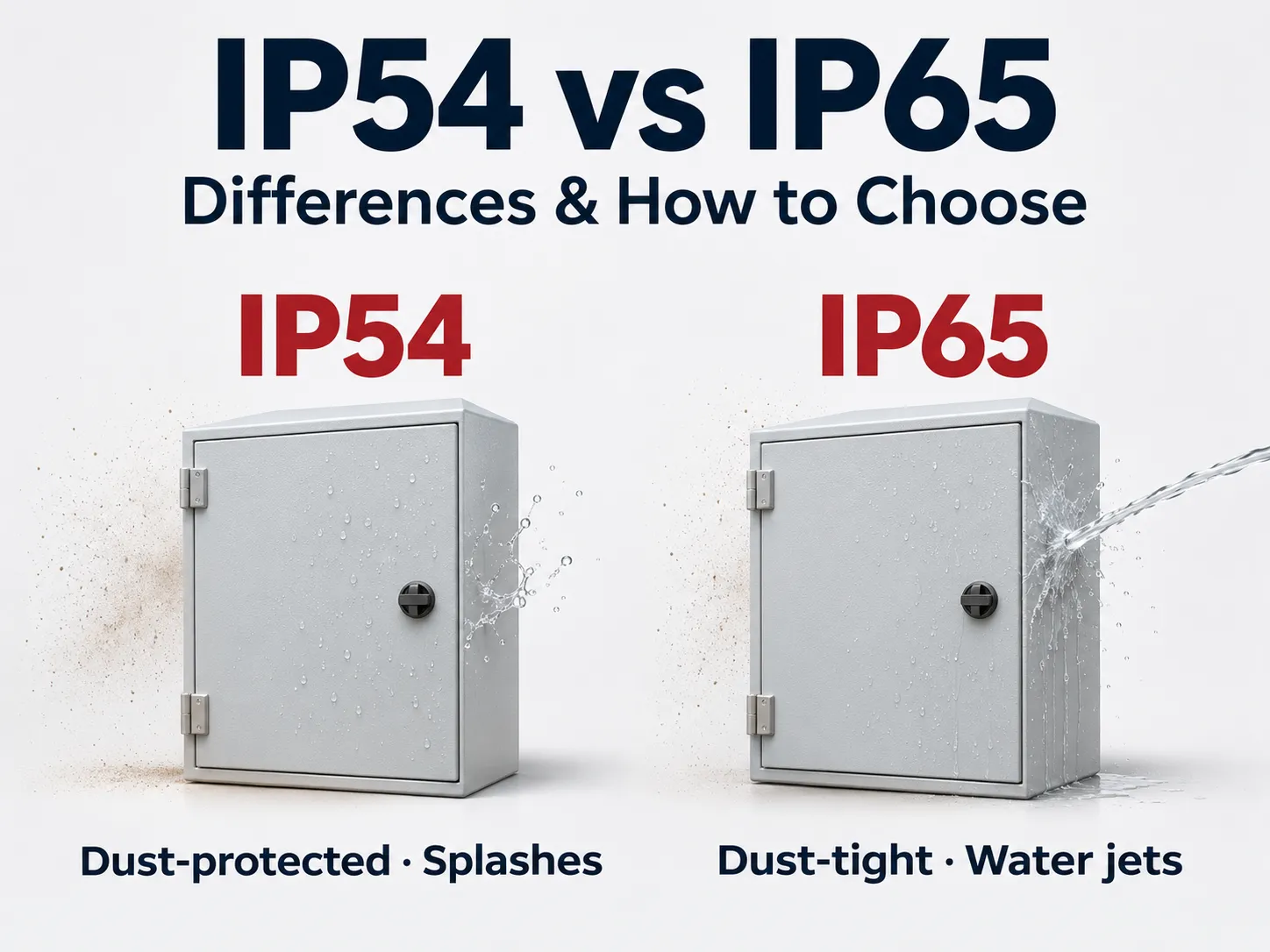
IP and NEMA ratings follow different systems. They should not be treated as exact equivalents.
For harsh sites, also review coating type, stainless steel grade, seal material, ventilation, drainage, and hardware.
Standard panel enclosures may not fit every cable layout, mounting space, or operating environment. For projects that require custom dimensions, specific materials, or higher environmental protection, Eabel’s โซลูชันตู้ไฟฟ้า offer wall-mounted, floor-standing, modular, stainless-steel, and customized configurations. This allows the enclosure to match the panel layout and site conditions instead of forcing the electrical design into a fixed box.

Review Protection and Monitoring Options
Some projects need surge protection, residual-current protection, ground-fault equipment protection, or arc-fault protection.
Energy meters, temperature sensors, breaker status, and remote communication may also be useful.
These features provide the most value where downtime is expensive or where electrical equipment is difficult to inspect.
Confirm the Correct Standards
Standards depend on the product type and destination market.
North American projects may reference UL 67 for product certification, NEMA panelboard standards for construction requirements, and the NEC for installation requirements.
IEC markets may use IEC 61439-1 with the relevant product-specific part. For distribution boards intended to be operated by ordinary persons, IEC 61439-3:2024 provides specific requirements.
National regulations, utility rules, and project specifications may add further requirements.
Confirm the target standard before production begins. A late change can affect the breakers, clearances, labels, tests, enclosure, and busbar design.
Prepare a Clear RFQ
A complete request for quotation should state the application, destination market, voltage, phase, main current, incoming arrangement, and outgoing circuit schedule.
It should also include the fault-current level, enclosure rating, target standard, metering needs, cable entry, size limits, and expansion plan.
Drawings and load schedules help the supplier prepare a more accurate design, quotation, and lead time.

5. Hidden Distribution Panel Risks You May Miss
Basic ratings do not reveal every design risk.
Temperature, cable routing, harmonics, maintenance access, and spare-part availability can affect long-term performance.
Heat, Ventilation, and Derating
High temperature reduces the performance of many electrical components.
Heat may come from direct sunlight, continuous loads, tightly packed breakers, conductor bundles, poor airflow, or loose terminals.
A sealed outdoor enclosure may run much hotter than an indoor panel with natural ventilation.
Confirm whether the breakers, conductors, or busbars require derating at the actual operating temperature.
Adding ventilation is not always a simple fix. Openings may reduce protection against dust, water, insects, or corrosive air.
Thermal design must balance cooling with enclosure protection.
Cable Entry and Termination Space
Electrical capacity does not guarantee enough wiring space.
Large cables need room for bending, lugs, glands, routing, and maintenance access.
A panel may have enough circuit ways but still be too small for the incoming and outgoing conductors.
Confirm the cable size, entry direction, lug range, bending radius, gland plate, and installation access before the enclosure is finalized.
Harmonics and Neutral Loading
Modern buildings contain many non-linear loads.
LED drivers, computers, UPS equipment, variable-frequency drives, chargers, and electronic power supplies can create harmonic currents.
Some harmonics add together in the neutral conductor. This can increase neutral loading and internal temperature.
For offices, data centers, retail sites, and facilities with many electronic loads, review neutral sizing, neutral bar capacity, power quality, and heat.

Protection Coordination and Downtime
A branch fault does not always remain local.
Without proper coordination, an upstream feeder or main breaker may trip before the downstream device clears the fault.
This can disconnect several circuits instead of one.
Where downtime is costly, discuss protection coordination before the panel design is finalized.
Factories, hospitals, data facilities, and critical commercial buildings may need a more detailed coordination study.
Serviceability and Lifetime Cost
The lowest quotation may create higher costs later.
Replacement breakers may be difficult to source. Proprietary parts may also increase repair time and reduce future flexibility.
Review maintenance access, spare-part availability, component standardization, expansion space, documentation, and technical support.
A serviceable design can reduce downtime and repair costs over the life of the electrical distribution panel.
Is Smart Monitoring Worth the Cost?
Smart monitoring can track current, energy use, temperature, alarms, and breaker status.
It offers the most value in production lines, data centers, large buildings, remote sites, and energy-intensive facilities.
A simple residential or small commercial project may not need advanced monitoring.
The decision should depend on the connected load, maintenance strategy, and cost of an unexpected outage.

6. Common Distribution Panel Buying Mistakes
- Selecting a panel only by ampere rating
- Ignoring the available fault current
- Confusing breaker capacity with the complete panel rating
- Ordering too few circuit ways or leaving no spare capacity
- Choosing the wrong enclosure protection
- Mixing incompatible breakers or components
- Ignoring heat, harmonics, or neutral loading
- Failing to confirm cable entry and termination space
- Accepting certificates without checking their scope
These mistakes often lead to redesign, delayed approval, unplanned downtime, or early replacement.
A low initial price provides little value when the panel cannot pass inspection or support the actual operating conditions.
7. Installation, Inspection, and Upgrade Signs
A suitable panel can still fail if it is installed or maintained incorrectly.
Installation Essentials
Qualified electrical professionals should complete installation and commissioning.
Conductors need correct sizing, routing, protection, and termination.
Grounding and bonding must follow the actual system design. Do not assume that neutral and ground use the same arrangement in every panel.
Three-phase loads should be distributed carefully to reduce imbalance.
Unused openings must be closed, and circuit labels should match the final installation.
The panel also needs enough working clearance for normal operation, inspection, and emergency access.
Projects with higher fault energy may require an arc-flash study, equipment labels, and defined safe working procedures.
การ ข้อกำหนดอุปกรณ์ไฟฟ้าของ OSHA state that unused cabinet openings should be effectively closed and that internal components must remain free from contamination, corrosion, or heat damage.

Distribution Panel Inspection Checklist
Inspection should cover loose connections, discoloration, overheating, dust, moisture, corrosion, damaged insulation, and missing filler plates.
Also check for unusual noise, burning odors, broken seals, incorrect labels, and abnormal breaker operation.
Infrared scanning can help identify hot connections when performed under a suitable maintenance program.
Inspection frequency depends on the environment, load, equipment condition, manufacturer instructions, and system criticality.
NFPA 70B electrical maintenance guidance provides a structured framework for planned inspection, testing, documentation, and corrective action.
Frequent trips, unusual buzzing, burning odors, visible corrosion, or excessive heat should not be treated as normal operation. Review these ปัญหาแผงไฟฟ้าทั่วไป to understand the likely causes and when professional inspection is needed.
When Should the Panel Be Upgraded?
An upgrade may be needed when there are no spare circuit spaces or when the electrical demand has increased.
Obsolete breakers, recurring overheating, damaged busbars, corrosion, water entry, and limited cable space are also warning signs.
New machinery, HVAC equipment, EV chargers, solar systems, or batteries may require more capacity or different protection.
Adding a subpanel can provide extra circuit spaces.
However, it does not correct an undersized feeder, damaged upstream equipment, inadequate fault rating, or insufficient service capacity.
A professional system assessment should determine whether expansion or replacement is the safer option.

8. What to Verify Before Ordering a Panel
Your RFQ tells the supplier what you need. The following documents show whether the proposed panel actually meets those requirements.
Documents to Verify Before Ordering
| Document or evidence | สิ่งที่ต้องตรวจยืนยัน |
|---|---|
| Nameplate | Voltage, phase, current, frequency, and short-circuit ratings |
| General arrangement drawing | Dimensions, mounting, door direction, and cable entry |
| Single-line or wiring diagram | Incoming source, outgoing circuits, protection, and neutral arrangement |
| Bill of materials | Actual brands, models, quantities, and ratings |
| Product certificate | Standard, manufacturer, model range, and valid scope |
| Short-circuit documentation | Whether the rating applies to the ordered configuration |
| Routine test record | Whether the delivered assembly was checked and tested |
| Enclosure documentation | Material, coating, and IP or NEMA rating |
| Installation instructions | Mounting, wiring, torque, and operating requirements |
| Quality records | Traceability and inspection of critical components |
A certificate for one breaker or enclosure does not automatically certify the complete assembled panel.
Check whether the model, manufacturer, rating, standard, and configuration match the proposed product.
The enclosure rating should also apply to the finished assembly.
Doors, seals, cable entries, ventilation parts, and accessories can change the final protection level.
Production changes require control. Replacing a verified breaker, busbar, enclosure, or internal component may affect the approved design.
Ask the supplier to document substitutions before production rather than changing critical parts without approval.
Reviewing these records before shipment is usually easier and less costly than correcting problems after delivery.

FAQs About Choosing a Distribution Panel
บทสรุป

A reliable distribution panel must match the electrical load, available fault current, operating environment, protection needs, and future expansion plan.
Do not choose an electrical panel by amperage, price, or breaker quantity alone. Review the complete assembly, its ratings, installation conditions, and supporting documents.
Share your voltage, phase, current, circuit quantity, installation environment, target standard, and project drawings with our team.
We can help review your requirements and recommend a suitable distribution panel or custom panel enclosure solution.
บทความที่เกี่ยวข้อง
วิธีเลือกขนาดแผงจ่ายไฟอย่างถูกต้องทีละขั้นตอน
ตู้ไฟหลักกับตู้ไฟย่อย: อธิบายข้อแตกต่างสำคัญ
โหลดเซ็นเตอร์กับแผงจ่ายไฟ: ความต่างสำคัญและการใช้งานที่เหมาะสม





 TH
 EN
 ES
 FR
 AR
 JA
 KO
 RU
 DE
 PT
 IT
 ZH
 VI
 HI
 MS
