

Fiberglass vs Stainless Steel Enclosures: Quick Comparison

| ปัจจัย | ตู้ไฟเบอร์กลาส | ตู้สแตนเลส |
|---|---|---|
| ความต้านทานการกัดกร่อน | Excellent for chemicals, salt air, and moisture | Good to excellent, especially with 316 stainless steel |
| ทนทานต่อสารเคมี | Strong in many corrosive environments | Depends on the stainless steel grade and chemicals |
| ความต้านทานต่อแรงกระแทก | Good, but may crack under heavy impact | Excellent for harsh industrial use |
| น้ำหนักคะแนน | Lighter and easier to mount | Heavier and may need stronger support |
| ความปลอดภัยทางไฟฟ้า | Non-conductive material | Conductive, grounding and bonding required |
| Washdown Use | Good with the right NEMA or IP rating | Excellent for frequent washdown |
| Hygiene | Suitable for some rated applications | Preferred for food, beverage, and pharma sites |
| การจัดการความร้อน | Insulates well but may hold internal heat | Transfers heat more easily |
| Wireless Signal | Better for antennas and wireless devices | May block or weaken signals |
| Field Modification | Easier to drill or cut, but creates dust | Harder to modify and needs proper tools |
| Best Fit | Corrosive outdoor and non-metallic applications | Washdown, high-impact, and secure applications |
Fiberglass Enclosures: Benefits and Limits

A fiberglass electrical enclosure is made from reinforced non-metallic material. It is often used where moisture, salt air, chemicals, or outdoor exposure can damage metal over time.
For a deeper material overview, you can compare fiberglass with other non-metallic electrical enclosure options before making a final choice.
This material works well for wastewater treatment, chemical plants, coastal equipment, telecom systems, outdoor control panels, irrigation controls, and remote monitoring boxes.
Corrosion resistance is the main reason to choose fiberglass. It does not rust like metal, so it can reduce repainting, surface repair, and early replacement in harsh environments.
For many enclosure sizes, fiberglass is also lighter than stainless steel. That can make shipping, lifting, wall mounting, and pole mounting easier.
Fiberglass is non-conductive, which can support electrical safety when the internal components are installed correctly. It is also signal-friendly, so it is useful for wireless devices, antennas, and remote control systems.
Still, fiberglass is not ideal for every location. It can crack under strong impact, especially near forklifts, public areas, tools, or heavy machinery.
Outdoor fiberglass enclosures should also have good UV resistance. Poor material quality may lead to surface aging, fading, or long-term strength loss.
Heat is another key point. Fiberglass insulates well, but it may also hold heat inside the box. If the enclosure contains drives, power supplies, transformers, or batteries, review ตู้ควบคุมอุณหภูมิไฟฟ้า before ordering.
Stainless Steel Enclosures: Benefits and Limits

A stainless steel electrical enclosure is usually chosen when strength, hygiene, washdown resistance, and long service life matter most.
It is common in food processing, beverage plants, pharmaceutical production, heavy manufacturing, outdoor industrial systems, and public-access areas.
Stainless steel offers excellent impact resistance. It is the safer choice when the enclosure may face tools, machinery, forklift contact, vandalism, or frequent handling.
Its smooth and strong surface also makes it easier to clean. That is why stainless steel enclosures are often preferred for washdown areas and clean production environments.
For food-related environments, enclosure design should support sanitary design and cleanability. Material choice, surface finish, sealing, and hardware all affect cleaning performance.
When the right grade is selected, stainless steel can perform well for many years. It is a good choice when downtime, equipment damage, or security failure would be costly.
The tradeoff is weight and cost. Stainless steel is heavier than fiberglass, which can increase shipping, lifting, and installation work.
Field modification is also harder. Drilling, cutting, or welding stainless steel needs proper tools and finishing. Poor work can reduce corrosion resistance.
Because stainless steel is conductive, grounding and bonding must be handled correctly. It may also weaken wireless signals if antennas or radio devices are installed inside.
ตู้หุ้มสเตนเลส 304 เทียบกับ 316
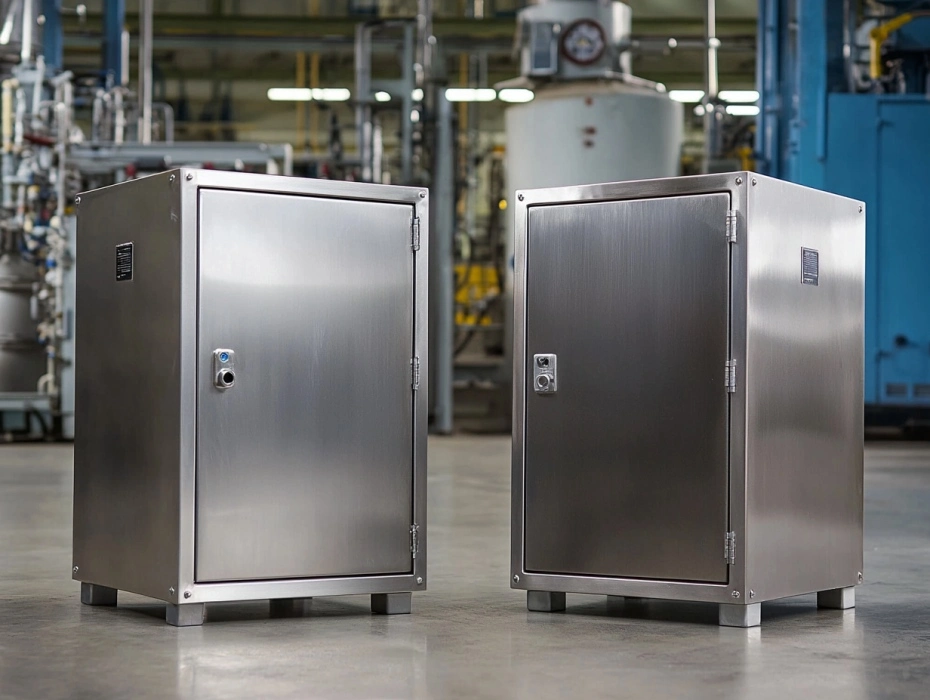
Not all stainless steel enclosures offer the same corrosion resistance. The two common choices are 304 and 316 stainless steel.
304 stainless steel is suitable for many indoor, outdoor, and general industrial environments. It works well when moisture and corrosion risk are moderate.
316 stainless steel is better for coastal air, salt spray, chlorine cleaners, marine sites, chemical washdown, and chloride-heavy environments.
If your enclosure will face salt, chlorine, strong cleaners, or coastal humidity, do not choose 304 only to save cost. A 304 vs 316 stainless steel enclosure comparison can help you avoid costly material mistakes.
Key Factors Before Choosing an Enclosure Material
Start with the environment. Check moisture, rain, salt air, chemicals, UV exposure, cleaning agents, dust, and temperature changes.
For corrosive outdoor locations, a fiberglass enclosure or ตู้ NEMA 4X may be a better fit. For food, pharma, or high-pressure washdown areas, stainless steel is often stronger.
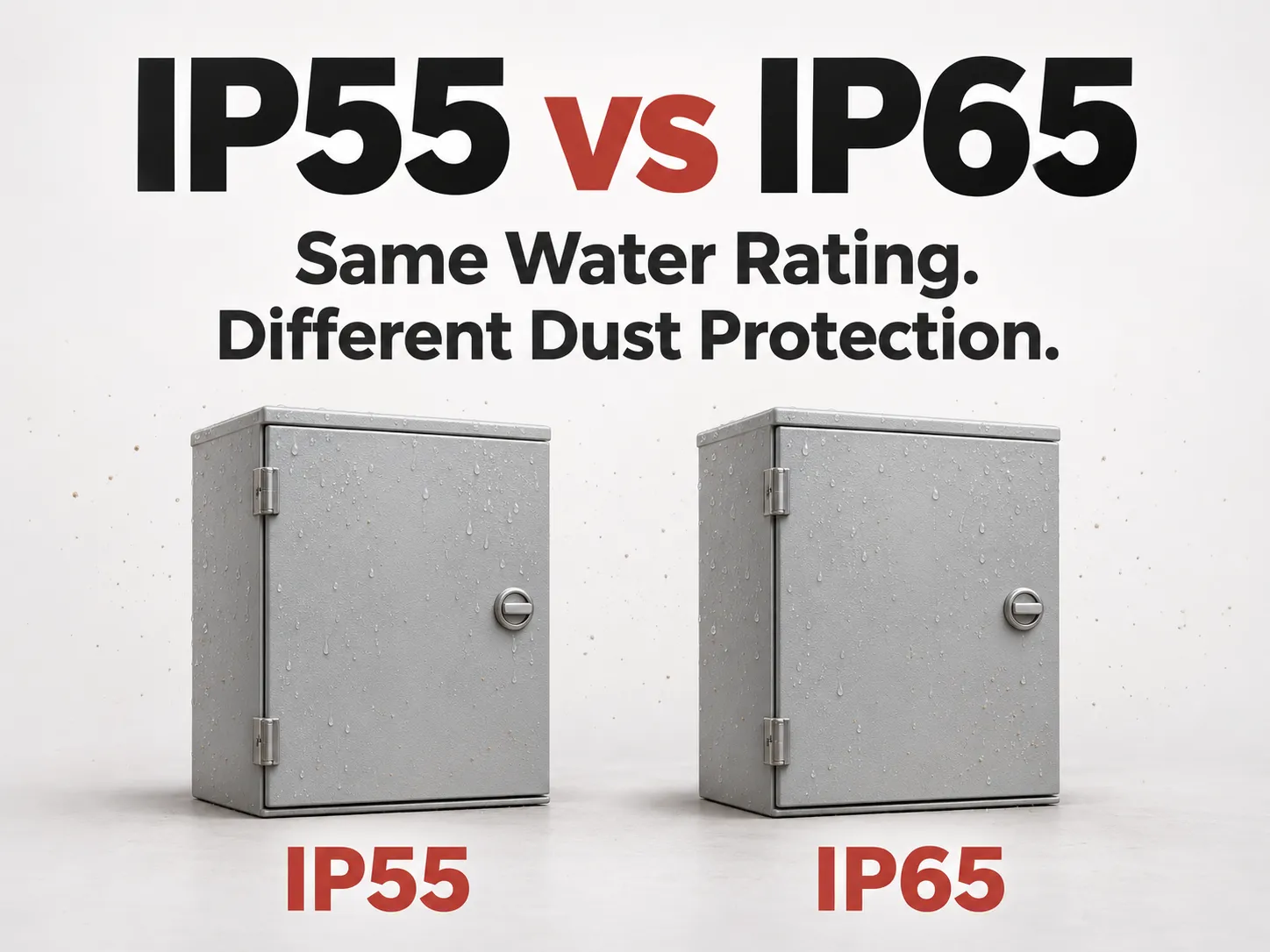
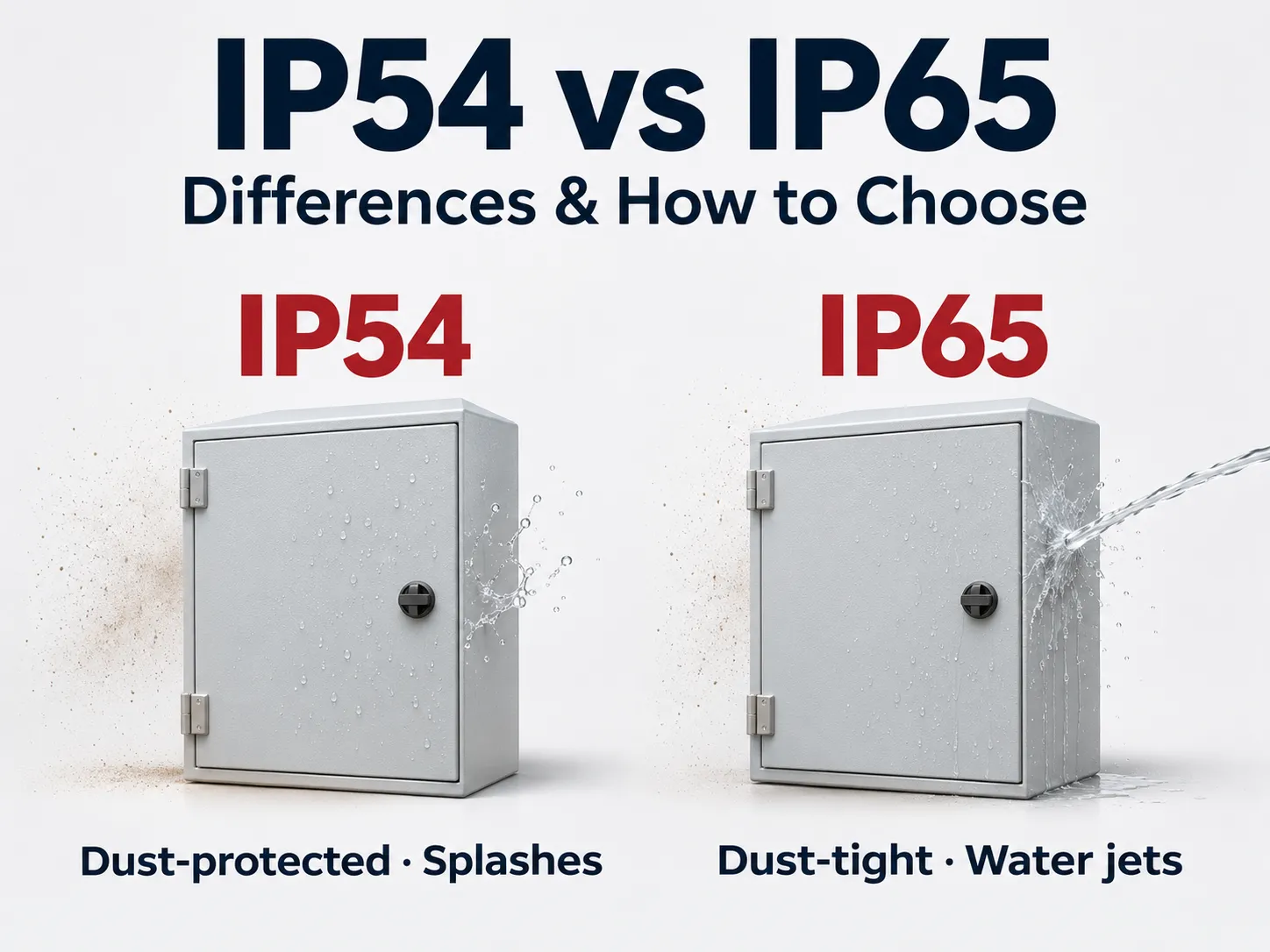
การ ระบบการจัดอันดับ IP ของ IEC also helps you judge dust and liquid ingress protection, especially for projects sold into IEC-based markets.
Next, review impact and security risk. If the box is near forklifts, tools, public access, or heavy machinery, stainless steel usually provides better protection.
Washdown needs should also guide your choice. A stainless steel washdown enclosure is often preferred in hygiene-sensitive sites, but fiberglass can work if the rating, gasket, latch, and hardware are suitable.
Do not ignore heat. A non-metallic electrical enclosure may hold internal heat longer. Stainless steel transfers heat more easily, but the final design still depends on ambient temperature and component heat load.
If your project also needs custom sizes, cutouts, mounting plates, surface finishes, or special ratings, compare material options with the full design needs of your industrial electrical enclosures, not only the enclosure body material.
Finally, compare total cost instead of purchase price only. Include shipping, installation, cutouts, mounting support, maintenance, downtime risk, and expected service life.

Which Enclosure Material Fits Your Application?
| Application Need | ทางเลือกที่ดีกว่า |
|---|---|
| Best enclosure material for corrosive environments | ไฟเบอร์กลาส |
| Salt air or coastal corrosion | Fiberglass or 316 stainless steel |
| Food processing washdown | สเตนเลส |
| Pharmaceutical or clean production | สเตนเลส |
| Wireless equipment or antennas inside | ไฟเบอร์กลาส |
| Heavy impact or vandalism risk | สเตนเลส |
| Lightweight pole-mounted control box | ไฟเบอร์กลาส |
| Public outdoor installation | สเตนเลส |
| Lower installed cost | ไฟเบอร์กลาส |
| Heavy-duty long-term durability | สเตนเลส |
In simple terms, fiberglass is usually better when corrosion, chemicals, low weight, insulation, or signal transmission matter most.
Stainless steel is usually better when the site needs impact resistance, hygiene, security, frequent washdown, or heavy-duty protection.

ข้อผิดพลาดทั่วไปที่ควรหลีกเลี่ยง
One common mistake is choosing by material name only. A fiberglass or stainless steel enclosure can still fail if the NEMA Type, IP rating, gasket, latch, hardware, or installation method is wrong.
For listed industrial projects, also review UL 50E environmental requirements. They help define environmental performance expectations for electrical equipment enclosures.
Another mistake is using 304 stainless steel in chloride-heavy locations. Coastal, marine, and chemical washdown sites often need 316 stainless steel for better corrosion resistance.
Some projects also assume fiberglass is always better outdoors. It is excellent for corrosion resistance, but outdoor use still requires UV-resistant material and proper sealing.
Heat buildup is often missed. If the box contains heat-producing equipment, review cooling, ventilation, spacing, and accessory needs before final selection.
Price can also mislead the decision. The right corrosion-resistant enclosure should reduce downtime, protect equipment, and fit the full lifecycle cost of the project.
Final Buying Checklist
Before ordering a fiberglass or stainless steel enclosure, confirm these points:
- การติดตั้งในอาคารหรือกลางแจ้ง
- Corrosion, salt air, chemical, or washdown exposure
- Required NEMA Type, IP rating, or UL 50/UL 50E listing
- Impact, vandalism, or public access risk
- Internal heat from drives, PLCs, power supplies, or batteries
- Mounting weight limit and support structure
- Wireless signal or antenna requirements
- 304 or 316 stainless steel requirement
- Cutouts, cable glands, windows, vents, or accessories
- Expected service life and maintenance plan

FAQs About Fiberglass vs Stainless Steel Enclosures
บทสรุป

Fiberglass is a strong choice for corrosion, chemicals, light weight, non-metallic protection, and wireless applications. Stainless steel is better for impact, washdown, hygiene, security, and demanding industrial sites.
หากคุณไม่แน่ใจว่าตู้แบบใดเหมาะสมกับโครงการของคุณ, ติดต่อเรา with your environment, size, rating, and installation needs. We can help you compare fiberglass, 304 stainless steel, and 316 stainless steel enclosure options.




 TH
 EN
 ES
 FR
 AR
 JA
 KO
 RU
 DE
 PT
 IT
 ZH
 VI
 HI
 MS
