

1. Start With the Application and Design

A good electrical enclosure starts with the application, not the metal sheet. Before production, the factory should understand where the cabinet will be installed and what it needs to protect.
An indoor control cabinet is different from an outdoor power distribution box. A wall-mounted enclosure also has different design needs from a floor-standing electrical cabinet.
The manufacturer should confirm the installation environment, cabinet size, mounting style, cable entry position, door direction, cooling needs, internal layout, locks, hinges, and required accessories.
This step should also include DFM, or design for manufacturing. A smart design can reduce welding, simplify assembly, lower cost, shorten lead time, and improve batch consistency.
For your project, poor design can lead to water leakage, heat buildup, wiring difficulty, weak structure, or installation delays. A reliable factory should review your drawings and suggest practical improvements before production.
2. Choose the Right Material and Thickness
Electrical enclosure material selection has a direct effect on strength, corrosion resistance, weight, cost, appearance, and service life. This is one of the most important decisions in custom electrical enclosure manufacturing.
Mild steel is often used for cost-effective indoor industrial cabinets. It is strong and easy to process, but it needs proper surface treatment and coating to resist rust.
Stainless steel is better for outdoor, coastal, food processing, chemical, and corrosive environments. It costs more, but it offers stronger long-term corrosion resistance.
Aluminum is lightweight and naturally corrosion resistant. It is useful when weight matters or when the enclosure needs good weather resistance.
Galvanized steel can improve rust resistance compared with untreated mild steel. It may be suitable for some industrial and outdoor applications.
Sheet thickness also matters. A large cabinet, heavy mounting plate, or harsh worksite usually needs stronger material. If the sheet is too thin, the enclosure may bend, vibrate, or deform during installation.
Do not choose material based only on price. For harsh environments, coating alone may not be enough. The base material, gasket, hinge, lock, and finish should all match the real application.

3. Cut and Punch the Sheet Metal Parts
After design and material selection, the factory cuts the sheet metal into different enclosure parts. These may include the cabinet body, door, side panels, mounting plate, covers, brackets, and accessory parts.
Common methods include laser cutting, CNC punching, shearing, drilling, and tapping. Laser cutting is often used for precise shapes and clean edges. CNC punching works well for repeated holes, slots, and ventilation openings.
This stage also creates cable entry holes, hinge holes, lock openings, mounting holes, and cutouts for accessories. These details must match the approved drawing.
Cutting accuracy affects the whole enclosure. If the parts are not accurate, the cabinet may have uneven gaps, rough edges, poor door fit, weak sealing, or slow assembly.
When checking a sample, look at the cutouts, hole positions, edges, and panel consistency. Small mistakes at this stage often become bigger problems during bending, welding, and assembly.
4. Bend and Form the Enclosure Body
The cut metal parts are then bent into shape. Most factories use CNC press brake machines to form the cabinet body, door frame, reinforced edges, brackets, and mounting structures.
Good bending needs accurate angles, correct bend sequence, flat panels, and consistent corners. These details affect both appearance and performance.
Bending accuracy is especially important for IP-rated enclosures. Door gaps and frame flatness affect gasket compression, which affects dust and water protection.
A strong enclosure design should use bending to improve rigidity and reduce unnecessary welding. This can make the cabinet cleaner, stronger, and easier to produce in bulk.
Poor bending may cause misaligned doors, uneven gasket pressure, weak corners, and visible deformation. These problems are not only cosmetic. They can affect sealing, installation, and long-term reliability.

5. Weld, Grind, and Add Fixing Points
Welding joins the enclosure parts and strengthens the cabinet structure. The welding method depends on the material, thickness, design, and protection requirement.
Common methods include spot welding, MIG welding, TIG welding, and seam welding when needed. After welding, the surface may be ground and smoothed for a cleaner finish.
This stage may also include welded studs, grounding studs, press-fit nuts, hinge reinforcement, lock reinforcement, and mounting plate fixing points.
Welding quality affects cabinet strength, water resistance, appearance, and coating results. Weak welds may cause cracks, distortion, uneven seams, burn marks, or poor corner strength.
Grounding details should not be ignored. Grounding points may need masking or post-treatment because full paint coverage can reduce electrical contact.
A good sample should have clean welds, stable corners, smooth edges, and solid fixing points. These details help show whether the factory can control both appearance and structure.
6. Prepare the Surface Before Finishing
Surface preparation is a hidden but important step. Many problems in electrical cabinets start before powder coating, even if the final product looks fine at first.
Before finishing, the factory may clean, degrease, remove rust, and apply material-specific pretreatment. Steel parts may use phosphating when suitable. Stainless steel may need passivation for some applications.
The purpose is to remove oil, dust, rust, and surface contamination. This helps the coating bond better and improves corrosion resistance.
Some areas may need masking, such as threaded holes, grounding points, or contact surfaces. This protects important functions after coating.
Poor pretreatment can cause peeling paint, bubbles, rust under the coating, weak adhesion, and short outdoor lifespan. This is one reason a low-cost enclosure may fail faster in real use.
Because this step is hard to see after production, ask how the factory controls powder coating pretreatment, coating adhesion, and corrosion protection.

7. Apply Powder Coating or Other Finishes
Powder coating is one of the most common finishes in sheet metal enclosure fabrication. Dry powder is sprayed onto the metal surface using electrostatic force, then cured in an oven to form a hard protective layer.
Powder coating improves appearance, scratch resistance, and corrosion protection. It also allows different colors and textures for custom electrical enclosures.
Other finishes may be used depending on the material and environment. Stainless steel may use brushed finishing. Aluminum may use anodizing. Some steel parts may use galvanizing or special anti-corrosion finishes.
The main quality points are coating thickness, adhesion, surface smoothness, color consistency, scratch resistance, and corrosion resistance.
A powder-coated steel enclosure may work well indoors. However, corrosive outdoor sites may need stainless steel, suitable hardware, stronger sealing, and a finish designed for the environment.
This matters for coastal areas, chemical plants, wastewater projects, food factories, telecom sites, and outdoor power systems.
8. Assemble Doors, Gaskets, and Accessories
After finishing, the enclosure enters the assembly stage. This is where the cabinet becomes a complete protective housing, not just a formed metal structure.
The factory installs hinges, locks, handles, door gaskets, mounting plates, DIN rails, grounding parts, bonding parts, ventilation parts, and cable entry accessories when required.
Assembly quality has a strong effect on sealing and safety. The door must close smoothly. The hinge must align correctly. The lock must create enough pressure to compress the gasket.
Gasket compression is one of the most important details for dust and water protection. If the pressure is weak or uneven, the enclosure may fail in wet or dusty environments. This is why it helps to understand como selar um gabinete elétrico before finalizing the design.
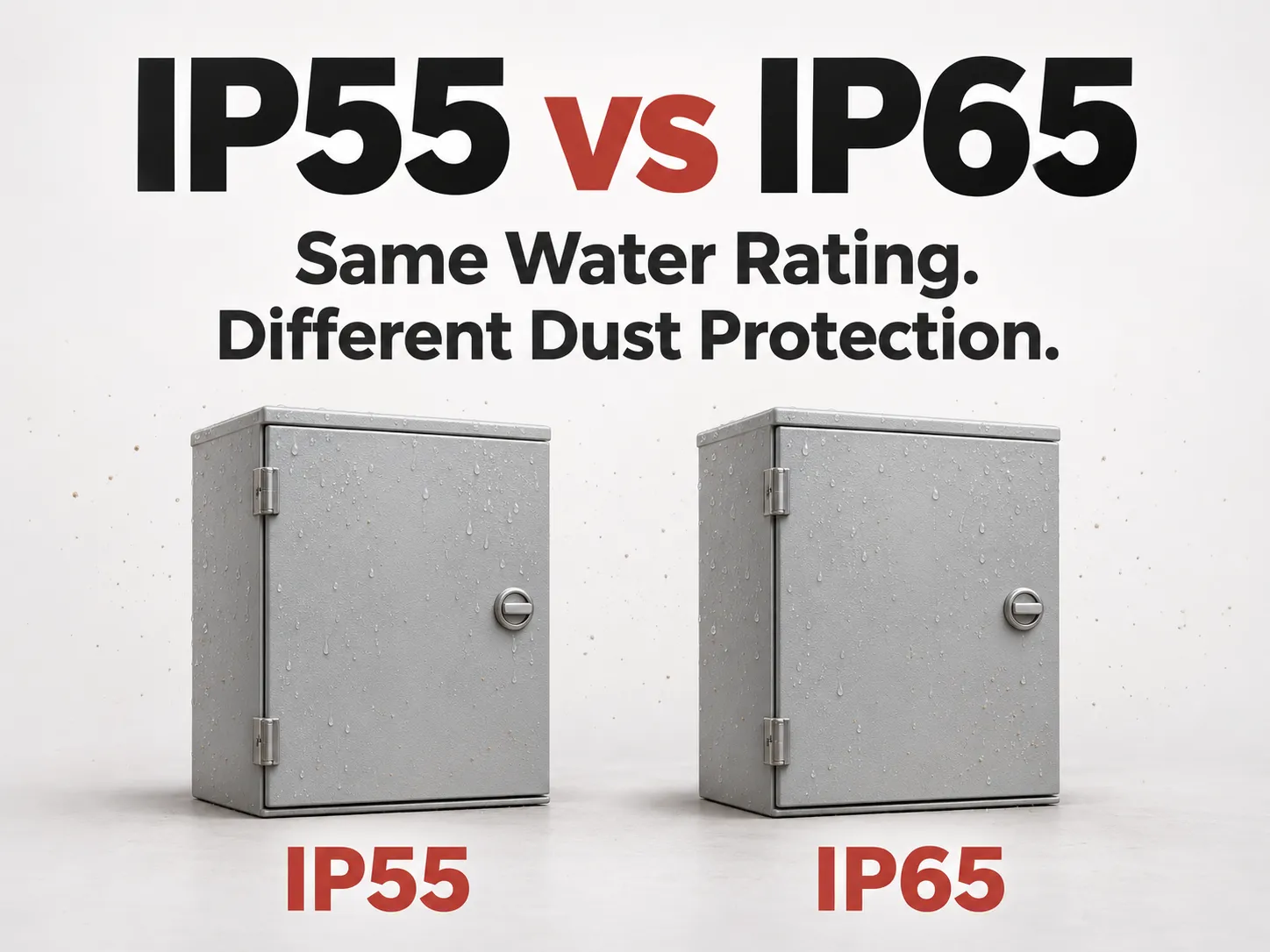
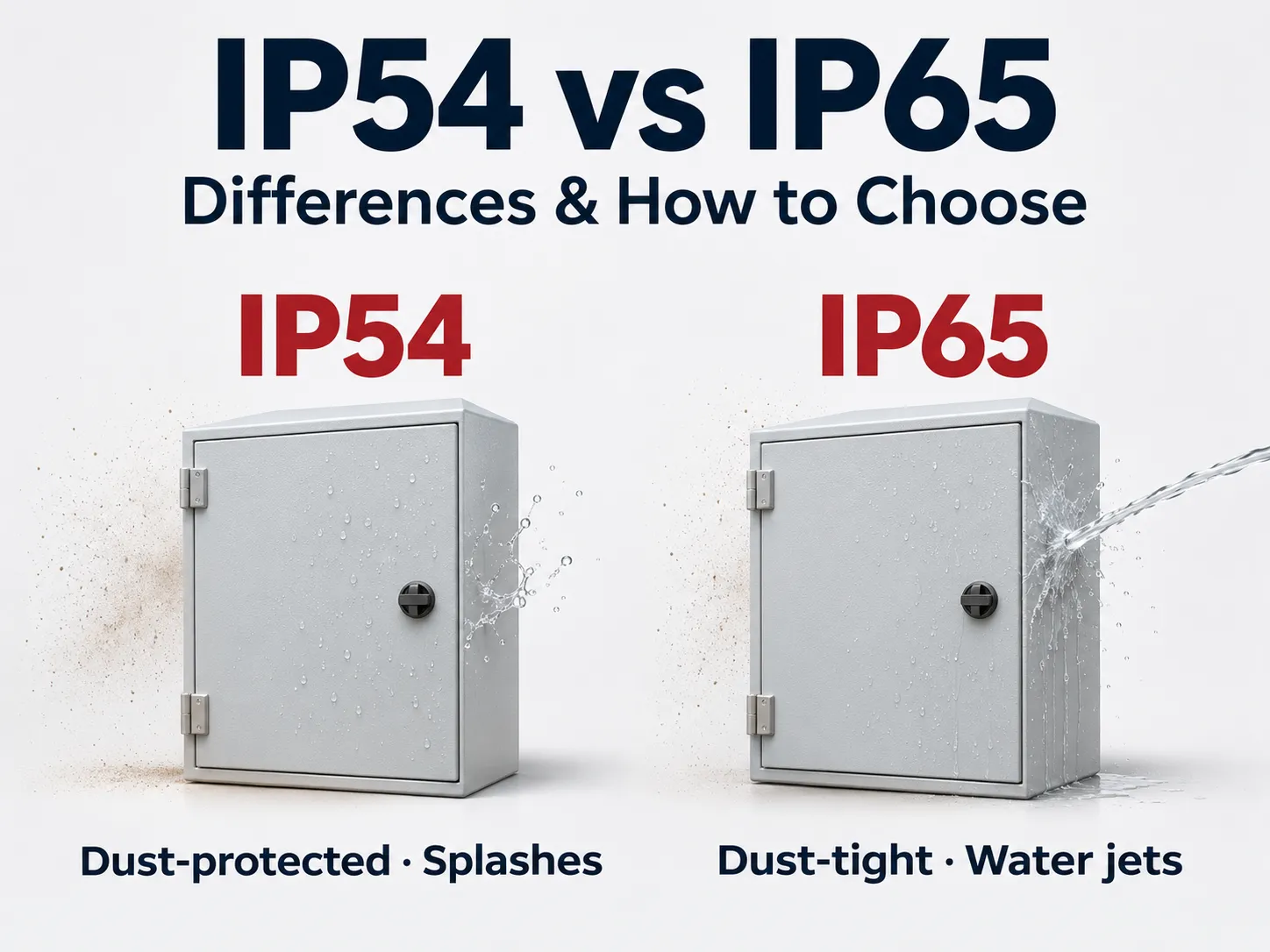
Classificações IP mainly focus on dust and water protection. Tipos de gabinete NEMA may also involve outdoor use, corrosion, oil, coolant, ice, or other environmental factors.
That is why IP and NEMA should not be treated as the same system. A professional enclosure manufacturer should understand normas de invólucro elétrico and the requirement behind the rating, not just the label.

9. Inspect, Test, and Pack the Enclosure
Final inspection confirms whether the electrical enclosure matches the drawing, order details, and project requirements. It also helps reduce problems before shipment.
A practical inspection should check dimensions, door gaps, welding quality, coating quality, gasket installation, hardware strength, grounding points, assembly details, and packaging.
For IP-rated or NEMA-type applications, factory checks are useful. But internal testing is not the same as formal third-party certification, such as UL 50E enclosure requirements.
For bulk orders, sample approval is only the first step. The factory also needs to control material thickness, bending tolerance, coating quality, gasket installation, and packaging consistency during mass production.
Packaging is often overlooked, but it can affect the final result. Weak packaging may cause bent doors, dented corners, scratched coating, loose accessories, or damaged mounting plates.
Good packaging should protect the door, corners, coating, gasket, mounting plate, and accessories during transport.
10. How to Choose a Reliable Enclosure Factory
The manufacturing process gives you a better way to compare suppliers. A reliable enclosure factory should control design, material, sheet metal fabrication, coating, assembly, testing, and packaging.
For custom projects, it also helps to review whether the factory can support gabinetes elétricos personalizados with different sizes, materials, cutouts, colors, ratings, and accessories.
Before placing an order, check these points:
- Can the factory support custom drawings and project-based designs?
- Does it understand indoor, outdoor, IP-rated, or NEMA-type requirements?
- Does it have laser cutting, CNC bending, welding, coating, and assembly capability?
- Can it control material thickness, coating quality, and gasket installation?
- Does it check door gaps, grounding points, locks, hinges, and mounting plates?
- Can it provide sample approval before mass production?
- Can it keep quality consistent from sample to bulk order?
- Can it support custom sizes, cutouts, colors, accessories, and packaging?
The best enclosure manufacturer should not only make the cabinet look good. It should also control hidden details such as sealing pressure, grounding contact, corrosion resistance, and structural strength.
This is especially important for industrial control, automation, power distribution, energy storage, telecom, infrastructure, and outdoor equipment projects.

FAQs About How Electrical Enclosures Are Made
Conclusão

Electrical enclosures are made through design, material selection, sheet metal cutting, CNC bending, welding, surface preparation, finishing, assembly, inspection, and packaging. Each step affects safety, protection level, corrosion resistance, installation quality, and service life.
If you need custom electrical enclosures for industrial control, automation, power distribution, outdoor equipment, or project-based applications, Contate-nos to discuss your drawings, material options, IP rating, accessories, and production requirements.
Leituras relacionadas
Invólucros elétricos à medida explicados: projeto, normas e custo
Acessórios para invólucros elétricos: tipos, normas e guia de seleção
Soldagem de gabinetes elétricos: guia completo para fabricantes
Controle de Qualidade na Fabricação de Metais: Garantindo Precisão, Segurança e Confiabilidade
Prevenir a ferrugem em gabinetes elétricos: estratégias principais
Dimensões dos invólucros elétricos: guia completo para escolher o tamanho certo





 PT
 EN
 ES
 FR
 AR
 JA
 KO
 RU
 DE
 IT
 ZH
 TH
 VI
 HI
 MS
