

What Is the Difference Between Open and Enclosed Control Panels?

An open industrial control panel is a control assembly mounted on a backplate or subpanel without a complete protective enclosure. It may include breakers, contactors, relays, PLCs, terminals, power supplies, and wire ducts.
An enclosed industrial control panel is a complete control assembly installed inside a protective enclosure. The enclosure may include a door, lock, gasket, cable entry, ventilation, labels, push buttons, indicators, or an HMI.
For a deeper selection reference, see this guia de gabinetes de painéis de controle industriais.
The main difference is protection. An open panel depends more on the final installation environment. By comparison, an enclosed panel already includes a housing designed to reduce exposure to dust, moisture, impact, and accidental contact.
This does not mean open panels are unsafe. They can work well inside a proper cabinet or controlled electrical room. However, they need more attention during final installation.
One point is often missed: a certified enclosure does not automatically mean the full control panel assembly is certified. Therefore, you should check the complete panel documentation, not only the enclosure label.
Esse UL guide to industrial control panels explains the difference between open panels, enclosed panels, and panel enclosures.
Open vs Enclosed Control Panels: Quick Comparison
| Fator | Open Control Panel | Enclosed Control Panel |
|---|---|---|
| Best location | Clean, dry, guarded area | Harsh, exposed, or high-traffic area |
| Proteção | Depends on final installation | Based on enclosure rating and design |
| Safety exposure | Higher if not guarded | Lower with proper enclosure and grounding |
| Acesso para manutenção | Easier and faster | Safer but more controlled |
| Initial cost | Geralmente mais baixo | Geralmente mais elevado |
| Long-term risk | Higher in dirty or wet sites | Lower in harsh environments |
| Compliance review | More installation-dependent | Easier if properly marked and certified |
| Utilização mais indicada | OEM machines, clean rooms, test areas | Factories, outdoor systems, washdown areas |
When an Open Control Panel Makes Sense
An open control panel can be a good choice when the site is clean, dry, and access-controlled. It often works inside protected cabinets, OEM machines, electrical rooms, test benches, and controlled production cells.
Open panels are easier to wire, inspect, and modify. As a result, they suit projects that need frequent testing, machine upgrades, or layout changes.
They can also reduce initial cost when the final installation already provides enough protection. For example, if the panel will sit inside a larger machine cabinet, a full separate enclosure may not be needed.
An open industrial control panel may fit your project if trained technicians are the only people with access. It can also work well when the surrounding cabinet already handles dust, contact, and physical protection.
However, open panels should not go where dust, water, oil mist, impact, or untrained access is likely. In those cases, the lower upfront cost may create bigger risks later.

When an Enclosed Control Panel Is the Better Choice
An enclosed control panel is usually the better option when the panel faces real industrial conditions. These may include dust, moisture, oil, chemicals, vibration, outdoor weather, or nearby operators.
The enclosure protects sensitive parts such as PLCs, VFDs, relays, terminals, transformers, and power supplies. It also helps reduce contamination, accidental contact, and physical damage.
Enclosed panels are usually safer in high-traffic areas because the enclosure creates a physical barrier. Even so, safety still depends on correct grounding, locking, labeling, SCCR, and installation.
For related background, this article explains the difference between a control panel vs enclosure.
This option often makes more sense for factory floors, pump stations, utilities, food plants, warehouses, chemical sites, coastal sites, and outdoor industrial control panel applications.
If your project needs a protected cabinet for dusty, wet, outdoor, or high-traffic environments, you can review Eabel’s industrial electrical enclosures as a practical reference for materials, ratings, mounting styles, and customization options.
When safety, uptime, and long-term reliability matter more than the lowest initial price, an enclosed industrial control panel is usually the stronger business choice.
The Hidden Cost Buyers Often Miss
Many teams compare only the purchase price. However, that can lead to the wrong decision.
An open panel may look cheaper at first. But if the site needs extra guarding, a separate enclosure, field changes, or inspection corrections, the final cost can increase quickly.
The real cost may include extra enclosure work, installation changes, inspection delays, dust damage, water damage, emergency repairs, replacement components, production downtime, and safety risk.
For a clean electrical room, an open panel can be cost-effective. For a harsh industrial site, an enclosed panel may reduce total cost by preventing failures and unplanned shutdowns.
So the better question is not “Which panel is cheaper?” It is “Which panel costs less after installation, maintenance, and downtime risk?”

Match the Panel Type to Your Site Environment
The installation environment should guide the choice. A control panel that works well in a clean room may fail quickly on a wet, dusty, or outdoor site.
| Condições do local | Melhor escolha | Motivo |
|---|---|---|
| Clean locked electrical room | Open panel | Easy access and lower cost |
| OEM machine cabinet | Open panel | Flexible and compact |
| Test bench or lab area | Open panel | Fast changes and troubleshooting |
| Dusty production floor | Enclosed panel | Protects internal components |
| Outdoor pump station | Enclosed panel | Better weather protection |
| Área de lavagem de alimentos | Enclosed panel | Resists moisture and cleaning exposure |
| Coastal or chemical site | Enclosed panel | Corrosion protection matters |
| High-traffic operator area | Enclosed panel | Better contact protection |
Different industries face different risks. A food plant may care more about washdown and stainless steel. Meanwhile, a pump station may care more about rain, sun, and condensation.
A warehouse may focus more on dust and impact. Therefore, the right panel type should match the risk that can stop your operation fastest.
NEMA/IP Rating and Material Selection
For enclosed control panels, the enclosure rating is one of the most important decisions. NEMA and IP ratings help match the enclosure to dust, water, corrosion, and contact exposure.
You can also review this guide to normas de invólucro elétrico for more rating details.
NEMA 1 often fits basic indoor protection. NEMA 12 supports indoor dust, lint, fibers, dripping water, and light splashing. NEMA 4 supports water spray and outdoor exposure.
NEMA 4X adds corrosion resistance, which is useful for wet, coastal, chemical, or washdown areas. The official Tipos de gabinete NEMA document gives more detail on common enclosure categories.
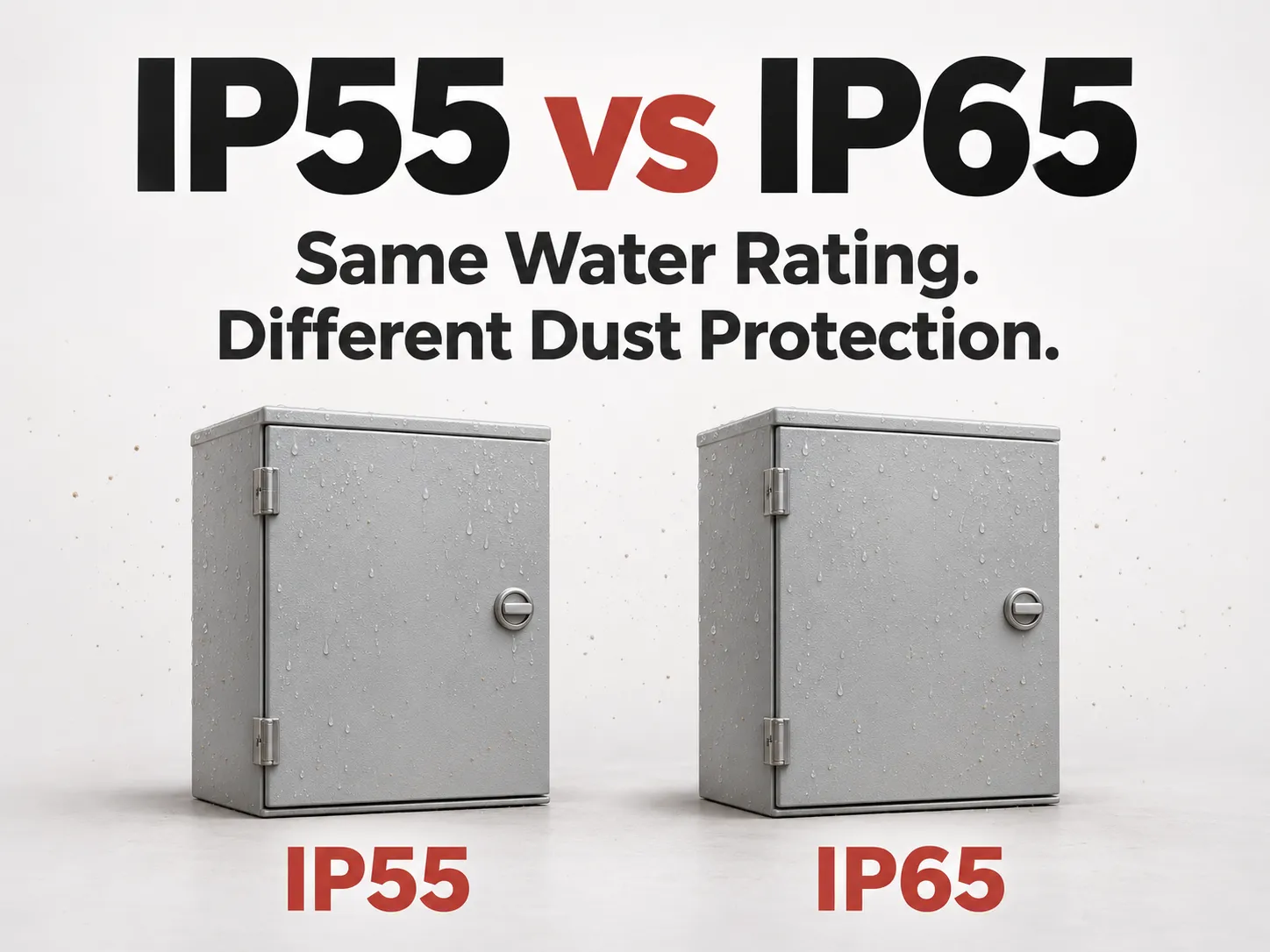
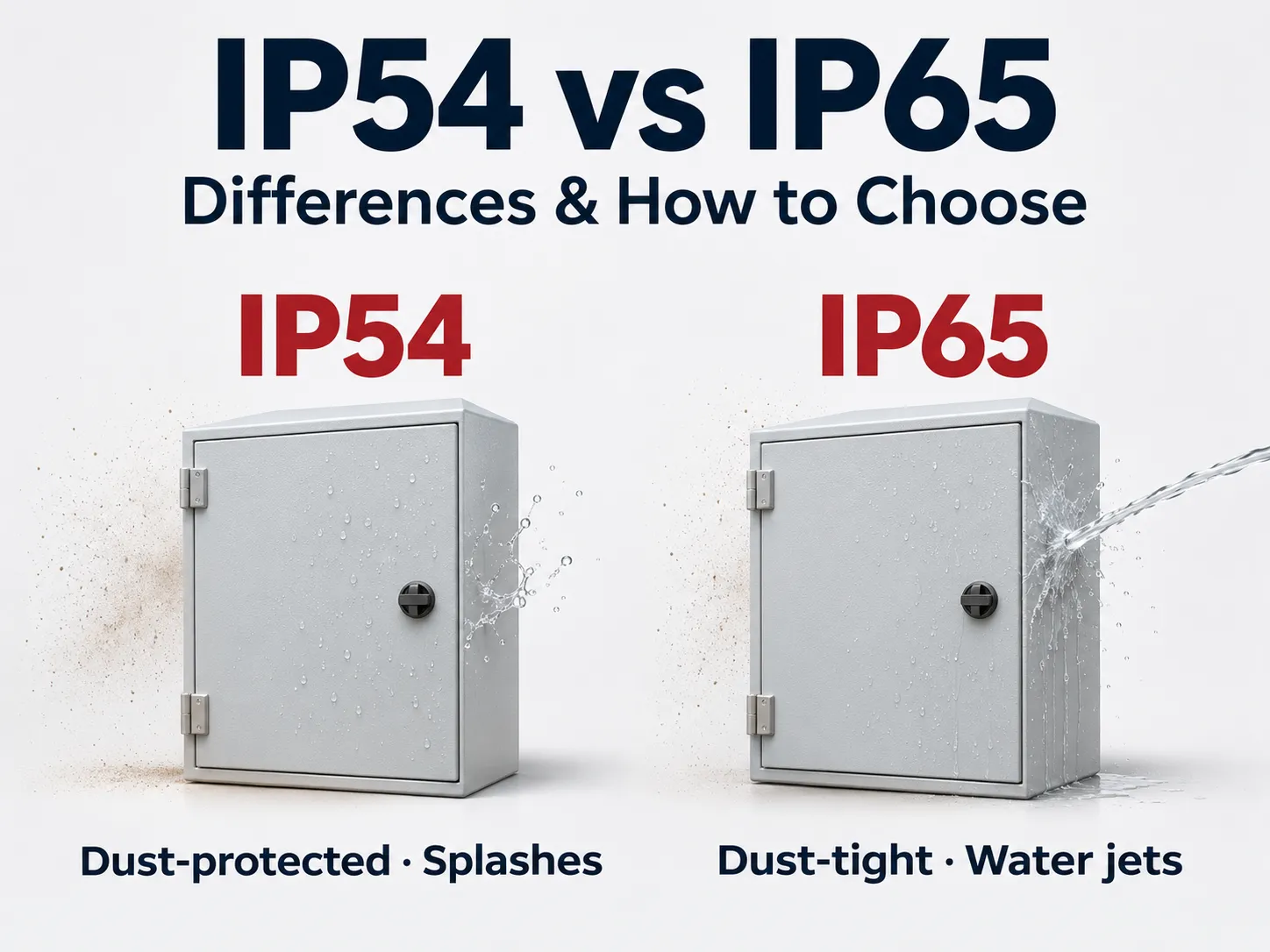
IP65 and IP66 help protect against dust and water ingress under defined test conditions. In addition, the Guia IEC para classificações IP explains how IP codes describe protection against solids and liquids.
Material selection also matters. Mild steel is common for general indoor industrial sites. Stainless steel is better for food, chemical, washdown, coastal, or corrosive environments.
Aluminum can help when lightweight corrosion resistance is needed. Fiberglass or polycarbonate may suit non-metallic corrosion-resistant applications.
A higher rating is not always better. If a NEMA rated control panel enclosure is too sealed, heat may build up and shorten component life. Therefore, the best rating is the one that matches the real site.

Compliance, SCCR, and Documentation
Compliance is not only about using quality components. You should confirm whether the complete panel is designed, marked, documented, and tested for your project.
For North American projects, UL 508A Industrial Control Panel Program requirements and NEC Article 409 are common references. Local code and AHJ requirements may also affect final approval.
SCCR means short-circuit current rating. It shows whether the panel can handle the available fault current at the installation site. Ignoring SCCR can create safety and approval problems.
Certified components do not always make the full panel certified. Also, a rated industrial control panel enclosure does not automatically certify the complete panel assembly.
Electrical safety also depends on proper installation and use. OSHA’s electrical safety requirements are useful for understanding general workplace electrical safety expectations.
Before shipment, your team should ask for nameplate data, wiring diagrams, component lists, labels, test records, certification details, and installation instructions.
This documentation can reduce delays during installation, inspection, and commissioning.
Heat, Ventilation, and Component Life
Enclosed panels protect components, but they can also trap heat. This is one of the most common risks in control panel thermal design.
Heat-sensitive components include PLCs, VFDs, transformers, power supplies, relays, and communication modules. If the enclosure is too small or poorly ventilated, these parts may fail earlier.
You should review enclosure size, internal spacing, heat load, airflow, filters, fans, heat exchangers, cooling units, ambient temperature, and sun exposure.
Esse active vs passive enclosure cooling guide can help compare cooling methods.
Outdoor panels need extra care. Direct sunlight, high ambient temperature, and sealed construction can raise internal temperature quickly.
A well-sealed enclosure is not always a reliable enclosure if heat control is ignored. Therefore, protection and ventilation must be balanced.

Open vs Enclosed Control Panels for Maintenance and Expansion
Maintenance access is another key difference in open vs enclosed control panels.
Open panels are easier to inspect and modify in clean, protected areas. Technicians can access wiring and components quickly.
Enclosed panels require more planning. However, they can still be easy to service if the layout is designed well. Clear labels, organized wiring, and logical component placement reduce maintenance time.
Your team should also plan for future expansion. Many systems later need added PLC modules, relays, terminals, VFDs, sensors, communication devices, or monitoring equipment.
A crowded panel can increase heat, wiring errors, and troubleshooting time. Good layout improves safety and reduces downtime during maintenance.
New Build or Retrofit: Which Panel Works Better?
The right choice may also depend on whether the project is new or a retrofit.
For new outdoor, dusty, wet, or harsh-environment projects, enclosed panels are usually the safer choice. The enclosure, rating, cable entry, cooling, and layout can be designed from the beginning.
For existing protected machines, open panels may be practical if the final cabinet is already suitable. This can save space and reduce cost.
For a control panel retrofit, check the current space, cable entry, enclosure condition, cooling capacity, access, and documentation. Older cabinets may not fit modern PLCs, VFDs, or communication modules.
In some cases, upgrading an old open panel into an enclosed solution can reduce future downtime and safety risk. This is especially true if the site has become dirtier, hotter, wetter, or more crowded.

Open vs Enclosed Control Panels: Common Buying Mistakes
A control panel is a long-term investment. Avoiding simple mistakes can save money, time, and safety risk.
Common mistakes include choosing open panels only because they are cheaper, assuming a rated enclosure means the full panel is certified, ignoring heat buildup, using the wrong NEMA or IP rating, and forgetting SCCR documentation.
Other risks include leaving no room for future expansion, choosing the wrong material for corrosive sites, or installing open panels where untrained people can access them.
The best panel design starts with the site condition, not only the component list.
Lista de verificação do comprador antes de fazer o pedido
- Where will the panel be installed?
- Is the site clean, dusty, wet, hot, corrosive, indoor, or outdoor?
- Who can access the panel?
- Qual a classificação NEMA ou IP necessária?
- What enclosure material is best for the environment?
- Does the project require UL 508A or other certification support?
- What voltage, current, and SCCR are required?
- Are drawings, labels, and test records included?
- How will heat be managed?
- Is there enough space for future upgrades?
- What downtime cost would panel failure create?
These questions help you compare suppliers more clearly. They also reduce the risk of ordering a panel that looks correct on paper but fails in the field.

FAQs about Open vs Enclosed Industrial Control Panels
Conclusão

Open industrial control panels are a practical choice for clean, dry, and protected spaces where access, flexibility, and initial cost matter. Enclosed industrial control panels are usually the better long-term choice for harsh, wet, dusty, outdoor, or high-traffic sites where safety, uptime, and component protection are more important.
If you are not sure which control panel type fits your project, Contate-nos with your installation environment, rating needs, electrical requirements, and application details. Our team can help you choose or customize the right industrial control panel for safer and more reliable operation.
Leituras relacionadas
Projeto de quadros de PLC: segurança, disposição e boas práticas
Invólucros elétricos à medida explicados: projeto, normas e custo
Os invólucros elétricos precisam de ventilação?
NEMA 12 vs NEMA 4: Qual gabinete escolher?
Invólucros elétricos para lavagem com jatos de água: seleção e boas práticas
Segurança dos invólucros elétricos: riscos, normas e boas práticas




 PT
 EN
 ES
 FR
 AR
 JA
 KO
 RU
 DE
 IT
 ZH
 TH
 VI
 HI
 MS
