

Why Cold Storage Creates Special Cabinet Risks
Cold storage changes the environment around electrical equipment. The challenge is not simply keeping a cabinet operational at a low temperature. Temperature changes, moisture exposure, component limits, and internal heat can occur together.
Temperature Cycling and Condensation
A freezer may remain at a stable low temperature for long periods, but conditions around electrical equipment still change. Doors open, defrost cycles run, equipment is serviced, and warmer humid air can enter from loading docks or adjoining spaces.
If a surface falls below the dew point of the surrounding air, moisture can condense. Repeated condensation can contribute to corrosion, insulation deterioration, tracking, unreliable terminals, and electrical faults.
This risk is especially important near doorways, loading areas, temperature-transition zones, and equipment exposed to changing ambient conditions.
For many cold-storage cabinets, managing condensation is at least as important as surviving the minimum ambient temperature.

Low Temperature and Component Limits
A metal enclosure may tolerate temperatures below the rated operating range of the equipment inside it. PLCs, HMIs, VFDs, power supplies, batteries, communication devices, seals, and cable accessories can all have different temperature limits.
Cabinet suitability should therefore be checked at the component level, including operating, startup, and storage limits where the manufacturer specifies them. The enclosure temperature rating alone does not establish that the completed cabinet will function reliably.
Moisture, Cleaning, and Corrosion
Cold storage should not automatically be treated as a washdown application.
A dry distribution freezer may see little direct water exposure. A food-processing cold room may be cleaned frequently with water and chemicals. Outdoor refrigeration areas face weather, while coastal or chemically aggressive sites may have greater corrosion risk.
The cabinet specification should follow the actual exposure rather than assume every refrigerated area requires the same construction.
Heat Inside a Cold Cabinet
Cold ambient air does not remove the need for thermal management.
VFDs, transformers, power supplies, contactors, and other power components release heat inside the enclosure. A tightly sealed cabinet can develop local hot spots even when the surrounding space is cold.
The design therefore has to protect some components from excessive cold while keeping heat-producing equipment within its allowable temperature range.
How to Choose Electrical Cabinets by Installation Zone
The most useful first question is not “Which cabinet should a cold warehouse use?” It is where the cabinet will actually be installed.
Different zones create different combinations of moisture, temperature, corrosion, weather, sanitation, and physical exposure.
| Kawasan Pemasangan | Pendedahan Utama | Typical Protection Direction | Material and Design Consideration |
|---|---|---|---|
| Dry electrical or service room | Dust, accidental contact, internal heat | Indoor industrial enclosure selected to project requirements; NEMA 12 is one common North American direction | Painted carbon steel may be practical where corrosion and water exposure are low |
| Refrigerated or freezer room | Low temperature, moisture, condensation | Sealed enclosure selected for actual moisture and ingress exposure | Coated steel or stainless steel depending on hygiene and corrosion requirements |
| Loading or transition zone | Temperature swings, condensation, traffic | Protection based on actual moisture exposure | Sealing and impact protection may matter as much as material |
| Washdown or sanitation area | Water jets, cleaning chemicals | NEMA 4/4X or appropriately specified IP protection may be considered | Stainless steel is often evaluated for wet or hygienic areas |
| Corrosive environment | Salt, chloride, chemicals, persistent moisture | Corrosion-resistant enclosure system | Stainless grade and finish should match the actual chemical exposure |
| Outdoor equipment area | Rain, dust, sunlight, temperature changes | Outdoor-rated NEMA or IP solution based on destination market | Weather, UV exposure, corrosion, drainage, and sealing all matter |
These are selection directions, not universal specifications. Final requirements should follow the project environment, local code, owner specifications, equipment instructions, and the authority having jurisdiction.
For buyers comparing enclosure formats before specifying a complete control panel, Eabel’s kandang elektrik include wall-mount, free-standing, modular, PLC, and rated enclosure options. The practical approach is to match the enclosure format and protection level to the actual installation zone rather than treat one cabinet as a universal cold-storage solution.
NEMA and IP Ratings Are Not the Same
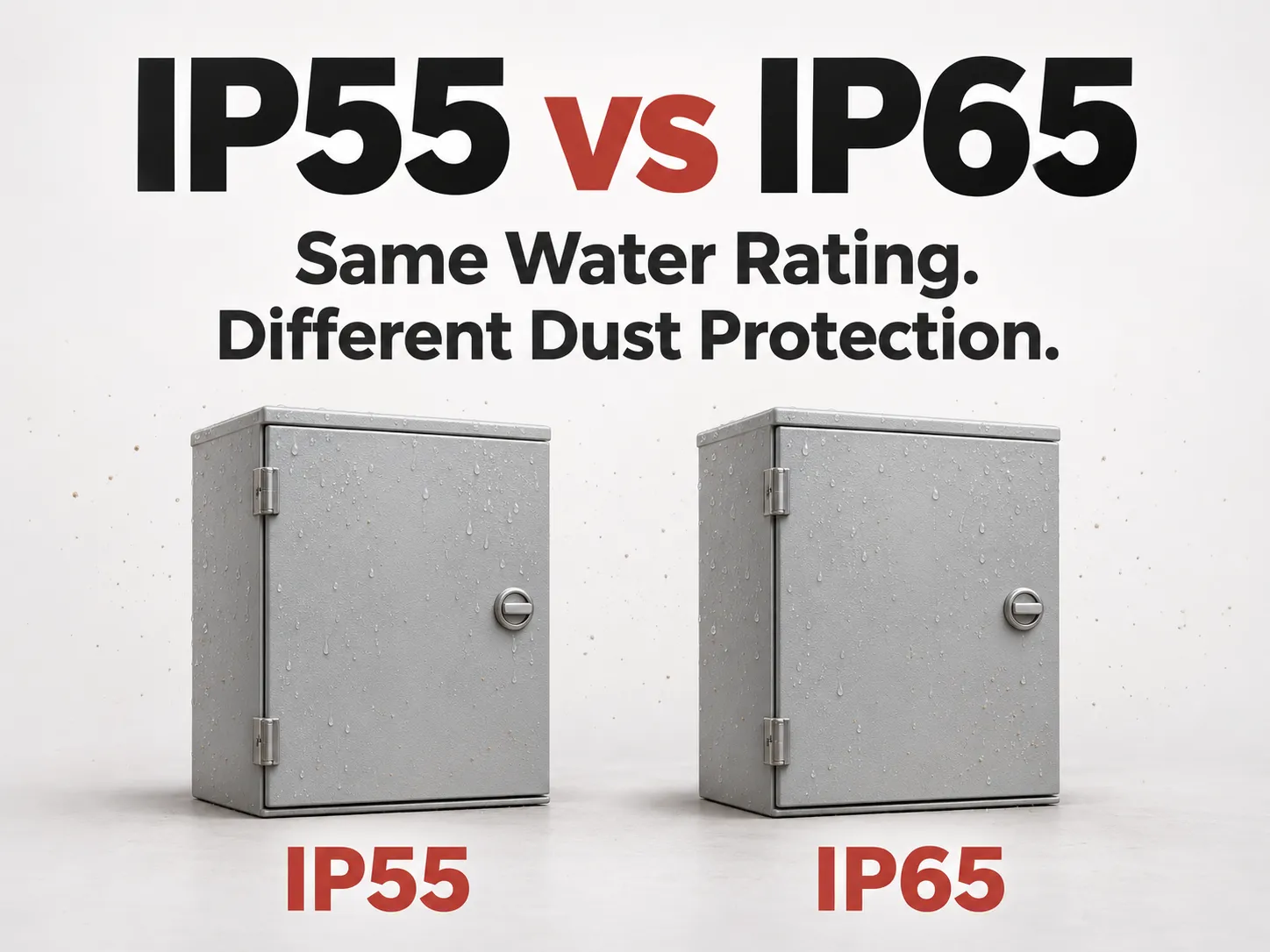
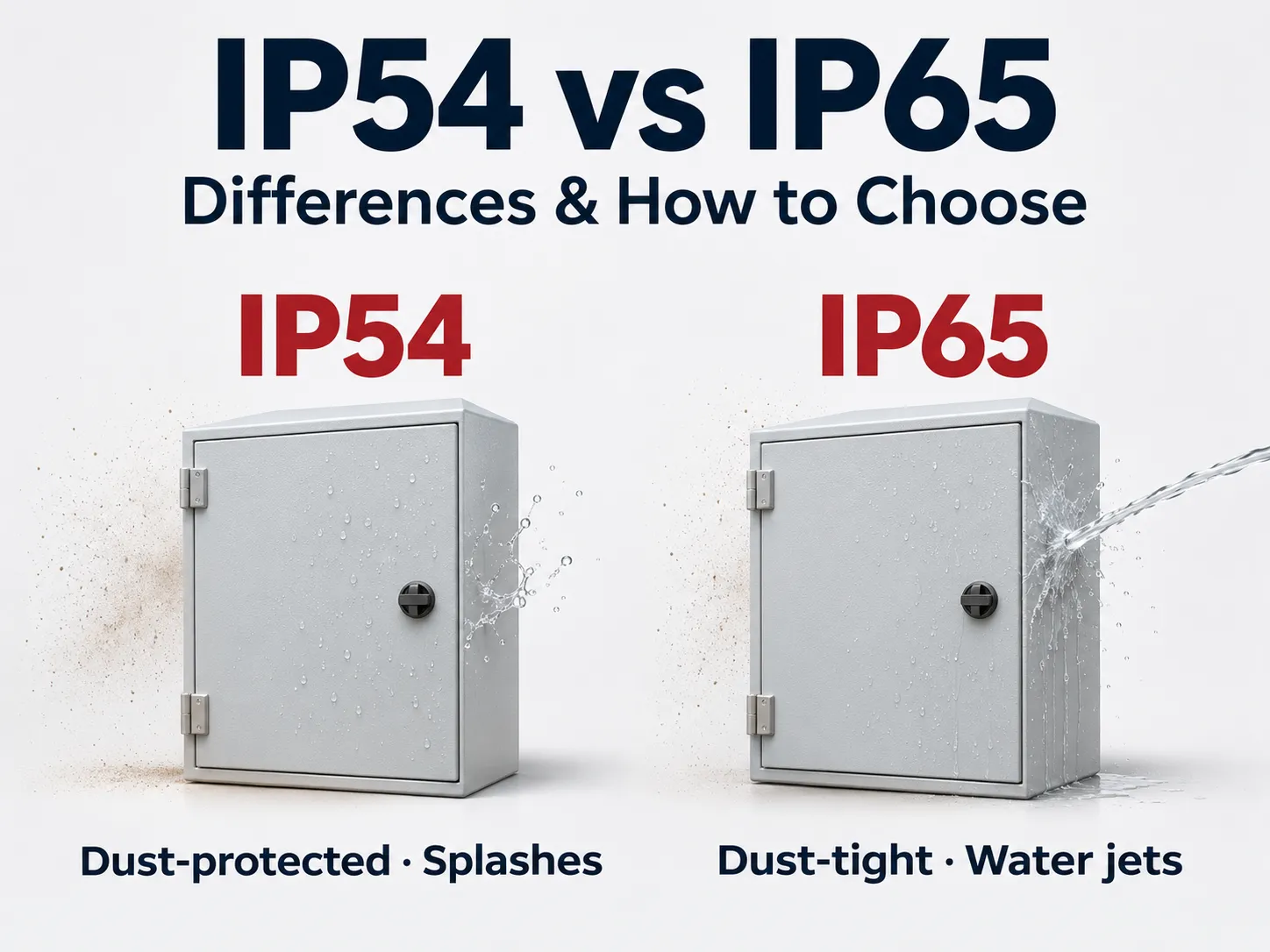
IEC 60529 defines the IP Code used to classify the degrees of protection provided by electrical enclosures against access, solid foreign objects, dust, and water.
NEMA enclosure Types use a different environmental classification system. Type 4X, for example, adds corrosion-related protection to the environmental protection associated with wet indoor or outdoor applications.
For this reason, an IP rating should not be written as an exact one-to-one equivalent of a NEMA Type. Buyers who need a closer comparison can review the differences between NEMA and IP enclosure ratings before specifying the required system and environmental protection.

Painted Steel, 304 Stainless, or 316 Stainless?
Painted carbon steel can be practical in a controlled electrical or service room where water and corrosion exposure are low.
Stainless steel becomes more attractive as hygiene, moisture, or corrosion requirements increase. 304 stainless steel is widely considered for many general wet indoor applications, while 316 is often evaluated where chlorides, salt, or more aggressive chemicals create a stronger corrosion risk.
The decision should still consider cleaning chemicals, surface finish, frequency of exposure, and project requirements. Where corrosion is a major concern, a more detailed 304 vs 316 stainless steel enclosure comparison can help buyers decide whether the additional corrosion resistance of 316 is justified.
Stainless steel does not compensate for poor sealing, unsuitable cable entries, or an inadequate enclosure rating.
How to Control Condensation and Temperature
Once the environmental risks are known, the designer can decide how to manage them. The solution may involve cabinet location, moisture control, component selection, or thermal management rather than simply increasing the enclosure rating.
Keep Sensitive Controls Outside the Cold Zone When Practical
Locating PLCs, network hardware, HMIs, and other sensitive electronics in a warmer service area can reduce cold-temperature and condensation exposure. It can also make servicing easier.
Moving controls outside the refrigerated space, however, may require longer motor and sensor cables, additional penetrations, voltage-drop checks, EMC planning, signal-routing controls, and local disconnects.
Moving a cabinet outside the freezer is a design trade-off, not an automatic best practice.
Control Internal Moisture Where Needed
When condensation cannot be avoided through cabinet location or system layout, moisture control may be required. Depending on the dew-point risk, this can include anti-condensation heaters controlled by thermostats or hygrostats, or a suitable enclosed climate-control solution.
Heating should not be specified automatically for every cold-storage cabinet. It is useful when maintaining internal surfaces or components above the relevant dew-point temperature forms part of the verified environmental-control strategy.
Cable glands, conduit interfaces, door seals, and field penetrations must also preserve the intended enclosure protection. For applications where temperature cycling creates persistent moisture risk, this guide to preventing condensation in electrical enclosures explains the issue in more detail.
Check Operating, Startup, and Storage Temperatures
A common specification error is checking only the minimum operating temperature on a component data sheet.
Critical equipment should also be checked for separate startup or storage limits where the manufacturer provides them. This becomes important after prolonged shutdowns, when equipment may have remained unpowered at low temperature for many hours.
A component that can continue operating at low temperature is not automatically guaranteed to start reliably after a long cold soak.
Particular attention should be given to HMIs, batteries, power supplies, VFDs, controllers, and communication equipment.
Account for Internal Heat
Thermal design should consider enclosure size, ambient temperature, component losses, internal spacing, sealing requirements, and the allowable temperatures of installed equipment.
Cold surrounding air can improve heat transfer through the enclosure, but sealed cabinets containing VFDs, transformers, or other power electronics can still develop local hot spots.
Internal temperature should therefore be checked from the actual component heat load and operating conditions rather than assumed to be safe because the warehouse is cold.

Components, Controls, Alarms, and Monitoring
A cold-storage control cabinet normally combines electrical protection, motor control, refrigeration logic, automation, and field interfaces. The exact arrangement should follow the refrigeration system rather than a standard component list.
The power section may contain a main disconnect, branch protective devices, breakers or fuses, contactors, overload protection, motor starters, soft starters, and VFDs.
The control section may include a PLC or dedicated refrigeration controller, relays, 24 VDC power supplies, terminal blocks, I/O modules, temperature and pressure inputs, defrost controls, fan controls, and door-related signals.
Interfaces may include an HMI, alarm outputs, communication gateways, remote I/O, and connections to BMS or SCADA systems.
Power and control wiring should have suitable separation, routing, service access, and realistic space for maintenance and future wiring.
Design Around the Refrigeration Sequence
Control logic should follow the refrigeration sequence, including compressor staging, fan operation, defrost, door-related functions, temperature and sensor alarms, motor or pressure trips, and communication with supervisory systems.
Current cold-room controllers commonly combine temperature regulation with defrost, fan control, alarms, and system protection rather than treating each function as a separate control system.
Energy monitoring is useful when it exposes unnecessary runtime, poor defrost scheduling, or abnormal operation. A fixed energy-savings percentage should not be claimed unless it is supported by measurements from the actual system.
Plan for Power Failure Before It Happens
The control strategy should define what happens when power returns after an outage.
Restarting every compressor, fan, heater, and auxiliary load at once can create unnecessary demand and may conflict with the required refrigeration sequence. Loads may need staged restart, time delays, manual reset, or other project-specific recovery logic.
Projects should also determine whether selected PLC, alarm, communication, or monitoring functions need backup power. This decision should follow the operational risk rather than become a default requirement for every cabinet.
Remote monitoring is most valuable when it helps operators diagnose faults. Alarm history, compressor runtime, defrost history, sensor condition, communication status, and trip information are often more useful than a remote temperature display alone.

Safety, Codes, and Compliance
Compliance depends on what is being supplied, where it will be installed, and which market receives it. An empty enclosure, a completed industrial control panel, and a larger refrigeration equipment assembly are not the same product from a standards perspective.
U.S. Projects: NEC, SCCR, and UL 508A
For U.S. industrial control panels, SCCR is an important design and marking issue. UL’s SCCR guidance explains that NEC Article 409 requires industrial control panels to carry an SCCR and that UL 508A Supplement SB provides an accepted method for determining the panel rating.
The required SCCR should be considered with the available fault current at the installation point before the panel design is finalized.
UL 508A provides a widely used construction and certification framework for industrial control panels and includes requirements for determining SCCR.
This does not mean that every electrical enclosure or every U.S. control cabinet must automatically be UL 508A Listed. Certification requirements should be confirmed from the project specification, overall equipment listing strategy, owner requirements, and AHJ.
The locally adopted NEC edition should also be verified rather than assuming every jurisdiction uses the same edition.
Projek Berasaskan IEC
For IEC-based projects, the standard should match the product being supplied.
IEC 60529 defines ingress protection, while IEC 62208:2023 applies specifically to empty enclosures before switchgear and controlgear components are incorporated by the assembly manufacturer.
IEC 61439-1:2020 provides the general definitions, service conditions, construction requirements, technical characteristics, and verification requirements for low-voltage switchgear and controlgear assemblies. For conformity, its requirements are applied together with the relevant product-specific part of the IEC 61439 series; IEC states that Part 2 applies where an assembly is not covered by Part 3 onward.
This is an important procurement distinction: ordering an empty enclosure is not the same as ordering a completed and verified electrical assembly.
Refrigeration-Specific Safety
Electrical cabinet design must also fit the refrigeration system’s safety requirements. ASHRAE Standards 15 and 34 work together: Standard 15 addresses refrigeration-system safety, while Standard 34 assigns refrigerant designations and safety classifications based on toxicity and flammability. Refrigerant choice can affect detection, ventilation, equipment location, ignition-source controls, and safety-reset logic, so these requirements should be coordinated with the refrigeration and electrical design rather than inferred from the enclosure rating alone.
ASHRAE Standard 15-2024 does not apply to refrigeration systems using ammonia (R-717). For closed-circuit ammonia refrigeration, applicable IIAR standards become particularly important. OSHA identifies ANSI/IIAR 2 as the industry’s definitive design safety standard and notes that some locations in ammonia refrigeration systems may be Class I, Division 2 hazardous locations.
Ammonia use alone therefore does not make every cabinet explosion-proof. Electrical equipment must match the actual area classification and applicable project requirements.

How to Specify and Validate a Cabinet Before Ordering
Many cabinet problems begin before fabrication because the supplier receives only a size, material, and basic NEMA or IP request.
The first step is to define what is actually being purchased. Buyers who are unsure about the scope should first distinguish a control panel from an electrical enclosure. An empty enclosure may require dimensions, material, rating, cutouts, mounting plates, and accessories, while a complete control panel adds electrical engineering, component selection, wiring, controls, SCCR, testing, and documentation. A partially assembled cabinet needs an equally clear scope boundary.
For a cold-storage project, the RFQ should define:
- Installation environment: cabinet location, minimum and maximum temperatures, humidity, condensation, washdown, chemicals, salt, and outdoor exposure.
- Enclosure specification: required NEMA Type or IP rating, material, finish, dimensions, and mounting method.
- Electrical supply: voltage, phase, frequency, earthing arrangement, and other site power requirements.
- Complete load schedule: compressors, fans, pumps, heaters, lighting, doors, conveyors, and auxiliary loads.
- Defrost system: defrost method plus heater, drain-heater, or other electrical loads where applicable. Defrost type and electrical demand directly affect control and protection requirements.
- Motor control and protection: starting method, VFD or soft-starter requirements, overload protection, and disconnect requirements.
- Fault-current requirements: available fault current and required SCCR where applicable.
- Controls and I/O: PLC or refrigeration controller, HMI, preferred component brands, sensors, field devices, and sequence of operation.
- Communications and alarms: required protocols, remote monitoring, data logging, alarm history, and BMS/SCADA integration.
- Power-failure response: restart delays, load staging, manual-reset functions, and any required backup power.
- Cable interfaces: entry direction, glands, conduit connections, penetrations, and spare entries.
- Service and expansion needs: access clearance, spare terminals, I/O, breaker space, and reasonable future capacity.
- Compliance requirements: destination market, owner specifications, applicable NEC/UL or IEC requirements, and required certifications.
- Project deliverables: drawings, schematics, BOM, certificates, test records, manuals, labeling, packing, and shipment requirements.
The goal is not to ask the supplier to “make it suitable for a cold room.” The RFQ should define the conditions and operating functions that make the application demanding.
Documents and Tests to Request
Documentation and acceptance criteria should be agreed before fabrication. Depending on scope, deliverables may include the general arrangement drawing, electrical schematic, BOM, material and enclosure-rating records, certificates, SCCR documentation, labels, and test reports.
For a complete wired control panel, factory testing should verify the intended sequence of operation as well as wiring. Useful scenarios include sensor failure, defrost start and termination, motor trips, communication loss, alarms, and restoration after a power failure.
ASHRAE Guideline 1.1-2025 applies the commissioning process to new HVAC&R systems and emphasizes verifying systems against project requirements, including their operation and maintainability.
Freeze the approved load schedule and sequence of operation before fabrication whenever possible. Late changes to motors, defrost heaters, VFDs, or control functions can affect protective-device selection, heat load, cabinet layout, wiring, and testing scope.
Installation and Maintenance for Long-Term Reliability
Factory enclosure ratings remain meaningful only when field installation preserves the intended construction.
Where practical, keep cabinets away from direct evaporator discharge, heavy ice formation, severe warm-to-cold transition points, and forklift or pallet traffic. Cabinets exposed to warehouse traffic may also require physical protection.
Use the specified glands, conduit interfaces, seals, grounding, and bonding methods. Unsealed field holes or unsuitable replacement fittings can create moisture paths and reduce the environmental protection of the enclosure.
Maintenance should focus on gaskets, latches, cable entries, corrosion, moisture tracks, loose connections, abnormal heating, and any installed heaters, hygrostats, fans, filters, or cooling equipment. Critical sensors should follow the project’s calibration requirements.
Future drilling and cable additions should be controlled for the same reason: a high NEMA or IP rating cannot compensate for damaged seals or poorly executed field modifications.

FAQs About Electrical Cabinets for Cold Storage Warehouses
Kesimpulan

Electrical cabinets for cold storage warehouses should be specified for their actual installation zone rather than from one facility-wide standard. Temperature, condensation, water and corrosion exposure, internal heat, refrigeration loads, controls, fault-current requirements, compliance, and service conditions all influence the final design.
If you are sourcing cabinets for a cold room, freezer warehouse, refrigeration plant, or cold-chain facility, hubungi Eabel with the installation environment, cabinet dimensions, required NEMA/IP protection, material, electrical loads, control requirements, and destination-market standards. These details allow the enclosure construction, internal layout, protection, and customization to be defined before production.
Bacaan Berkaitan
Warehouse Electrical Enclosures: Buyer Guide
Panduan Kawalan Suhu Kepungan Elektrik
Panduan Membeli Kepungan Panel Kawalan Industri
Penerangan tentang Gland Kabel: Piawaian, Penarafan IP dan Aplikasi
Keselamatan Kepungan Elektrik: Risiko, Piawaian & Amalan Terbaik




 MS
 EN
 ES
 FR
 AR
 JA
 KO
 RU
 DE
 PT
 IT
 ZH
 TH
 VI
 HI
