

Is the Problem in the Panel, Circuit, or Supply?

Finding the fault location should come before replacing a breaker or panel. The pattern of the problem often provides the first clue.
| Symptom Pattern | More Likely Source | Recommended Next Step |
|---|---|---|
| One appliance is affected | Appliance, plug, cord, or local connection | Disconnect and inspect the equipment |
| One room or circuit is affected | Branch circuit, breaker, wiring, or load | Reduce the load and test the circuit |
| Several unrelated circuits are affected | Neutral, panel, main connection, or upstream supply | Request professional diagnosis |
| The whole site loses power | Main service, switchgear, transformer, generator, transfer equipment, or utility | Check upstream equipment and supply status |
| Problems occur when one machine starts | Starting current, voltage drop, or limited circuit capacity | Review the load and circuit design |
One failed appliance often points to a local equipment problem. A fault affecting one circuit is more likely to involve its breaker, wiring, or connected load.
Several circuits failing together may indicate a loose neutral, damaged busbar, main connection problem, or supply disturbance.
This quick check does not replace testing. It simply helps avoid unnecessary breaker or panel replacement.
Electrical Panel Warning Signs That Need Immediate Action
Stop using the affected equipment when you notice:
- Smoke, flames, or visible sparks
- Burning odors or melted insulation
- Loud crackling, sizzling, or sustained buzzing
- Severe discoloration or unusual heat
- Water entering the enclosure
Keep people away from the panel if there is smoke or active arcing. Never use water on energized electrical equipment.
A wet panel should not be opened or operated. Correct the leak only when this can be done without approaching exposed electrical parts.

Common Electrical Panel Problems and Solutions
1. Why Does a Circuit Breaker Keep Tripping?
A breaker trip is usually a protective response. It does not always mean the breaker itself is defective.
Three common causes are excess load, a circuit fault, or damaged equipment. Short circuits and ground faults can also make a breaker trip immediately.
You may notice that the breaker trips during peak use, after one machine starts, or as soon as it is reset.
Disconnect recently added or high-demand loads first. Where site procedures allow, an authorized person may reset the breaker once.
Do not reset it when there is heat, odor, moisture, arcing, or visible damage. Leave it off if it trips again or will not stay in the ON position.
Testing should confirm whether the problem is in the breaker, branch wiring, or connected load. The Electrical Safety Foundation International’s breaker guidance explains how breakers interrupt current when a circuit becomes overloaded or unsafe.
Never install a higher-rated breaker simply to stop nuisance trips. The breaker, conductor size, and circuit design must remain properly coordinated.
2. Hot or Buzzing Electrical Panel
Loose connections increase resistance. That resistance creates heat and may damage conductors, terminals, breakers, or nearby insulation.
Typical signs include discoloration, intermittent power, a burning odor, or one component running hotter than similar breakers under comparable loads.
Normal circuit breakers may produce some heat. Temperature should be evaluated with the load, component type, nearby equipment, and visible condition.
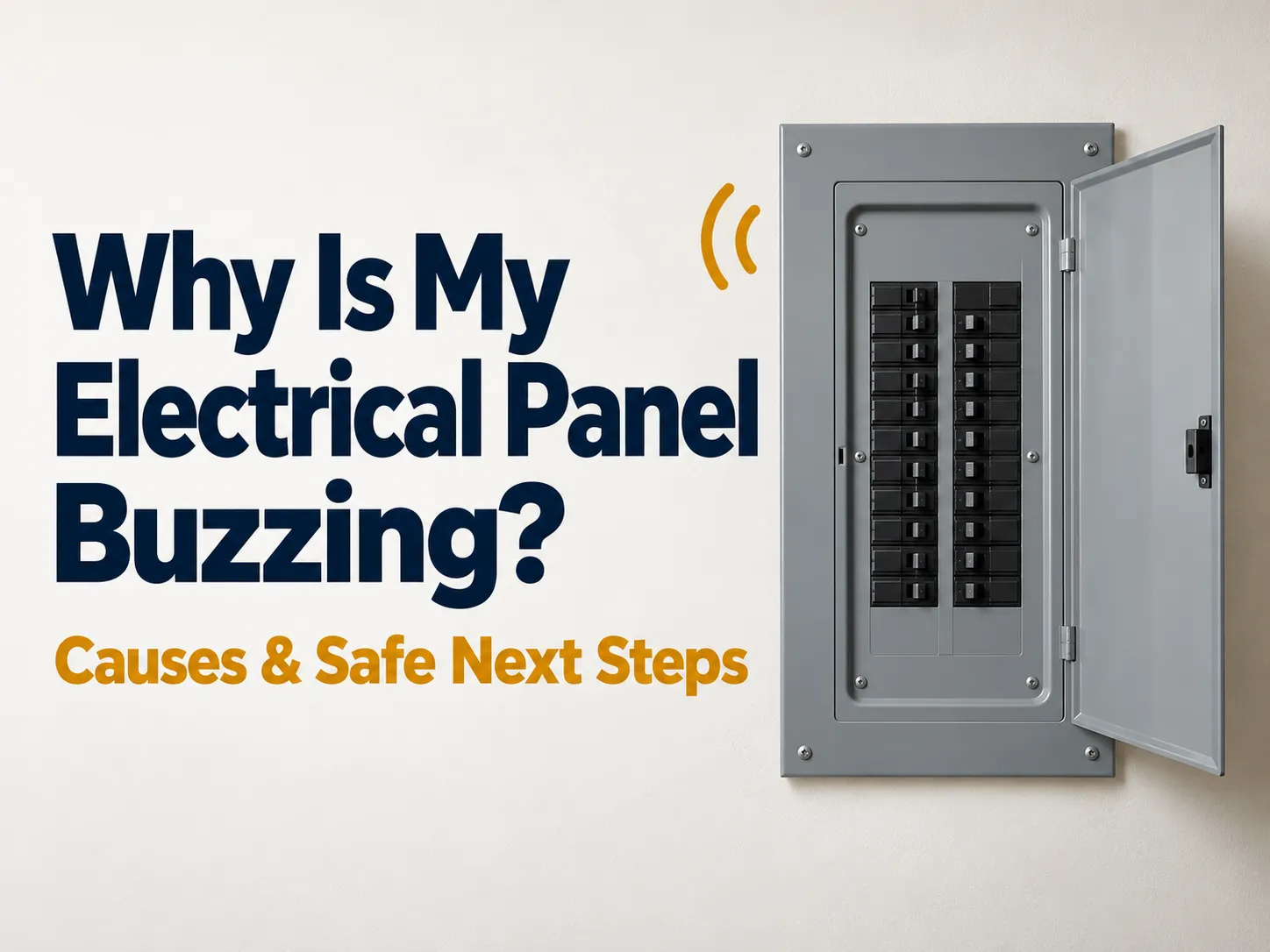
A faint hum may be normal, but persistent buzzing, sizzling, or crackling needs investigation. Learn more about why an electrical panel may be buzzing and which sounds indicate a developing fault.
A loose terminal may result from incorrect torque, vibration, poor conductor preparation, or repeated heating and cooling.
Qualified personnel should isolate the equipment and inspect the affected connection.
Damaged conductors, terminals, and breakers may require replacement. Manufacturer torque values and termination instructions should be followed.
Overtightening can damage a terminal. Undertightening may allow the connection to loosen and overheat.

3. Damaged Busbar or Loose Breaker Connection
The busbar carries power from the main supply to individual breakers. Damage at this connection can cause heat, arcing, or repeated circuit failure.
You may see pitting, burn marks, a loose breaker fit, or discoloration near the breaker mounting point.
Incompatible breakers, corrosion, poor contact pressure, and previous overheating are common causes.
Replacing the breaker alone may not solve the problem when the busbar surface is already burned or distorted.
Where the manufacturer provides a listed replacement interior or bus assembly, qualified personnel may replace the affected part.
Burned, pitted, or distorted busbars should not be repaired with improvised methods. Extensive damage often makes panel replacement the safer option.
4. Rust, Water, and Corrosion in the Panel
Moisture and contamination can damage conductive surfaces and reduce long-term reliability.
Common signs include rust, white or green oxidation, condensation, water stains, and intermittent breaker operation.
The source may be a roof leak, failed gasket, poor cable entry, high humidity, salt air, chemicals, or washdown exposure.
Material, coating, sealing, drainage, and condensation control all affect corrosion resistance. These strategies can help you 電気筐体の錆を防ぐ before internal components are damaged.
Correct the environmental source before replacing damaged components. Otherwise, the same electrical panel problem may return.
Light rust on the outer enclosure may be repairable. Corrosion on terminals, breakers, neutral bars, or busbars needs a closer assessment.
The enclosure rating should match the actual environment. Indoor or outdoor location alone is not enough.
Consider condensation, dust, salt, chemicals, washdown, and ambient temperature. NEMA enclosure guidance explains how enclosure types address different environmental conditions.
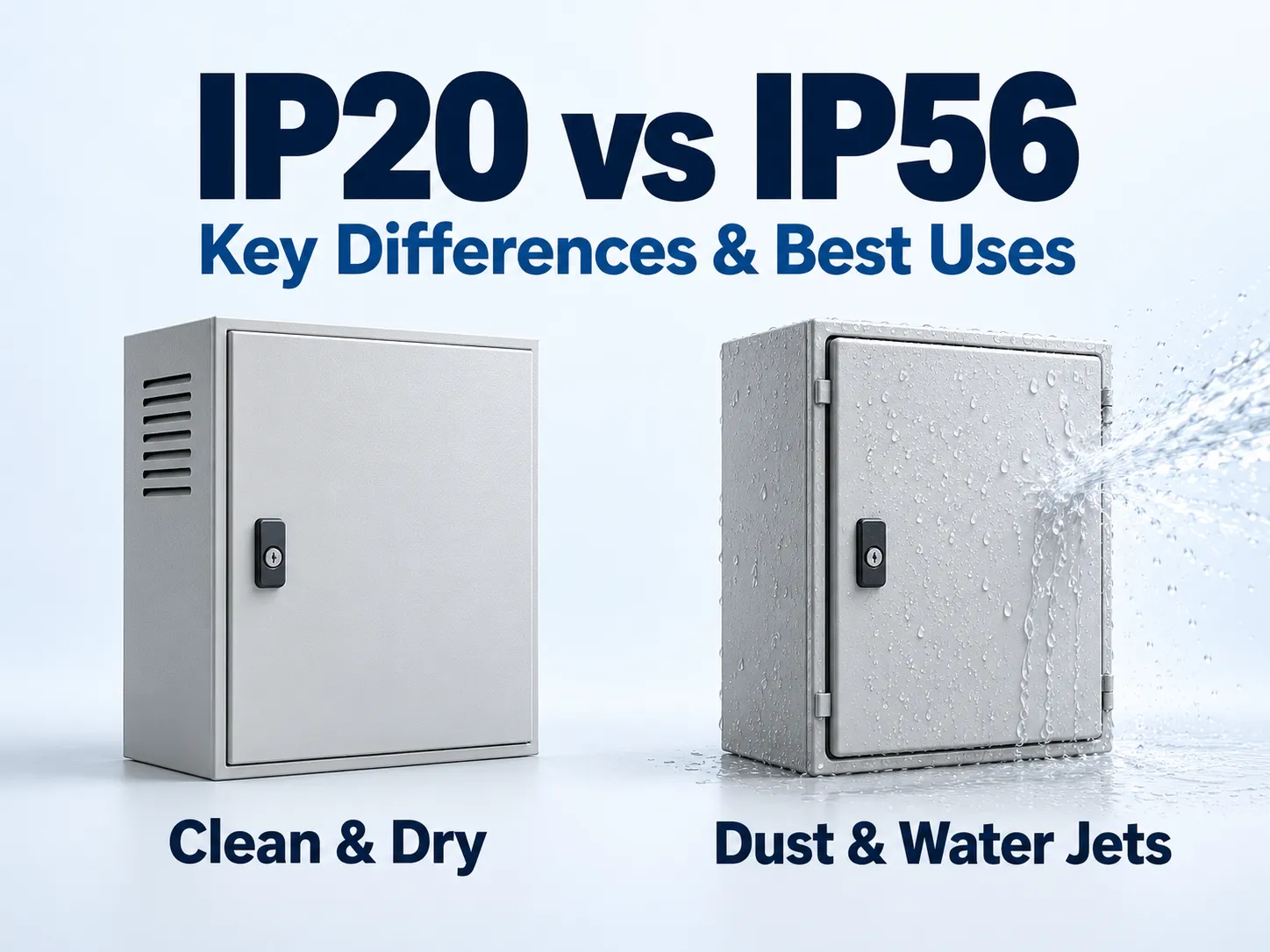
IP and NEMA ratings describe protection in different ways. They should not be treated as direct equivalents.

5. Overloaded or Undersized Electrical Panel
Electrical demand often increases after installation. New machinery, HVAC equipment, heaters, chargers, pumps, or production lines can add more load than expected.
Frequent trips during peak use may indicate a branch-circuit overload, poor phase balance, or limited panel capacity.
Lights may dim when large motors start. One phase may also carry more current than the others.
A lack of spare breaker spaces does not prove the panel is overloaded. It may only show limited expansion space or poor circuit planning.
A proper load study should consider actual operating demand, motor-starting current, phase balance, and future expansion.
Before adding major equipment, review how to size a panelboard correctly using load, ampacity, phase, and circuit-space requirements.
Possible solutions include dedicated circuits, better load distribution, approved load management, a subpanel, or a larger distribution panel.
Nonlinear loads may also create harmonics. These can affect neutral current, heat, and equipment performance in some commercial and industrial systems.
6. Flickering Lights and Loose Neutral Problems
A loose neutral can create unstable voltage across connected loads. Lights may become brighter in one area and dimmer in another.
Electronics may restart, alarms may appear, and sensitive equipment may operate unpredictably.
Similar symptoms can also result from poor grounding, voltage drop, phase imbalance, or an upstream supply disturbance.
Testing should compare line-to-line, line-to-neutral, and neutral-to-ground conditions.
Service connections, grounding, bonding, and upstream equipment may also need inspection.
Do not replace the panel based only on flickering lights. First confirm whether the fault is inside the panelboard, branch circuit, service equipment, or utility supply.

7. Unsafe Wiring and Improper Panel Modifications
Unplanned circuit additions often create crowded wiring and difficult maintenance conditions.
Possible defects include incorrect conductor sizes, missing filler plates, unapproved breakers, poor cable routing, and undocumented changes.
Multiple conductors are acceptable only when the terminal is identified for that conductor number, size, and material.
A connection should not be called defective simply because two conductors are present. The equipment marking and manufacturer instructions decide whether the termination is allowed.
Use breakers and accessories approved for the panel. OSHA electrical installation requirements state that listed or labeled equipment must be installed and used according to its instructions.
Replace missing covers and update circuit labels after modifications.
When the enclosure lacks usable space, a properly designed subpanel or replacement panel may be safer than further crowding.
8. When Should an Electrical Panel Be Replaced?
An old panel is not automatically unsafe. Condition, capacity, ratings, and component support matter more than age alone.
Replacement may be necessary when compatible breakers are unavailable or the model is recalled.
Before ordering parts, check the manufacturer, catalog number, and date code against the CPSC panelboard and circuit breaker recall database.
Severe corrosion, repeated overheating, damaged busbars, or extensive physical damage also support replacement.
A panel may no longer suit the project when current loads exceed its rating or future equipment cannot be added safely.
Record the manufacturer, model, catalog number, rating, and date code before sourcing parts.
Check whether listed replacement components remain available. Unsupported substitutions can create new breaker panel problems.
The panel’s short-circuit current rating must be suitable for the available fault current.
Each protective device must also have an adequate interrupting rating for the circuit where it is installed.

How Professionals Confirm the Root Cause
Professional electrical panel troubleshooting goes beyond replacing the breaker that appears to be affected.
| Diagnostic Step | What It Helps Confirm |
|---|---|
| Visual and environmental inspection | Heat damage, moisture, corrosion, contamination, and unsafe modifications |
| Load and phase testing | Overload, imbalance, starting current, and voltage-drop problems |
| Thermal inspection | Abnormal connections, hot spots, and breaker-to-bus issues |
| Voltage and neutral testing | Loose neutrals, grounding faults, and supply disturbances |
| Rating and component review | Breaker compatibility, conductor sizing, SCCR, and enclosure suitability |
Thermal images should be reviewed with actual current, ambient temperature, and similar nearby components.
A hot spot without load information can lead to the wrong conclusion.
Operating history also adds value. Compare faults with machine starts, peak production, weather, maintenance work, and recent equipment additions.
This process can reveal whether the cause began during specification, installation, operation, or maintenance.

Should You Repair or Replace the Panel?
The correct choice depends on the damage area, available parts, capacity, reliability, and downtime risk.
| 判断要素 | Repair May Be Suitable | Replacement May Be Better |
|---|---|---|
| Damage area | One isolated component | Busbar or several components |
| 容量 | Present and future load remain within limits | Required loads exceed panel capability |
| 腐食 | Limited to the outer enclosure | Internal conductive parts are affected |
| コンポーネント | Listed replacement parts are available | Parts are obsolete or incompatible |
| 定格 | Existing ratings remain suitable | Voltage, SCCR, or interrupting ratings are inadequate |
| 信頼性 | One isolated failure | Repeated or unpredictable faults |
| ダウンタイム | Repair restores dependable service | Continued repairs increase operating risk |
Repair may suit one failed breaker, a correctable termination, or minor external enclosure damage.
Replacement is more appropriate when the busbar is burned, several components are damaged, or the equipment no longer supports the application.
A low-cost repair is not always the lowest lifecycle-cost choice.
Repeated downtime, difficult parts sourcing, damaged machinery, and frequent service calls can make replacement more economical.

How to Prevent Future Electrical Panel Problems
Many failures begin during specification or installation.
Confirm the current load and expected expansion before selecting a panel. Include motors, HVAC systems, chargers, heaters, solar equipment, and production growth.
Match the system voltage, frequency, phase configuration, bus rating, breaker ratings, conductor sizes, and available fault current.
Use compatible and traceable components. Keep drawings, circuit labels, ratings, and replacement records up to date.
The enclosure should suit moisture, dust, salt, chemicals, washdown, vibration, and ambient heat.
When repeated faults are linked to moisture, dust, corrosion, limited internal space, or poor heat control, replacing a breaker alone may not prevent the problem from returning. For new installations or panel upgrades, Eabel’s 電気エンクロージャ are available in multiple sizes and configurations, helping you match the enclosure to the panel layout and actual site conditions.
Allow enough internal space for wiring, heat dissipation, and maintenance. Avoid blocking ventilation or overcrowding cable entries.
Arrange an inspection after flooding, major renovations, repeated trips, unusual heat, corrosion, or significant load changes.
Preventive maintenance can identify developing faults before they cause equipment damage or unplanned shutdowns.

FAQs About Electrical Panel Problems
まとめ

Electrical panel problems should be traced to their true source. Repeated trips, abnormal heat, corrosion, unstable voltage, and damaged connections may point to faults in the circuit, panel, or upstream supply.
Eabelに問い合わせる for help selecting or customizing an electrical enclosure for your panel size, load, environment, thermal needs, and project requirements.
関連記事
Electrical Overload: Risks, Warning Signs & Prevention
Thermal Imaging for Enclosure Maintenance






 JA
 EN
 ES
 FR
 AR
 KO
 RU
 DE
 PT
 IT
 ZH
 TH
 VI
 HI
 MS
