

What Does IP55 Mean for Electrical Enclosures?

IP55 is an ingress protection rating. The first “5” means the enclosure limits dust entry, but it does not block dust completely. The second “5” means it resists water jets from any direction.
In simple terms, an IP55 electrical enclosure protects internal components from harmful dust levels and low-pressure water spray. You can use IEC ingress protection ratings as a useful reference when comparing different IP codes.
This rating is useful when you need practical protection for electrical systems but do not need the tighter sealing of IP65, IP66, or IP67 enclosures.
What Does an IP55 Enclosure Protect Against?
An IP55 rated enclosure helps protect wiring, terminals, switches, relays, control devices, and other electrical parts from common site risks.
It can reduce damage from dust, dirt, rain splash, normal-pressure hose spray, outdoor moisture, and accidental contact with internal electrical parts.
It is not suitable for immersion, flooding, high-pressure washdown, or sites with heavy fine dust that may damage sensitive electronics.
Where Are IP55 Enclosures Used?
IP55 enclosures are often used for industrial control panels, PLC cabinets, telecom boxes, pump control systems, utility cabinets, solar support equipment, and machine-side electrical boxes.
They work best in factories, workshops, covered outdoor sites, and infrastructure projects with moderate dust or water spray. For broader application context, NEMA enclosure applications also show how enclosures protect electrical and control equipment in many industries.
For example, a sheltered outdoor IP55 cabinet may be enough for a utility control box. But a cabinet in a cement plant, food washdown area, or coastal site may need a higher rating or stronger material.
IP55 vs IP65: Which Rating Should You Choose?
You may compare IP55 and IP65 when choosing an electrical cabinet. Both can resist water jets, but they are different in dust protection. For a deeper comparison, see this guide on IP55 vs IP65 enclosure protection.

| Rating | Dust Protection | Water Protection | Best For |
|---|---|---|---|
| IP55 | Dust protected | Water jets | General industrial and sheltered outdoor use |
| IP65 | Dust-tight | Water jets | Dust-heavy or more exposed environments |
Choose IP55 when you need balanced protection, easier ventilation, and better cost control. Choose IP65 or higher when fine dust, harsh weather, or stricter sealing is required.
Main IP55 Enclosure Types
Wall-Mounted IP55 Enclosures
Wall-mounted IP55 enclosures are used for compact control panels, terminal boxes, small power units, and machine-side electrical systems.
They save floor space and are easier to install in workshops, production lines, utility rooms, and sheltered outdoor walls.
Floor-Standing IP55 Cabinets
Floor-standing IP55 cabinets are better for larger control systems, power distribution, telecom equipment, and multi-component layouts.
They provide more space for breakers, VFDs, power supplies, communication devices, wiring, and future maintenance.
Custom IP55 Enclosures
A custom IP55 enclosure is useful when standard sizes do not match your project. It can include special dimensions, cutouts, mounting plates, locks, vents, colors, and cable entry designs.
This option is common for OEM projects, electrical contractors, machine builders, distributors, and repeat electrical cabinet programs.

Material Options for IP55 Enclosures
Material choice affects strength, corrosion resistance, weight, cost, and service life. The right option depends on the installation environment and project budget.
| Material | Best For | Main Benefit |
|---|---|---|
| Carbon Steel | Indoor industrial use | Strong and cost-effective |
| Stainless Steel | Wet, corrosive, or outdoor areas | Better corrosion resistance |
| Aluminum | Lightweight projects | Easy handling and good corrosion resistance |
| Galvanized Steel | Outdoor utility cabinets | Balanced strength, cost, and rust resistance |
Carbon steel is often enough for dry indoor areas. Stainless steel is better for wet, chemical, marine, or corrosive sites.
Aluminum helps when weight matters. Galvanized steel is a practical choice for outdoor IP55 cabinets that need strength and improved rust resistance.
Custom IP55 Enclosure Options
Customization helps the enclosure fit your real equipment, wiring, installation, and maintenance needs. A good design should protect the components and make field work easier.
Common options include custom cabinet size, door style, mounting plate, DIN rail layout, cable gland holes, connector cutouts, locks, hinges, ventilation, filter fans, heaters, powder coating, logo plates, and wall, pole, floor, or rack mounting.
If your project needs a custom cabinet size, special cutouts, mounting plates, locks, ventilation, or surface finishing, you can also review Eabel’s electrical enclosures for standard and customized options before confirming the final design.
For custom IP55 enclosure projects, confirm the drawing before production. This helps make sure cable entry, cooling space, access direction, and accessory locations are planned correctly. You can also review common electrical enclosure accessories before finalizing locks, glands, vents, hinges, and mounting parts.

Ventilation, Cable Entry, and Sealing Risks
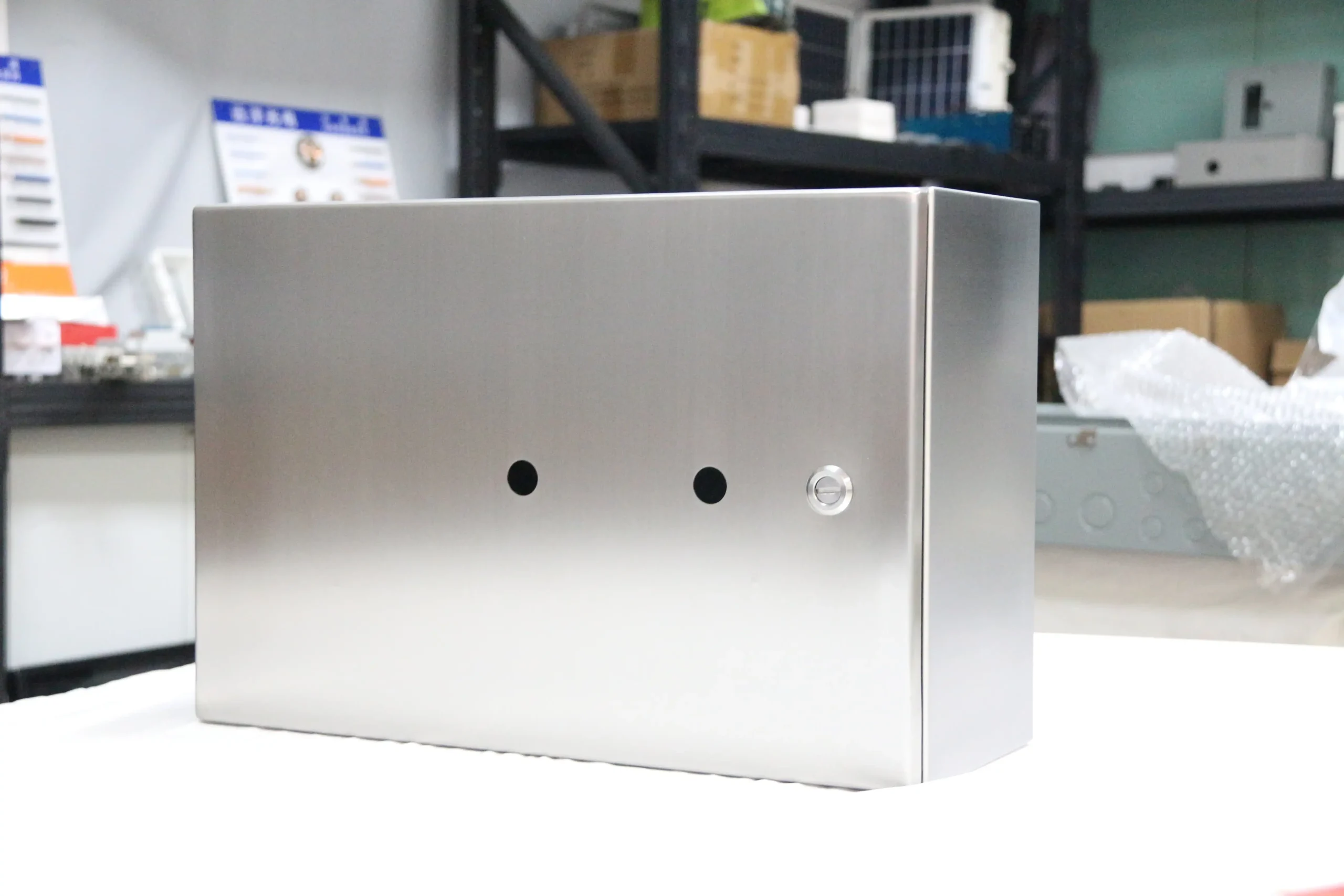
The final enclosure rating depends on the full assembly, not only the empty cabinet. Cable holes, vents, fans, buttons, locks, and display windows can all affect protection.
An enclosure may start as IP55, but poor cutouts or low-quality accessories can weaken dust and water resistance. This is why proper planning for how to seal an electrical enclosure is important before production or field modification.
Use IP-rated cable glands, match vents and filters to the target rating, avoid random drilling after delivery, and keep openings away from direct water paths. OSHA also highlights the importance of closing unused cabinet openings in its electrical cabinet opening protection requirements.
If the cabinet contains heat-generating parts such as VFDs, power supplies, relays, or batteries, sealing alone is not enough. You also need to manage heat and condensation. For this reason, it helps to understand when electrical enclosure ventilation is needed.
How to Choose the Right IP55 Enclosure
Start with the installation environment. Check dust level, rain exposure, water spray, humidity, sunlight, vibration, temperature, and corrosion risk.
Next, confirm the equipment size and heat load. PLCs, VFDs, relays, power supplies, batteries, and breakers all affect the internal layout.
Then choose the right material. For dry indoor sites, carbon steel may be enough. For wet or corrosive areas, stainless steel or galvanized steel may be safer.
Plan cable entry before production. This includes gland size, hole position, connector type, wiring route, and maintenance access. If the project requires special structure, review custom electrical enclosure design before confirming drawings.
Before placing an order, ask for cabinet drawings, material thickness, surface finish details, gasket design, cutout drawings, mounting layout, accessory list, and IP rating information. If your market requires certification review, the UL 50E enclosure standard can also help you understand enclosure requirements for non-hazardous locations.
Buyer Checklist Before Ordering
- Required IP rating and installation location
- Cabinet size, material, and thickness
- Door style, lock type, and mounting method
- Cable entry plan and cutout drawing
- Ventilation, cooling, or condensation control
- Surface finish, color, branding, and labels
- Quantity, lead time, drawings, and technical documents
This checklist helps reduce common problems such as wrong cabinet size, poor cable routing, weak sealing, overheating, and unsuitable material selection.

FAQs About IP55 Enclosures
Conclusion

IP55 enclosures offer a practical balance of dust protection, water-jet resistance, customization flexibility, and cost control. They are suitable for many industrial, telecom, utility, control panel, and sheltered outdoor electrical projects.
If you need a custom IP55 enclosure, contact us with your size, material, installation environment, drawings, and accessory needs. Our team can help you choose the right structure, protection level, and customization options for safer installation and longer service life.
Related Reading
What Is an Electrical Enclosure? Complete Guide
How to Choose the Right Electrical Enclosure
Types of Electrical Enclosures Explained
IP65 vs IP66 vs IP67: Which Rating Is Best?



 EN
 ES
 FR
 AR
 JA
 KO
 RU
 DE
 PT
 IT
 ZH
 TH
 VI
 HI
 MS
