

What Are Energy Enclosures Used For?

Energy enclosures are part of a wider group of enceintes industrielles used to protect electrical and electronic components in power generation, storage, conversion, control, and distribution systems.
Common applications include solar combiner boxes, solar inverter enclosures, battery energy storage cabinets, EV charging enclosures, wind turbine control boxes, power distribution cabinets, grid monitoring cabinets, and backup power systems.
Each application has different risks. A small indoor control box may only need basic dust protection, while an outdoor battery energy storage enclosure may require cooling, corrosion resistance, fire safety design, and strict compliance.
Check the Installation Environment First
The installation environment should be your first checkpoint. It affects the enclosure material, IP or NEMA rating, gasket design, cooling method, surface treatment, and mounting structure.
You should confirm whether the enclosure will be installed indoors or outdoors. Field-installed electrical cabinets may face rain, dust, snow, salt spray, chemicals, direct sunlight, and large temperature changes.
The project location also matters. A coastal solar farm may need a corrosion resistant enclosure. A desert energy site may need stronger dust protection and thermal control. A rooftop project may need lightweight materials and secure mounting.
For public or exposed sites, impact resistance and lock design should also be reviewed. An Cote IK can help show how much impact energy an enclosure can resist.
Choose the Right IP or NEMA Rating
IP and NEMA ratings show how well an enclosure protects against dust, water, weather, and other environmental risks. For energy enclosure selection, this is one of the most important buying decisions.
| Notation | Idéal pour | Note de l'acheteur |
|---|---|---|
| IP65 | Dust and water jet protection | Common for outdoor electrical enclosures |
| IP66 | Stronger water jet protection | Useful for harsher outdoor energy sites |
| IP67 | Immersion temporaire dans l'eau | Suitable where water exposure is higher |
| NEMA 3R | Basic outdoor weather protection | Often used for rain and sleet protection |
| NEMA 4 | Watertight outdoor protection | Good for demanding outdoor installations |
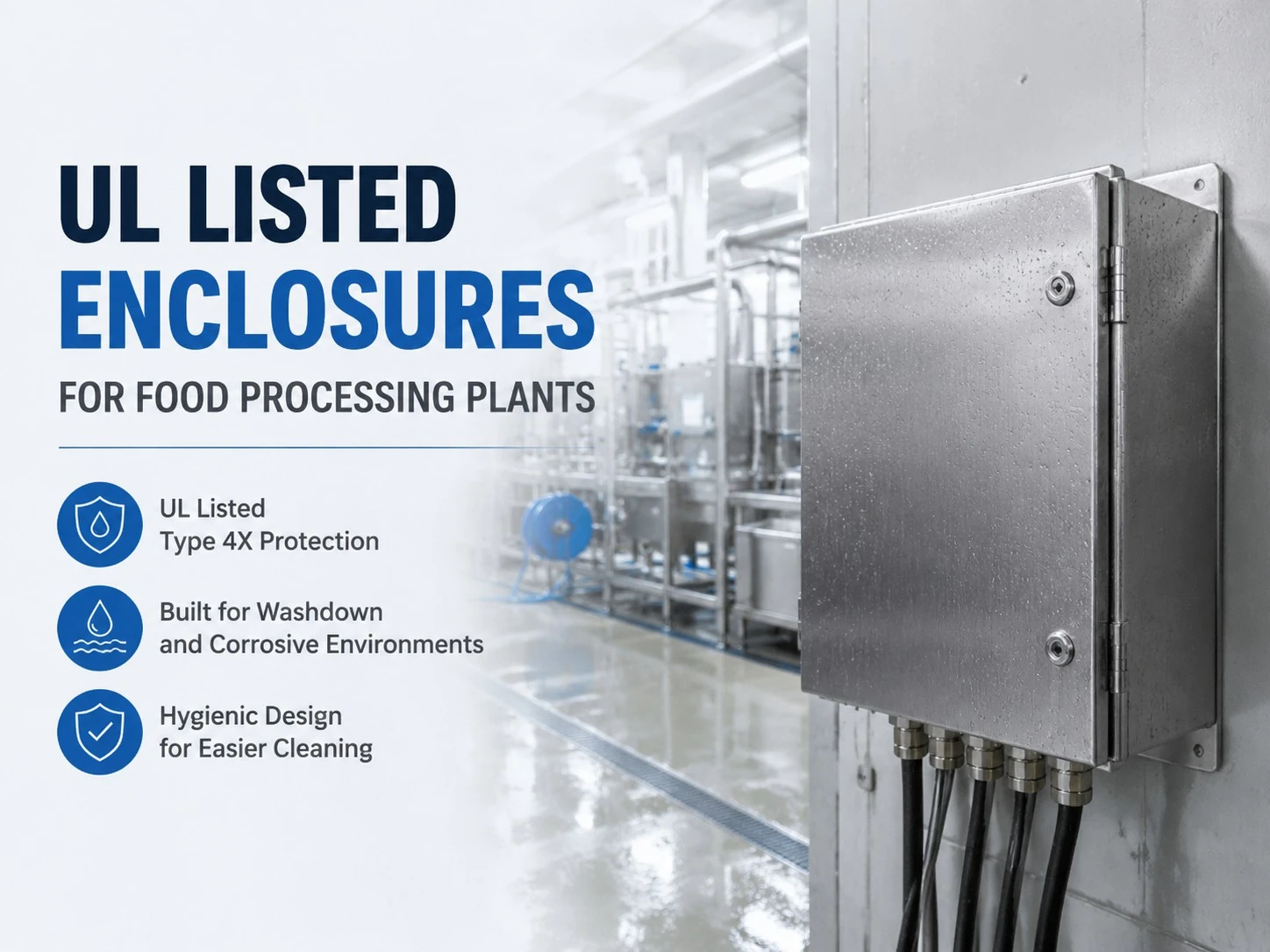
| NEMA 4X | Water and corrosion protection | Better for coastal or corrosive sites |
| NEMA 12 | Indoor dust and drip protection | Used in industrial indoor environments |
If your project serves different markets, it helps to compare Indices de protection NEMA et IP before confirming the final protection level.
For global projects, you can also refer to official Indices de protection IP IEC to understand how ingress protection is defined for dust and water.
For North American projects, the official Types de boîtiers NEMA document can help clarify which enclosure type fits the site conditions.
A higher protection rating is not always better. A tightly sealed weatherproof electrical enclosure can trap heat if the cooling design is poor. Check sealing and thermal management together.

Select the Best Enclosure Material
The enclosure material affects strength, weight, corrosion resistance, insulation, heat dissipation, service life, and cost. Your choice should match the site exposure and project risk.
Stainless steel is a strong choice for outdoor, coastal, chemical, and corrosive environments. It is often used for solar farms, EV charging sites, and harsh industrial energy systems.
Carbon steel is strong and cost-effective. It works well for indoor or protected industrial power systems, but it needs proper coating if used in humid or outdoor areas.
Aluminum is lightweight and corrosion resistant. It is useful for rooftop, pole-mounted, or outdoor electrical enclosures where weight matters. It may also support better heat dissipation in some designs.
Polycarbonate and fiberglass enclosures are lightweight, insulating, and corrosion resistant. They can be suitable for smaller control boxes, monitoring units, or sites where metal corrosion is a concern.
Metal enclosures may also help when EMI/RFI shielding is required for power electronics, control devices, or communication modules.
Plan Thermal Management Early
Energy systems often generate continuous heat. Solar inverters, batteries, breakers, transformers, and power electronics can raise the internal temperature of the enclosure.
If heat is not controlled, components may age faster, fail more often, or shut down during high-load operation. This can increase downtime and maintenance cost.
You should consider internal heat load, ambient temperature, solar radiation, enclosure size, airflow path, and protection rating. In hot sites, thermal management for electrical enclosures should be planned before production.
If you are comparing vents, fans, filters, air conditioners, or closed-loop cooling, this guide to active vs passive enclosure cooling can help you choose a safer thermal design.
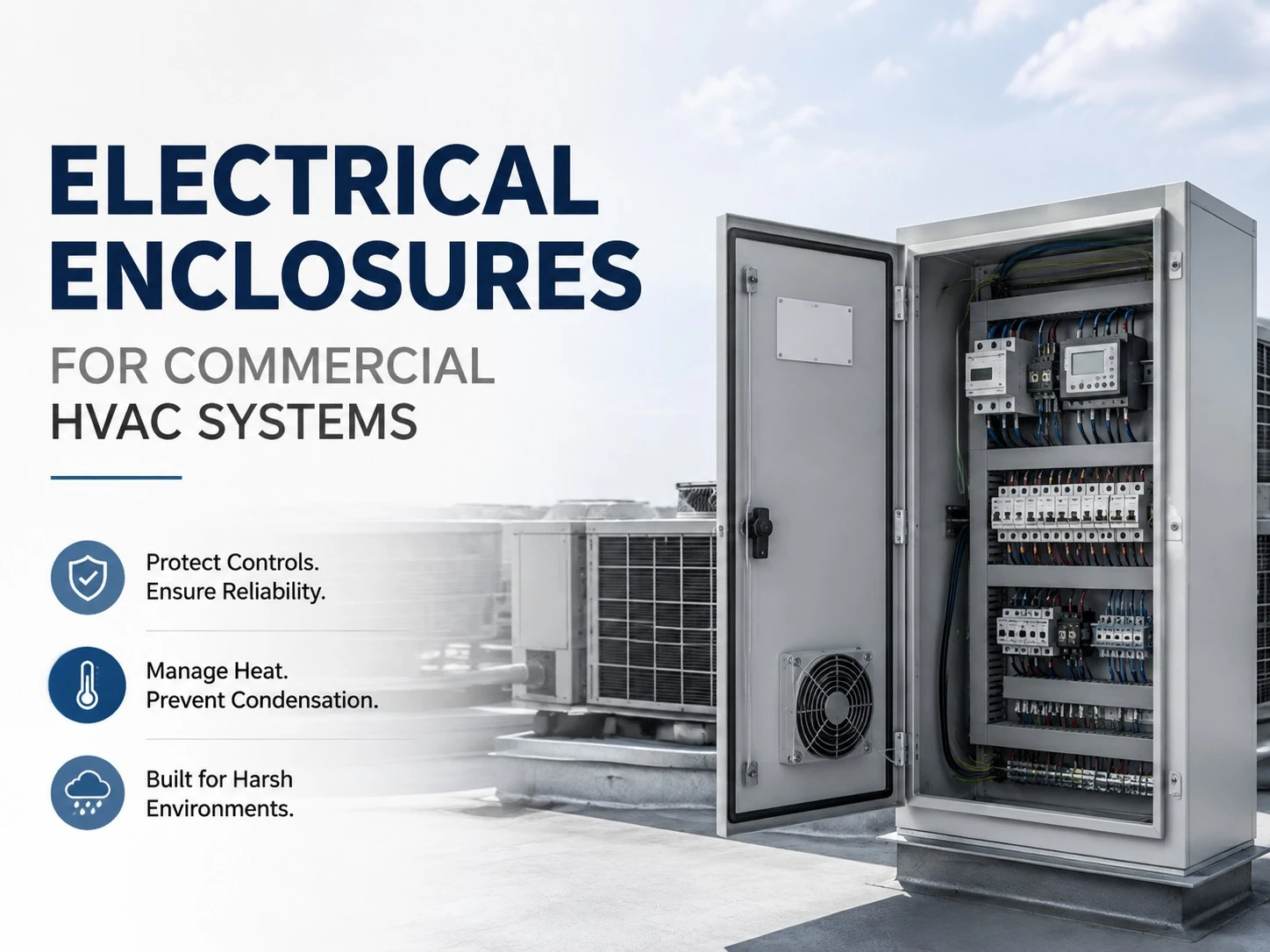
Common options include passive ventilation, fans and filters, heat sinks, air conditioners, heat exchangers, pressure equalization vents, and condensation control devices.
In locations with large day-night temperature changes, condensation control is as important as waterproof protection. Moisture inside the cabinet can damage terminals, sensors, and electronic modules.

Confirm Layout, Cable Entry, and Maintenance Space
A good enclosure should not only fit the components. It should also make wiring, testing, inspection, and maintenance easier.
Before ordering, confirm the component list, mounting plate size, cable gland quantity, cable entry direction, wire bending radius, and service clearance.
Solar, BESS, and EV charging systems may need clear separation between AC wiring, DC wiring, communication wiring, grounding points, busbars, terminals, and monitoring devices.
Leave enough space for future upgrades. Your project may later need extra breakers, sensors, communication modules, or monitoring devices.
The mounting method should also match the site. Wall-mounted, pole-mounted, floor-standing, rooftop, and skid-mounted enclosures all have different requirements for door swing, cable route, anchoring, vibration, and maintenance access.
Review Safety and Compliance Requirements
Energy equipment may involve high voltage, high current, DC arc risk, battery safety issues, and local installation rules. The enclosure should support safe operation and inspection.
Key safety details include grounding and bonding points, lockable doors, touch-safe internal layout, emergency disconnect access, arc flash label space, and controlled access for service teams.
For battery-based renewable energy systems, boîtiers de batteries solaires may need stronger attention to ventilation, corrosion resistance, safety access, and long-term outdoor protection.
For battery energy storage systems, UL energy storage system testing can be a useful reference when reviewing system-level safety expectations.
Battery storage projects may also need to review NFPA 855 when fire safety and installation requirements are part of the project scope.
Project requirements may include IP rating, NEMA rating, UL 50, UL 50E, UL 508A, IEC 60529, IEC 61439, UL 9540, UL 9540A, or NFPA 855. Always confirm the required standards before production.

Consider Corrosion, UV, and Surface Treatment
Surface treatment can greatly affect the real service life of an energy enclosure. This is important for outdoor solar farms, EV charging stations, wind power systems, coastal projects, and industrial energy sites.
Common options include powder coating, stainless steel finishing, anti-corrosion coating, UV-resistant materials, salt spray resistant design, and proper coating thickness.
Color can also matter. Dark colors may absorb more heat under direct sunlight, while lighter colors may help reduce surface temperature in some outdoor installations.
For harsh outdoor sites, corrosion resistance can be more important than the initial enclosure price. A cheaper cabinet may cost more later if it rusts, leaks, or needs early replacement.
Standard vs Custom Energy Enclosures
Standard enclosures can work well for simple indoor applications, common component layouts, and low customization needs. They are usually faster to source and easier to replace.
Custom electrical enclosures are often better for solar, battery storage, EV charging, and industrial power projects with special cable entry, high heat load, outdoor exposure, or strict layout needs.
Customization can include cutouts, mounting plates, cooling systems, cable glands, busbar layout, door structure, locks, surface treatment, branding, and OEM design.
For projects that need flexible sizing, special cutouts, cable entry planning, cooling accessories, or OEM customization, Eabel electrical enclosures can support different industrial and energy applications. This is useful when a standard box cannot fully match your layout, rating, or installation needs.
For many energy projects, a custom enclosure can reduce field modification, improve installation speed, and better match the real electrical layout.

Energy Enclosure Buyer Checklist
Before placing an order, confirm these details with your enclosure supplier:
- Application type and installation environment
- Required IP or NEMA rating
- Material and surface treatment
- Internal component size and heat load
- Cooling method and condensation control
- Cable entry, grounding, and mounting plan
- Maintenance access and future expansion space
- Safety, fire, and compliance requirements
- Order quantity, customization needs, and lead time
This checklist helps you avoid missing key design details before production. It also makes communication with the enclosure manufacturer faster and more accurate.
Erreurs courantes à éviter
Some enclosure problems start before production. The most common mistake is choosing the cabinet size before confirming the full component layout, cable route, and cooling space.
Other common mistakes include ignoring heat dissipation, using indoor cabinets outdoors, choosing poor materials for corrosive sites, leaving too little cable entry space, modifying the enclosure after delivery, and ignoring local safety standards.
These issues can reduce protection performance, damage the coating, increase installation cost, or delay the whole project. Early design review is usually cheaper than field repair.

FAQs About Choosing Energy Enclosures for Solar, BESS, and Power Projects
Conclusion

Choosing the right energy enclosure is not only about finding a box that fits the equipment. You need to consider the working environment, IP or NEMA rating, material, cooling, cable layout, mounting, safety standards, and long-term maintenance. A well-designed enclosure can protect valuable components, reduce downtime, and improve project reliability.
If you need enclosures for solar, battery storage, EV charging, power distribution, or other energy applications, Contactez-nous with your drawings, component list, installation environment, protection rating, cooling needs, order quantity, and customization requirements. Our team can help you choose or customize a suitable enclosure for your project.
Lectures connexes
Climate Effects on Electrical Enclosures
Les boîtiers électriques ont-ils besoin d’une ventilation ?
Guide de contrôle de la température des boîtiers électriques
Custom Electrical Enclosures Explained



 FR
FR  EN
EN  ES
ES  AR
AR  JA
JA  KO
KO  RU
RU  DE
DE  PT
PT  IT
IT  ZH
ZH  TH
TH  VI
VI  HI
HI  MS
MS 