

Why SAA Certification Matters for Modular Housing

SAA certification helps show that an electrical product has been assessed against relevant Australian and New Zealand safety requirements. For modular housing, this matters because many electrical parts are chosen before the building arrives on site.
A prefab home may be wired in a factory, transported by truck, and connected later at the final location. During this process, the enclosure must stay secure, safe, and suitable for local installation practice.
Certification also helps when you source from overseas. A general CE mark or supplier claim may not be enough for an Australian project. You need documents that match the product type, electrical components, and market requirements.
This is especially important for distribution boards, outdoor meter boxes, switchboard enclosures, and enclosure assemblies that include electrical parts. For related prefab applications, you can also review American electric boxes for prefab buildings.
SAA, RCM, EESS, and AS/NZS Explained
Many project teams see these terms but are not always sure how they connect. They are related, but they do not mean the same thing. You can also compare broader normes relatives aux boîtiers électriques before confirming the final design.
| Terme | Ce que cela signifie pour votre projet |
|---|---|
| SAA | Product safety approval for relevant electrical equipment |
| RCM | Compliance mark used for applicable electrical products in Australia and New Zealand |
| EESS | Registration and certification system for certain electrical equipment |
| AS/NZS 3000 | Wiring Rules for electrical installation work |
| Classement IP | Protection level against dust, water, and site exposure |
The key point is simple. A certified enclosure or enclosure assembly can support compliance, but it does not replace compliant installation.
Final wiring, testing, site connection, and approval should still be handled by licensed electrical professionals according to local rules.

Common Electrical Risks in Modular Housing Projects
Modular construction creates risks that are easy to miss during purchasing. You can use an sécurité des boîtiers électriques review to check material, sizing, sealing, and maintenance risks earlier.
Some suppliers provide overseas certificates that do not match Australian project needs. This can create questions during inspection or delay the final connection.
Enclosure size is another common problem. Local electricians may need space for breakers, RCBOs, neutral bars, earth bars, surge protection, meters, cable bending, and future circuits. If the enclosure is too tight, wiring becomes slower and less service-friendly.
Outdoor exposure also matters. Modular homes may be used in coastal housing, worker camps, remote accommodation, rental units, or off-grid sites. Rain, dust, UV, heat, and salt air can damage weak enclosures over time.
Transport is another risk. A modular unit may face vibration, lifting, loading, and movement before it reaches the site. Poor mounting or weak packaging can leave the enclosure bent, scratched, loose, or damaged.
A final issue is missing documentation. Even when the enclosure looks fine, poor records can slow communication between the supplier, builder, electrician, and project owner. Australian guidance on electrical compliance in prefabricated structures is also useful for understanding inspection and handover risk.

Comment choisir le bon boîtier électrique
Start with the installation location. An indoor distribution board has different needs from an outdoor meter box or a weatherproof control enclosure.
For indoor use, the enclosure should be neat, compact, and easy to access. It should have enough internal space for wiring, labels, protective devices, and future service work.
For outdoor modular homes, choose an IP-rated electrical enclosure that can handle rain, dust, and site exposure. Weak sealing can allow moisture into the box and create long-term electrical risks.
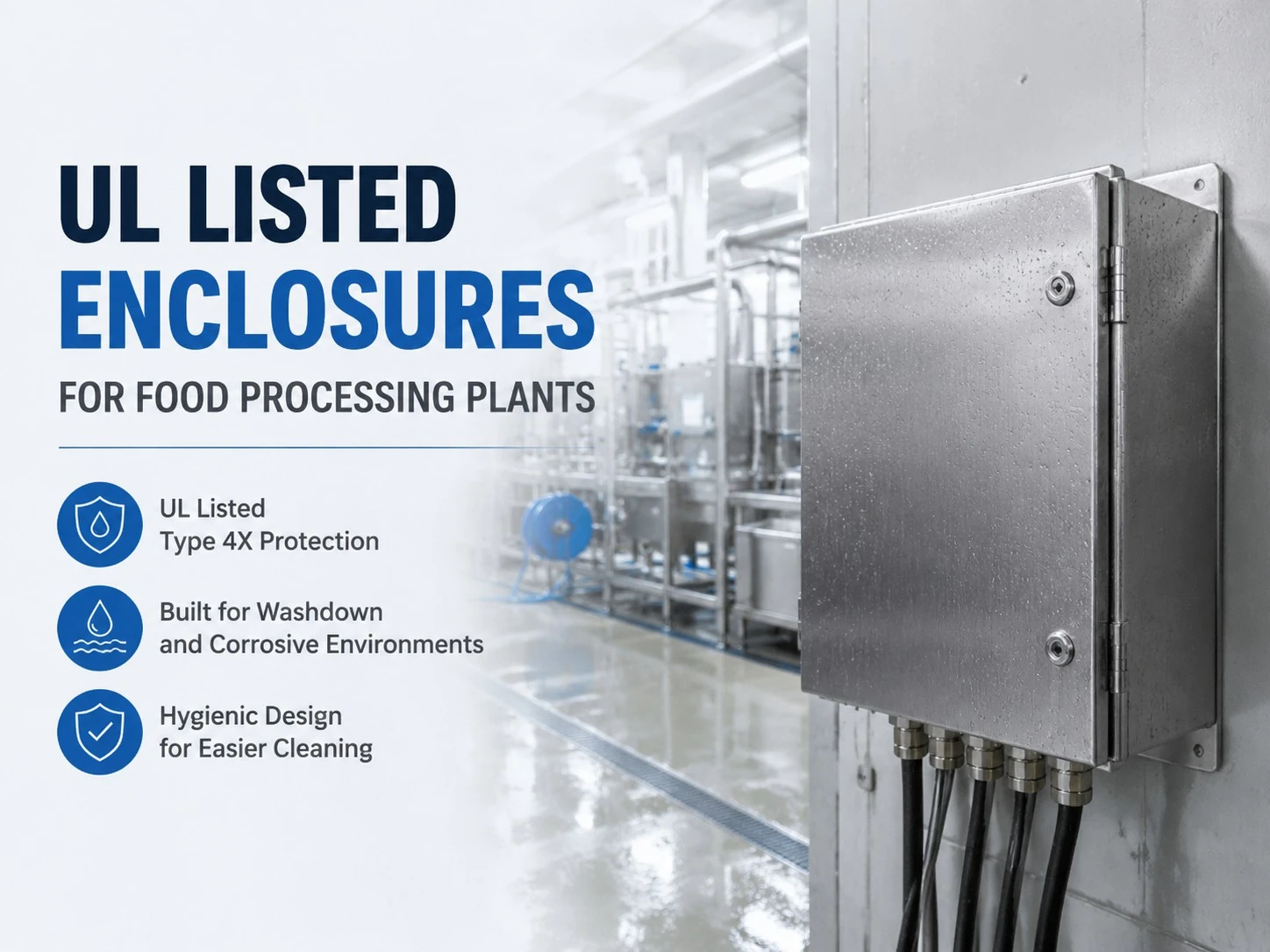
In coastal areas, corrosion resistance is critical. Salt air can quickly damage low-quality steel. Stainless steel, aluminum, or well-finished powder-coated steel may be better choices depending on the site.
Remote and harsh environments need stronger housing, reliable locks, clean cable entry, and easy maintenance access. If technicians need to service the enclosure later, the layout should be clear and practical.
For repeated modular housing units, standardization is valuable. Using the same enclosure size, cutouts, wiring space, and layout can help reduce mistakes across multiple homes.
If you need project-ready enclosure options for modular homes, Eabel electrical enclosures can support different sizes, materials, IP ratings, cable entry designs, and custom layouts for prefab housing and electrical distribution projects.
For outdoor or semi-outdoor projects, compare IP65, IP66, and IP67 enclosure ratings before choosing the final protection level.

Buyer Checklist Before Bulk Ordering
Before you place a bulk order, check both compliance documents and real project usability.
| Que vérifier | Pourquoi c'est important |
|---|---|
| SAA or relevant approval evidence | Helps reduce product compliance risk |
| RCM and EESS details where applicable | Supports Australian market supply requirements |
| AS/NZS-related documents | Helps confirm project suitability |
| Classement IP | Protects against water and dust |
| Material and finish | Affects corrosion resistance and service life |
| Internal wiring space | Makes installation and maintenance easier |
| Rated current and circuit capacity | Helps match the electrical design |
| Technical drawings | Helps electricians review the layout early |
| Wiring diagram | Reduces confusion during connection and service |
| Conception d'entrée de câble | Makes site wiring cleaner and faster |
| Packaging method | Reduces transport damage during module delivery |
Do not only ask for the enclosure price. Ask whether the supplier can support your project with drawings, material details, certificate files, layout review, and repeatable production quality.

Best Enclosure Types for Modular Housing
Different parts of a modular home may need different electrical enclosures. Choosing the right type can improve safety, reduce installation time, and make future maintenance easier.
Main distribution boards are usually installed inside the home. They manage lighting, power outlets, appliances, and protection devices. These boards should be safe, accessible, and easy to label.
Outdoor meter boxes are used for service connection and metering. They need stronger weather protection, secure locks, and durable materials.
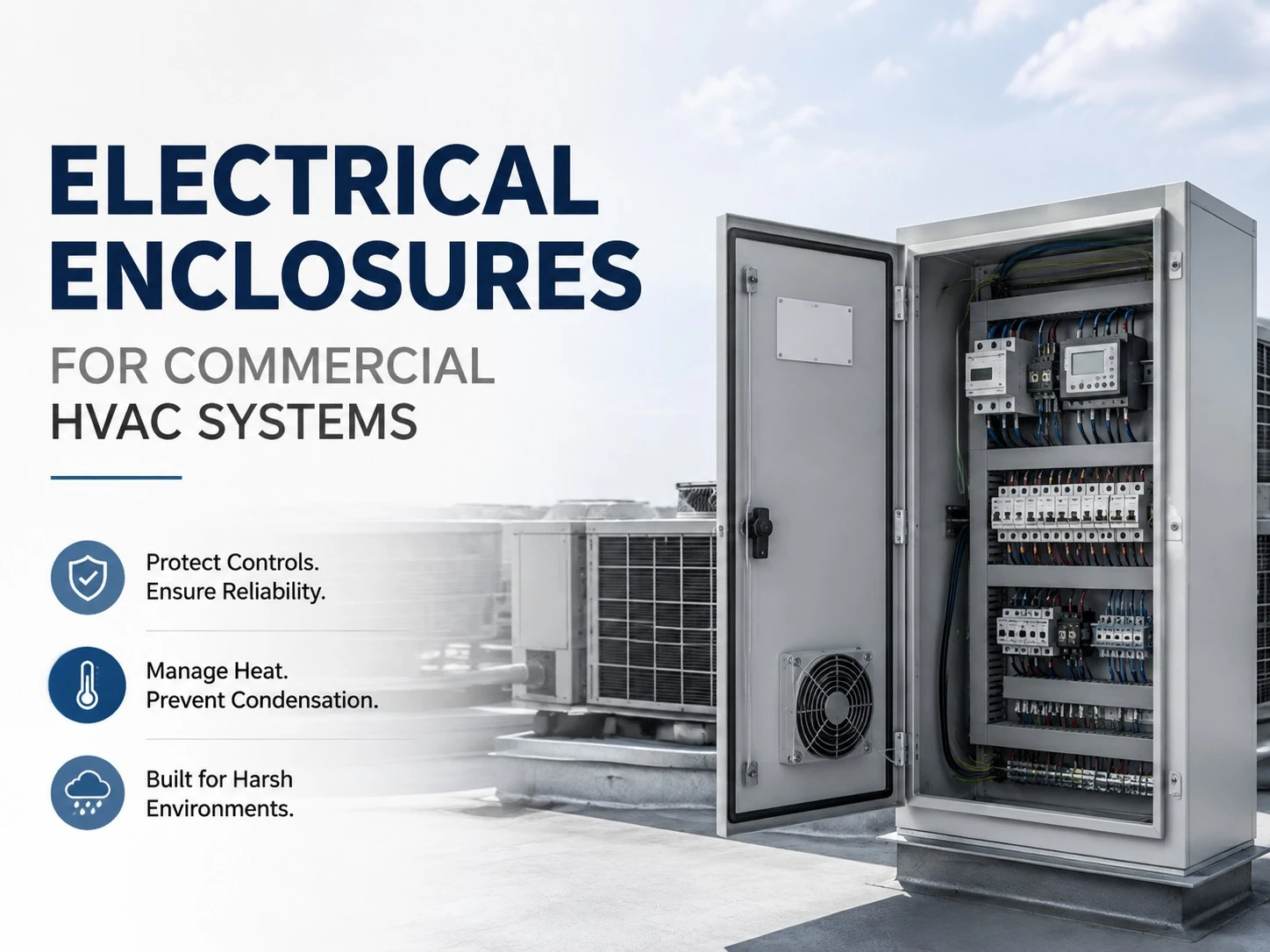
Weatherproof control boxes may be used for pumps, HVAC equipment, outdoor lighting, water systems, or small utility controls. The IP rating should match the real exposure level.
Switchboard enclosures may be needed for multi-unit modular housing, worker accommodation, or larger prefab developments. In these cases, capacity, spacing, labeling, and future expansion become more important.
Stainless steel enclosures are useful for coastal, humid, or exposed locations. They usually cost more than basic steel boxes, but they can reduce corrosion and replacement risk.
Custom enclosure assemblies can also help modular builders. If the same layout is repeated across many units, a custom design can reduce wiring errors and speed up installation.
Documentation That Helps Approval and Handover
Good documentation is one of the easiest ways to reduce project risk. It helps contractors, inspectors, developers, and maintenance teams understand what has been supplied.
A useful technical file should include certificate evidence, technical drawings, wiring diagrams, component lists, IP rating details, material specifications, factory inspection records, installation guidance, and maintenance notes.
This is very helpful for imported modular homes and large repeated housing projects. When each unit uses the same enclosure design and the same document package, the review process becomes easier.
Clear documents also help after handover. If a property manager or electrician needs to service the system later, they can find the enclosure layout, rating, and wiring information faster.
How Better Enclosures Reduce Project Cost
A low-cost enclosure may look attractive at first. But if it causes wiring rework, water ingress, corrosion, inspection questions, or replacement work, the real cost becomes higher.
A suitable SAA certified or Australian-compliant enclosure assembly can reduce rejected components. It also helps electricians work faster because the wiring space, cable entry, and labels are easier to manage.
The right enclosure can also reduce maintenance calls after the home is occupied. Clean layout, durable sealing, corrosion-resistant materials, and clear drawings all make long-term service easier.
For projects with many repeated modular units, these savings become more important. A small problem in one enclosure can become a large cost when repeated across dozens or hundreds of homes.

FAQs About SAA Electrical Enclosures for Modular Homes
Conclusion

SAA electrical enclosures can help modular housing projects improve safety, reduce compliance risk, and protect electrical systems in real site conditions. The best enclosure should have suitable certification support, enough wiring space, strong sealing, durable materials, clear drawings, and complete project documentation.
If you are sourcing electrical enclosures for modular homes, prefab housing, or Australian-standard projects, Contactez-nous to discuss your enclosure size, material, IP rating, internal layout, and document needs. We can help you choose a safer and more project-ready enclosure solution before bulk production.
Lectures connexes
What Is the IP Rating for a Weatherproof Enclosure?
Indoor vs Outdoor Meter Boxes: 7 Key Differences
Meter Box vs Distribution Box: Key Differences
What Is a Meter Box? Types, Safety, and Uses



 FR
FR  EN
EN  ES
ES  AR
AR  JA
JA  KO
KO  RU
RU  DE
DE  PT
PT  IT
IT  ZH
ZH  TH
TH  VI
VI  HI
HI  MS
MS 