

Qu'est-ce qu'un boîtier modulaire ?

A modular enclosure is an industrial cabinet built with a strong frame and removable parts. These parts may include doors, side panels, roof panels, base plates, mounting plates, DIN rails, cable plates, locks, and hinges.
Unlike a one-piece welded box, a modular electrical enclosure is designed for easier change. You can replace panels, adjust layouts, add accessories, or connect multiple cabinets together.
These enclosures are often used for PLCs, drives, breakers, terminals, power supplies, network devices, and automation controls.
The value is simple. Your equipment gets strong protection, while your industrial enclosure system stays easier to expand and service.
If your project needs a flexible cabinet platform, custom industrial enclosure solutions can help match the enclosure structure, material, size, and protection level to real working conditions.
Boîtiers modulaires ou traditionnels
Both modular and traditional enclosures can protect electrical equipment. The better choice depends on your project size, working conditions, and future upgrade needs.
| Facteur | Modular Enclosure | Traditional Enclosure |
|---|---|---|
| Structure | Frame with removable panels | Fixed welded or one-piece body |
| La flexibilité | Easy to modify or expand | Harder to change after installation |
| Entretien | Better access from several sides | More limited access |
| Expansion | Cabinets can often be joined | Expansion may need replacement |
| Scellage | Depends on gasket and assembly quality | Usually has fewer joints |
| Idéal pour | Growing or complex systems | Simple fixed installations |
A welded enclosure may work well for a fixed system with few future changes. A modular control cabinet is often better when you need access, expansion, custom layouts, or faster service.
Pour une comparaison plus approfondie, ce guide de modular vs non-modular enclosures explains how structure, maintenance, shipping, and long-term cost can affect your project.

Main Benefits of Modular Enclosures
Easier Expansion
Industrial systems often grow over time. You may need to add new drives, controllers, terminals, or communication devices later.
With a modular enclosure, you can plan future expansion more easily. Cabinets can often be bayed together, panels can be replaced, and internal space can be adjusted.
Faster Maintenance
Maintenance teams need safe and quick access. If a cabinet is hard to open or inspect, small problems can take longer to fix.
Removable panels make wiring, devices, and mounting plates easier to reach. This can reduce service time and help technicians work more safely.
During service work, proper lockout/tagout safety practices help reduce the risk of unexpected energy release during maintenance.
Cleaner Internal Layout
A crowded enclosure is harder to wire, cool, and maintain. It may also increase the risk of wiring mistakes.
Modular industrial enclosures make it easier to separate power, control, signal, and network components. A cleaner layout improves airflow, troubleshooting, and future upgrades.
Lower Long-Term Downtime
Downtime is expensive in industrial operations. If a cabinet must be cut, rebuilt, or replaced during upgrades, the total cost can rise quickly.
Modular designs can reduce rework, service time, and upgrade costs over the full project life.

Comment choisir le bon boîtier modulaire
Choosing the right modular enclosure starts with the working environment. Do not select only by size or price. A low-cost cabinet can become expensive if it fails in the field.
If you also need a wider selection framework, this guide on how to choose the right electrical enclosure can help you compare environment, size, material, rating, and compliance needs.
Vérifiez l'environnement d'installation
Start with the real site conditions. Check for dust, water spray, oil, chemicals, sunlight, temperature changes, vibration, impact, and corrosion risk.
The environment decides the enclosure rating, material, sealing method, and cooling plan.
Confirm the Protection Rating
An IP rated enclosure shows protection against dust and water. For global projects, Indices de protection IP IEC help define how well an enclosure resists dust and liquid ingress.
Common IP ratings include IP54, IP65, IP66, IP67, and IP68. IP54 may suit basic indoor use, while IP65 or IP66 is better for dust-tight and water-jet protection.
IP68 depends on immersion conditions defined by the test or manufacturer. Always check the exact test condition before using it for deep or long-term water exposure.
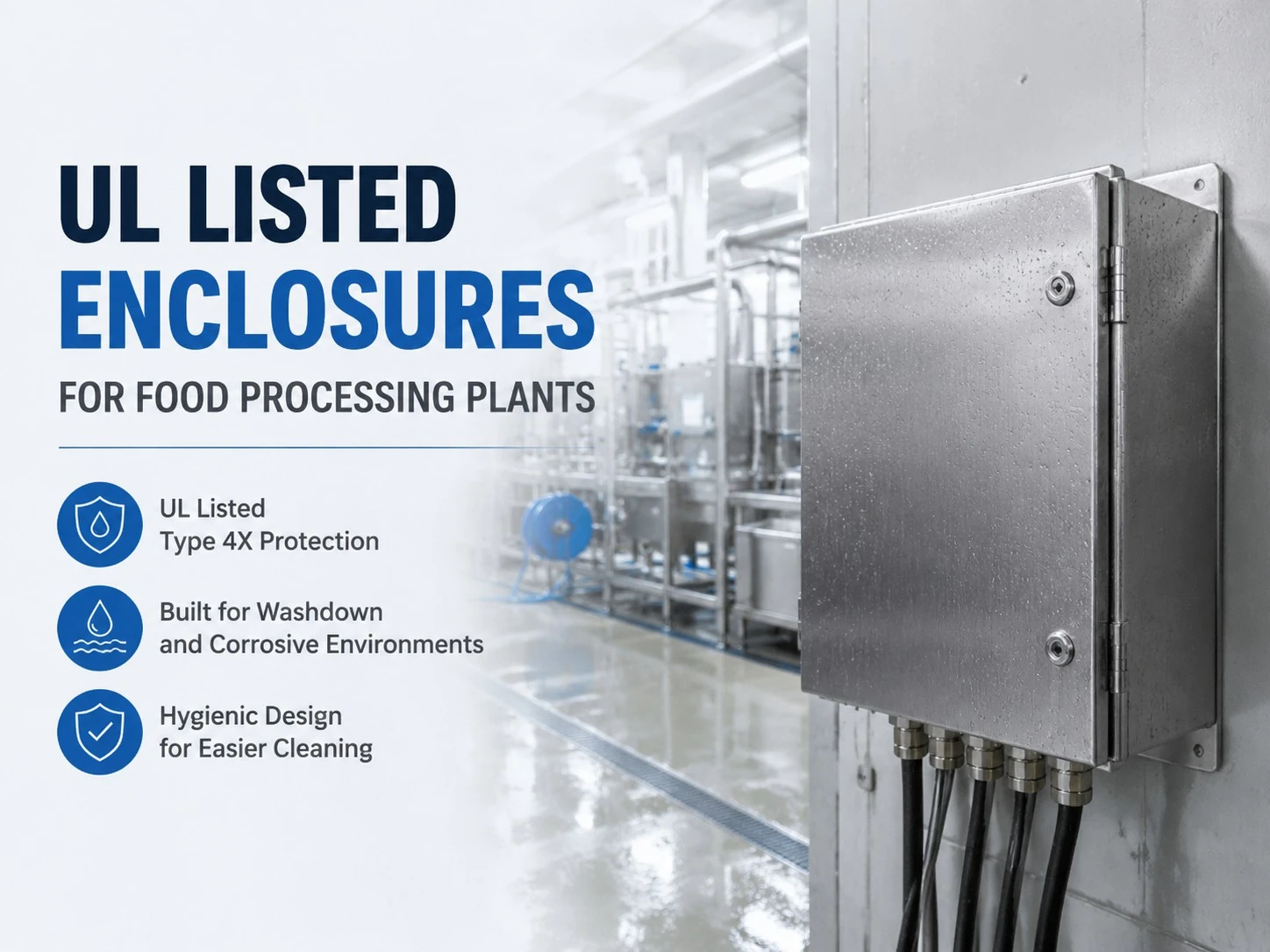
NEMA enclosures are common in North America. For North American projects, Types de boîtiers NEMA help describe protection for indoor, outdoor, washdown, and corrosive environments.
NEMA 12 is often used indoors. NEMA 3R suits outdoor rain. NEMA 4 and NEMA 4X are used for stronger water protection, with 4X adding corrosion resistance.
IP and NEMA ratings are not direct matches. Always check the project standard before ordering.

Select the Right Material
Material affects strength, corrosion resistance, weight, cleaning performance, and cost. Match the material to the site, not only to the budget.
| Matériel | Idéal pour | Principal avantage | Watch Out For |
|---|---|---|---|
| Acier Carbone | Indoor control panels | Solide et rentable | Needs coating |
| Acier inoxydable | Food, chemical, marine, washdown areas | Haute résistance à la corrosion | Coût plus élevé |
| Aluminium | Outdoor or lightweight systems | Résistant à la lumière et à la corrosion | Lower strength than steel |
| Fiberglass or GRP | Corrosive or non-metallic applications | Rust-free and non-conductive | Less rigid for heavy loads |
Calculate Internal Space
A common mistake is choosing an enclosure that is too small. Components may fit at first, but wiring, airflow, and future upgrades need extra room.
Leave space for cable bending, wiring ducts, terminal blocks, heat dissipation, and maintenance access.
Plan Cable Entry and Wiring
Cable entry affects sealing and installation quality. Poor cable entry can reduce the enclosure’s protection level.
Plan where cables enter and exit. Use suitable cable glands, gland plates, or cable entry systems. Keep power and signal wiring separated when needed.
Review Heat Load and Cooling
Drives, transformers, power supplies, and control devices can raise the internal temperature quickly.
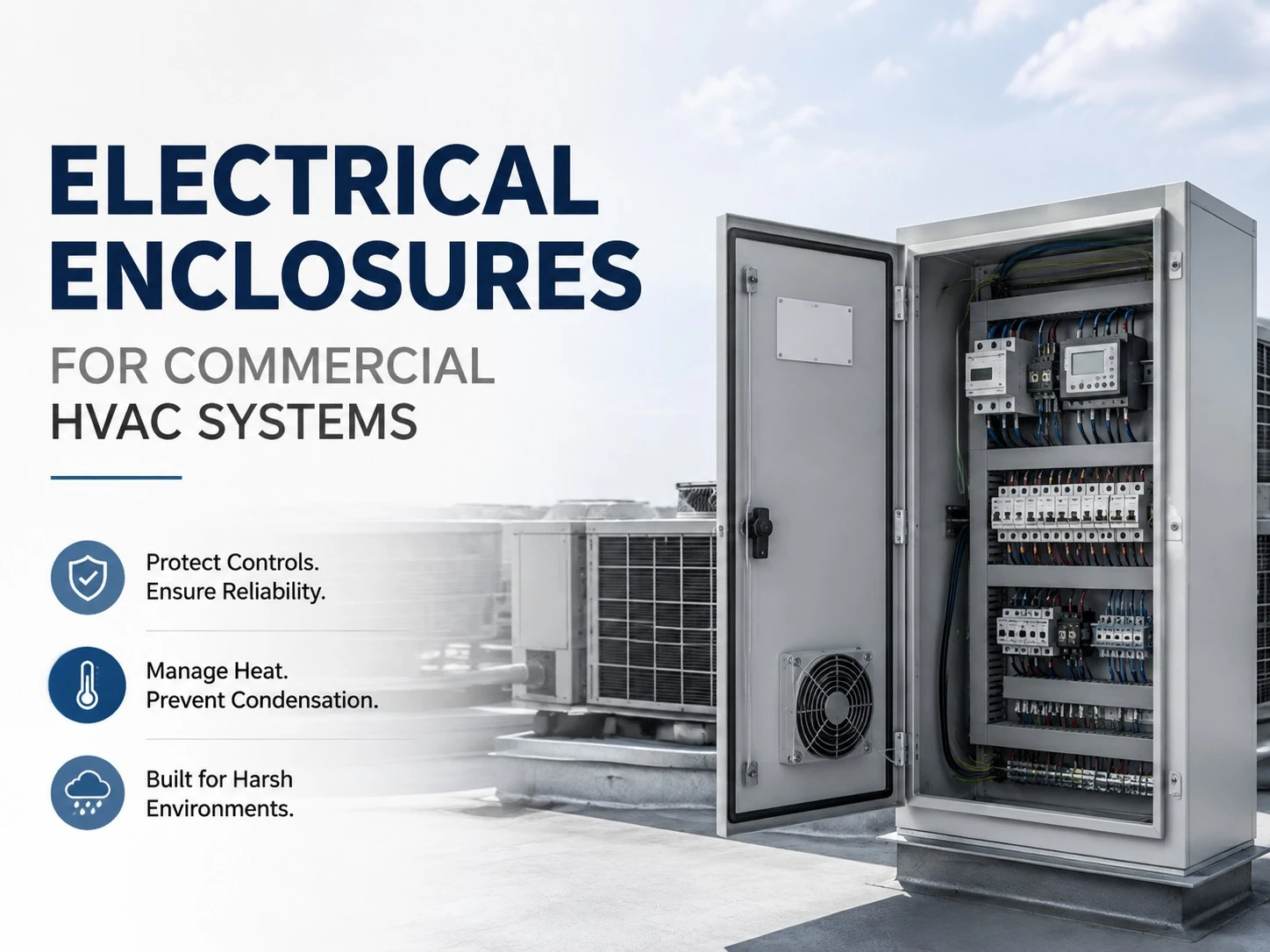
Check the heat load before choosing the cabinet. You may need natural ventilation, fans, filters, air conditioners, or heat exchangers.
For projects with drives, power supplies, or high ambient temperatures, reviewing contrôle de la température du boîtier électrique early can reduce overheating risk and extend component life.
Check Access and Certification
Door swing, lock type, hinge strength, and working space all affect daily service. Make sure technicians can inspect and repair the system safely.
Some projects may require UL, IEC, NEMA, or customer-specific standards. If the enclosure will be used for an industrial control panel, UL 508A industrial control panels requirements may affect layout, wiring, spacing, and compliance review.

Best Applications for Modular Enclosures
Modular enclosures are useful where electrical systems may change, expand, or need regular maintenance.
Common applications include PLC control cabinets, automation systems, motor control panels, power distribution, machine control systems, renewable energy projects, water treatment, and utility control systems.
They are also useful for OEM machine builders. A modular platform makes it easier to repeat standard cabinet designs while still allowing project-specific changes.
When Modular Enclosures May Not Be the Best Choice
Modular enclosures offer many advantages, but they are not always the best answer.
For a very simple fixed system, a basic welded enclosure may be enough. If no future expansion is planned, extra flexibility may not add much value.
Assembly quality is also important. Poor gasket placement, loose fasteners, or incorrect cable entry can reduce sealing performance.
High-vibration areas may need stronger fastening and regular inspection. Harsh washdown or corrosive sites need the right material, gasket, and rating.
Choose a modular enclosure because it solves real problems in protection, access, expansion, and maintenance.

Modular Enclosure Buying Checklist
- Installation environment checked
- Indoor or outdoor use confirmed
- IP or NEMA rating selected
- Material matched to site conditions
- Internal size and future space calculated
- Heat load and cooling method reviewed
- Cable entry and wiring routes planned
- Door access and maintenance space checked
- Gasket and sealing method reviewed
- Grounding and certification needs confirmed
FAQ sur les boîtiers modulaires
Conclusion

Modular enclosures help protect industrial controls while giving your system more room to grow. The best choice depends on your environment, rating needs, material, layout, cooling plan, and future maintenance requirements.
If you need modular enclosures for control panels, automation systems, power distribution, or custom electrical projects, Contactez-nous for practical selection support. We can help you choose a safer and more reliable enclosure solution for your application.



 FR
FR  EN
EN  ES
ES  AR
AR  JA
JA  KO
KO  RU
RU  DE
DE  PT
PT  IT
IT  ZH
ZH  TH
TH  VI
VI  HI
HI  MS
MS 