

Start With the Plant Area and Failure Risk
A wastewater treatment plant is not one uniform environment. A cabinet in a clean electrical room faces different conditions from a pump panel beside a wet well or a dosing controller near a chemical treatment process.
OSHA’s hydrogen sulfide guidance explains that hydrogen sulfide is toxic, highly flammable, and heavier than air. It may be released from sewage sludge and can collect in low or poorly ventilated spaces. In addition to harming workers, sulfur compounds can contribute to electrical and electronic corrosion where moisture is present. Their presence may affect ventilation, gas monitoring, confined-space procedures, material selection, and hazardous-location review.
| Plant Area | Main Exposure | Équipement typique | Main Design Priority |
|---|---|---|---|
| Headworks and screening | H₂S, aerosols, debris, washdown | Sensors, starters, local controls | Corrosion resistance, sealed entries, washdown protection |
| Wet wells and lift stations | Humidity, gases, flooding | Pump controls, level instruments, telemetry | Area classification, equipment elevation, alarms, reliable sealing |
| Aeration and basin areas | Weather, mist, heat, UV | Blower controls, analyzers, instruments | Outdoor protection, heat removal, condensation control |
| Chemical dosing rooms | Chlorine, acids, oxidizers | Dosing controls, pumps, analyzers | Verified material, gasket, and accessory compatibility |
| Sludge and dewatering areas | Moisture, H₂S, dust, vibration | VFDs, conveyors, presses | Corrosion resistance, sealing, mechanical strength |
| Electrical and control rooms | Internal heat, dust, lower chemical exposure | MCCs, PLC racks, network equipment | Cooling, service access, SCCR, panel compliance |
| Remote or flood-prone sites | Floodwater, sun, vandalism, power loss | Pump controls, telemetry, transfer equipment | Elevation, remote alarms, security, backup operation |
These exposure patterns are general screening points rather than fixed specifications. Plant areas can have different corrosion levels, contaminants, ventilation, and equipment arrangements, so the final design must use site information rather than the area name alone.
Environmental exposure is only half of the decision. The other half is what happens when the protected equipment fails.
A cabinet controlling noncritical lighting does not carry the same risk as one controlling an influent pump, high-level alarm, or essential aeration system. Critical equipment may justify redundant controls, remote alarms, manual operation, spare parts, or a faster recovery plan.
Flood protection should begin at the site level, not with the enclosure rating. EPA Region 1’s 2025 adaptation procedures for wastewater and sewer systems recommend comparing critical asset elevations with baseline and future flood elevations before selecting mitigation measures. Equipment may need to be raised, relocated, isolated, waterproofed, or supported by backup power.
Remote stations add further requirements. The design may need cellular or radio telemetry, secure locks, surge protection, antenna provisions, manual pump control, generator access, and room for future communication equipment.

Choose the Right NEMA or IP Rating
NEMA and IP ratings describe environmental protection, but they use different classifications and test methods. This detailed comparison of NEMA vs. IP ratings explains why they should not be treated as direct equivalents.
NEMA 12 can suit controlled indoor areas where dust, dripping water, and noncorrosive contamination are the main concerns. NEMA 3R is used for certain outdoor applications, but it does not provide the hose-directed water or additional corrosion protection associated with Type 4X.
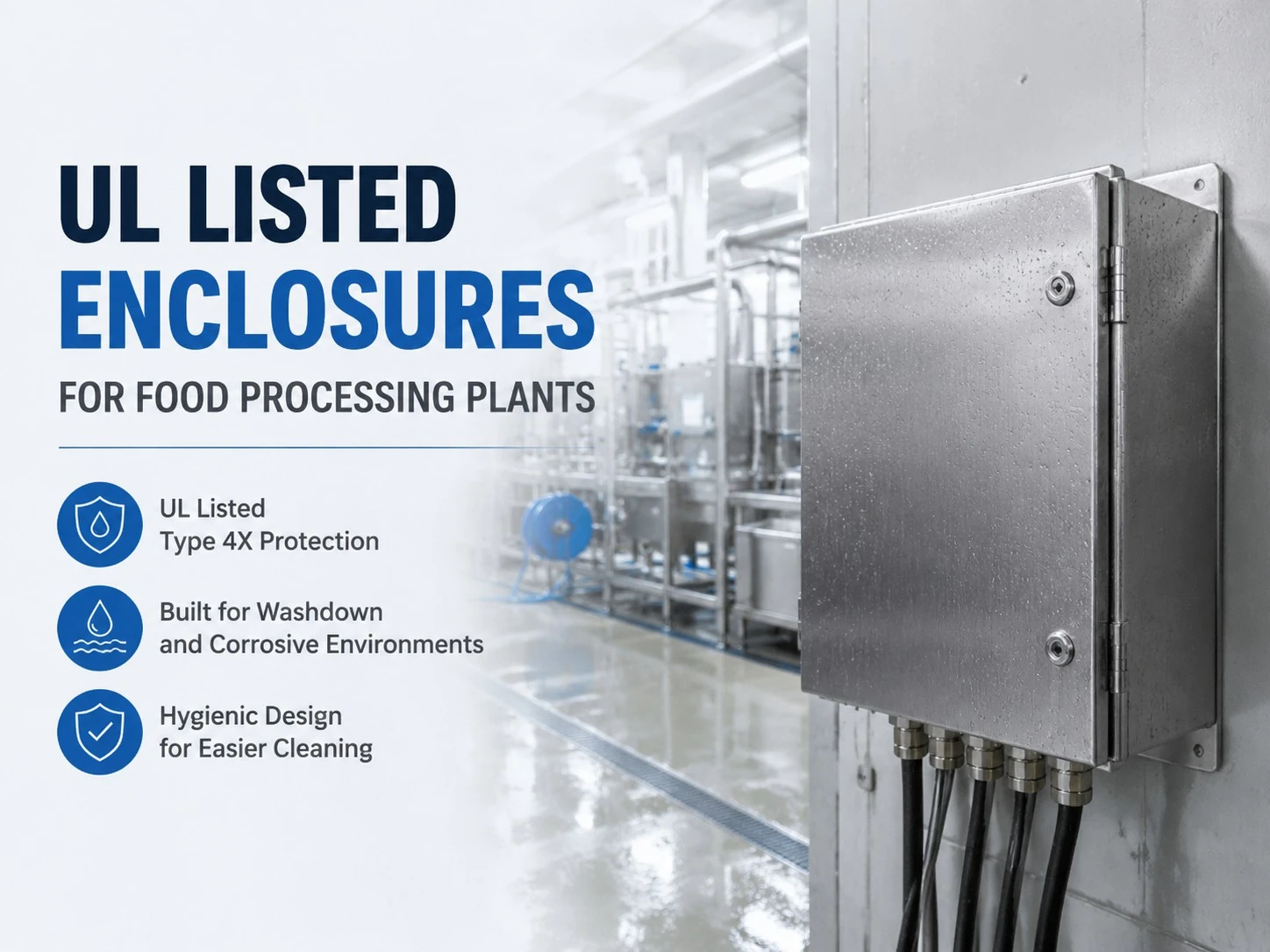
NEMA 4 protects against windblown dust, rain, splashing water, and hose-directed water. Type 4X provides the same ingress protection plus a degree of protection against corrosion. It is common in wet and washdown areas, but it does not establish compatibility with every chemical used at a wastewater facility.
NEMA 6 and 6P address defined submersion conditions. Type 6 covers occasional temporary submersion, while Type 6P covers prolonged submersion at a limited depth and provides an additional degree of corrosion protection. Neither rating means unlimited depth, permanent underwater service, or compatibility with every contaminant in floodwater. UL’s enclosure type descriptions explain the intended conditions for Types 4X, 6, and 6P.
IP66, IP67, and IP68 may appear in international specifications or equipment data sheets. The IP Code focuses on protection against solid objects and water, while NEMA Type evaluations can include additional conditions. An IP rating therefore cannot be converted directly into a NEMA Type designation.
Important: The project specification should state whether NEMA, IP, or both rating systems apply. Do not choose a rating through a simple equivalency chart.
A higher rating is not automatically a better design. An enclosure that is more tightly sealed than necessary may retain heat, increase cost, restrict cooling options, and make maintenance harder.
The rating must also apply to the completed assembly. A Type 4X cabinet fitted with a lower-rated gland, fan, hole plug, window, or operator may no longer provide Type 4X protection as installed.

Select Materials for the Complete Assembly
The best enclosure material is not always the most expensive option. It is the material that matches the chemicals, temperature, washdown method, UV exposure, mechanical load, internal heat, and expected service conditions.
| Matériel | Main Strengths | Main Limitations | Typical Application Direction |
|---|---|---|---|
| Powder-coated carbon steel | Strong, economical, easy to fabricate | Scratches and coating damage can expose the base metal | Controlled indoor areas with limited corrosion |
| Acier inoxydable 304 | Strong and suitable for many general industrial environments | Compatibility must be checked for chlorides and aggressive chemicals | Moderate corrosion and general washdown |
| Acier inoxydable 316 | Greater resistance in many chloride-bearing and aggressive environments | Higher cost; fabrication defects can still cause corrosion | More demanding chemical, coastal, or process areas |
| Fiberglass-reinforced polyester | Non-rusting, lightweight, nonmetallic | UV, impact, heat, and chemical resistance vary by formulation | Corrosive areas and some remote telemetry applications |
| Polycarbonate | Lightweight, compact, nonmetallic | Size, UV, chemical, and impact limits vary | Small control, instrument, and communication enclosures |
| Aluminium | Léger et facile à manipuler | Chemical and galvanic compatibility require review | Selected outdoor or weight-sensitive applications |
This table is a screening guide, not a chemical compatibility chart. For stainless steel projects, compare Boîtiers en acier inoxydable 304 et 316 before choosing a grade based only on price or general corrosion resistance.
Stainless steel performance depends on the chemical environment, chloride level, temperature, surface finish, fabrication, contamination, and maintenance. Type 316 generally provides more resistance than Type 304 in many chloride-bearing environments, but neither grade is suitable for every wastewater chemical or concentration.
NEMA 4X is an environmental performance rating, not a blanket chemical compatibility approval. Review the enclosure body, gaskets, hinges, latches, fasteners, grounding studs, glands, conduit hubs, windows, and cooling equipment against the actual chemicals, concentrations, temperatures, and exposure time.
Material combinations also matter. Moisture between dissimilar metals can promote galvanic corrosion, while unsuitable carbon-steel hardware on a stainless steel cabinet may fail around attachment points long before the enclosure wall.
Stainless steel grade alone does not guarantee good performance. Weld quality, heat tint, surface contamination, scratches, crevices, and water-trapping ledges can weaken an otherwise suitable design. Fabrication and finishing quality are especially important where chemical residue or washdown water can remain on the surface.
Gaskets are equally important. EPDM, neoprene, silicone, polyurethane foam, and other materials do not respond in the same way to oxidizers, oils, acids, ozone, heat, and UV. The selected gasket must match the environment and retain enough compression after repeated door openings.
The enclosure rating must continue through every cable and door interface. Common weak points include:
- Cable glands, conduit hubs, and unused-hole plugs
- HMI, pushbutton, window, and disconnect-handle cutouts
- Cooling units, filter fans, drains, and pressure-compensation devices
- Field-made openings and replacement accessories
Conduit and cable routes can carry moisture, condensate, or corrosive contaminants into a cabinet even when the door seal remains intact. Define drainage, suitable sealing fittings, and required cable-entry systems as part of the enclosure design.
Top entries need extra care because failed seals or poorly routed conduit can direct water into the enclosure. Bottom or side entries may reduce this risk, but they must still account for flood elevation, access, process emissions, and cable routing.
Field modifications should be controlled. Cutting an opening can damage coatings, expose untreated metal, create sharp edges, or introduce an accessory that does not support the required rating. General-purpose sealant should not be used to compensate for the wrong gland, an oversized opening, or poor installation.
Final drawings should identify approved cutouts, entry locations, accessory ratings, gasket requirements, and limits on site modification. This helps prevent later maintenance work from weakening the original design.

Control Heat and Condensation
A sealed enclosure can stop external water and still develop moisture inside. Air trapped in the cabinet contains water vapor. If an internal surface falls below the dew point, that vapor can condense on metalwork, terminals, circuit boards, and cables.
The risk often increases after equipment shuts down, during cool nights, or when warm, humid air enters while the door is open. Repeated condensation can contribute to corrosion, insulation tracking, false signals, and intermittent failures.
A practical enclosure condensation prevention plan should address humidity, temperature cycles, heating, drainage, and air exchange rather than relying on one accessory.
Anti-condensation heaters can keep internal surfaces above the dew point. Hygrostats can switch heaters based on humidity, while thermostats provide temperature-based control. Insulation, correctly installed drains, and pressure-compensation devices may also help.
These devices serve different purposes. A drain removes collected liquid but does not stop condensation. A breather can reduce pressure differences but may admit humid or corrosive air. Every drain, vent, and pressure device must support the required environmental rating and any hazardous-location requirements.
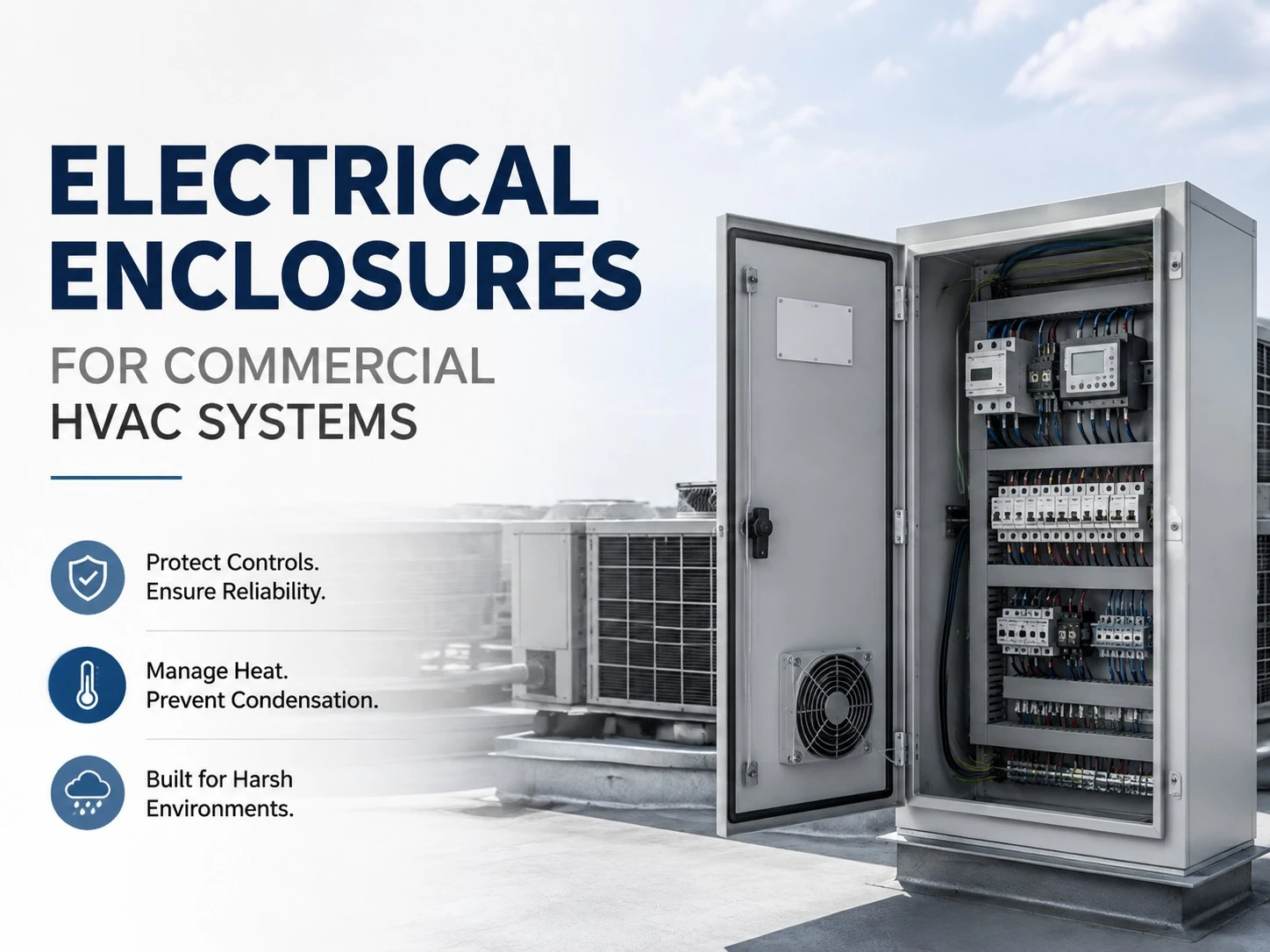
Heat creates the opposite problem. VFDs, power supplies, transformers, PLC racks, and communication equipment release heat inside the enclosure. Solar loading and high outdoor temperatures can raise the internal temperature further.
Open filter fans may work in clean, controlled rooms, but they can draw moisture, sulfur gases, chlorine vapors, or dust across electrical components. Closed-loop air conditioners or air-to-air heat exchangers are better choices where outside air must remain separated from the cabinet interior.
Passive measures can reduce the cooling load. These include sunshields, suitable exterior finishes, larger enclosure surfaces, adequate component spacing, and installation away from direct process heat.
Cooling capacity should be based on equipment heat loss, ambient temperature, solar exposure, enclosure surface area, target internal temperature, and operating cycle. Cabinet dimensions alone are not enough.
The cooling unit becomes part of the enclosure assembly. Its housing, seals, drain, power connection, and mounting opening must suit the same environment as the cabinet.

Separate Environmental, Hazardous-Location, and Panel Requirements
Environmental ratings, hazardous-location approvals, panel certification, SCCR, and arc-flash analysis answer different questions. A cabinet can meet one requirement without meeting the others.
UL 50 addresses non-environmental construction considerations for electrical enclosures. UL 50E addresses environmental considerations. UL’s Industrial Control Panel and Panel Shop Program explains how completed industrial control panels are evaluated beyond the rating of an empty enclosure. UL 508A covers areas such as component use, enclosure environmental ratings, wiring, motor protection, safety markings, and applicable electrical-code requirements.
Buying a certified empty enclosure does not automatically make the completed control panel UL 508A certified. Installed components, wiring methods, overcurrent protection, spacing, markings, enclosure modifications, and short-circuit current rating must be evaluated as part of the completed panel.
Hazardous-location suitability requires a separate review. Methane, hydrogen sulfide, or other flammable gases may be present in parts of wastewater collection and treatment systems. Process type, ventilation, gas sources, and equipment position can affect the classification.
NFPA 820 provides requirements for protection against fire and explosion hazards specific to wastewater treatment facilities and associated collection systems. The current published edition is the 2024 edition, but each project must follow the edition adopted by its contract documents, local code, and Authority Having Jurisdiction.
A NEMA 4X enclosure is not automatically explosion-proof or suitable for a classified location. A standard UL 508A panel is also not automatically approved for installation in a hazardous area.
Buyers who need a broader explanation of classification systems and protection methods can review this guide des enceintes pour zones dangereuses, but the project engineer and Authority Having Jurisdiction must still approve the final solution.
Depending on the application, the compliance path may involve UL 698A industrial control panels, UL 1203 explosion-proof equipment, UL 121201 nonincendive equipment, NFPA 496 purging or pressurization, or equipment evaluated under the UL 60079 series. The responsible engineer and Authority Having Jurisdiction should confirm the classification and protection method.
SCCR is another separate requirement. It states the short-circuit current level the completed panel can withstand under specified conditions and depends on the ratings and combinations of components in the power circuit. UL 508A includes methods for establishing and marking industrial control panel SCCR.
Arc-flash risk is not established by the enclosure Type or SCCR alone. NEMA Type ratings do not evaluate arc-flash resistance, and adequate SCCR does not state the incident energy a worker may face.
Important: Do not confuse environmental protection, hazardous-location suitability, panel certification, SCCR, and arc-flash protection. Each addresses a different risk.
Grounding and bonding must also match the enclosure material and installed equipment. Metallic doors and enclosures may need reliable bonding paths. Nonmetallic enclosures can change shielding and electromagnetic compatibility needs, especially around VFDs, radios, and sensitive instruments.

Follow a Practical Enclosure Selection Process
A useful specification converts real site conditions into clear design requirements before fabrication begins.
Once the project requirements are clear, buyers can compare standard and custom electrical enclosure options by size, mounting format, rating, and configuration instead of modifying a general-purpose cabinet on site. Eabel’s range includes wall-mount, free-standing, modular, PLC, outdoor, and customized enclosure formats, but the final design should still follow the project specification.
1. Define the Location and Equipment Function
Record the exact plant area, nearby processes, indoor or outdoor location, installation height, available space, and access conditions.
Identify what the enclosure controls and the effect of failure. Consider overflows, untreated discharge, loss of aeration, incorrect chemical dosing, alarm failure, permit risk, and expected recovery time.
2. Document the Actual Exposure
Record water spray, washdown method, humidity, hydrogen sulfide, chlorine, acids, oxidizers, solvents, dust, sludge, UV, temperature, solar heat, vibration, impact, flooding, and ice.
Use actual chemical names and concentrations when available. “Corrosive environment” is not detailed enough for material selection.
3. Confirm Hazardous-Location Requirements
Review the process, ventilation, area-classification drawings, project specifications, adopted NFPA 820 edition, and applicable electrical code.
Do not select an explosion-protection method by assumption. The responsible engineer and Authority Having Jurisdiction should confirm the classification and required equipment.
4. Select the Environmental Rating and Materials
Choose the required NEMA Type or IP rating based on the real indoor, outdoor, washdown, corrosion, dust, ice, and submersion conditions.
Specify the rating for the completed assembly. Then select the enclosure body, finish, hardware, fasteners, glands, and gasket materials as one compatible system.
5. Size the Enclosure and Calculate the Heat Load
Allow space for equipment, wire ducts, cable bending, terminals, door-mounted devices, safe testing, component removal, and future additions.
Calculate the internal heat load and ambient conditions before selecting cooling equipment. Confirm that VFDs, power supplies, and other large components can be replaced without dismantling unrelated equipment.
6. Define Every Opening and Accessory
Prepare a cutout and cable-entry plan covering conduit routes, cable glands, HMIs, operators, windows, disconnects, cooling systems, heaters, drains, pressure devices, antennas, and unused holes.
State which field modifications are allowed and how the completed rating will be checked after any change.
7. Confirm Certification, Testing, and Documentation
Define whether the supplier will provide an empty enclosure, a populated cabinet, or a completed certified control panel.
Confirm the required enclosure standards, UL 508A scope, SCCR, hazardous-location documentation, grounding, labeling, drawings, wiring diagrams, bill of materials, thermal calculations, factory tests, and inspection records.
Certification of an enclosed industrial control panel covers the enclosure and the provided panel but not the external motors, heaters, luminaires, or other loads it controls. The supplier’s scope should therefore be defined clearly.
8. Plan Maintenance and Lifecycle Cost
Place filters, cooling coils, heaters, drains, gaskets, glands, and bonding connections where they can be inspected and serviced.
Set inspection intervals according to exposure severity, equipment criticality, access difficulty, manufacturer guidance, and previous findings. Maintenance should cover enclosure condition, door seals, cable entries, cooling equipment, filters, and corrosion-control devices.
Compare lifecycle cost rather than purchase price alone. Include cleaning, inspection labor, replacement gaskets, cooling energy, remote-site travel, corrosion repair, spare parts, downtime, and eventual panel replacement.
Before requesting a quotation, provide the manufacturer with the plant area, equipment function, environmental exposure, required rating, material, dimensions, heat load, cable-entry plan, certification scope, quantity, and delivery requirements. Better project information reduces redesign, uncontrolled field changes, and avoidable delays.

FAQs About Electrical Enclosures for Wastewater Treatment
Conclusion

Electrical enclosures for wastewater treatment must be selected as complete engineered assemblies. The right solution matches the plant area, equipment criticality, environmental rating, chemical exposure, materials, gaskets, cooling, cable entries, flood strategy, and compliance path. A strong enclosure body cannot compensate for a weak gland, unsuitable gasket, uncontrolled opening, or incorrect hazardous-location assumption.
Contactez Eabel to discuss your enclosure dimensions, NEMA or IP requirements, stainless steel or nonmetallic material options, cable entries, custom cutouts, thermal management, control panel layout, and certification scope. Clear requirements before fabrication can reduce site changes and support more reliable long-term wastewater operation.
Lectures connexes
Coffrets électriques lavables : sélection et bonnes pratiques
Presse-étoupes expliqués : normes, indices de protection IP et applications
How to Prevent Rust in Electrical Enclosures
Les boîtiers électriques ont-ils besoin d’une ventilation ?
Nettoyage et entretien des boîtiers électriques : Guide des bonnes pratiques



 FR
FR  EN
EN  ES
ES  AR
AR  JA
JA  KO
KO  RU
RU  DE
DE  PT
PT  IT
IT  ZH
ZH  TH
TH  VI
VI  HI
HI  MS
MS 