

Que sont les boîtiers industriels ?

Industrial enclosures are protective boxes, cabinets, or housings used to contain electrical and control components. They are widely used in machinery, production lines, power distribution, outdoor equipment, and industrial automation systems.
A typical industrial electrical enclosure may hold PLCs, VFDs, circuit breakers, relays, terminal blocks, power supplies, HMIs, sensors, network devices, and cable connections. The enclosure keeps these parts organized, shielded, and easier to inspect.
Why Industrial Enclosures Are Used
Industrial sites can expose electrical equipment to dust, moisture, oil mist, vibration, cleaning water, heat, and chemical vapor. Without the right enclosure, these conditions can damage components and cause unsafe operation.
The main purpose of an industrial enclosure is to reduce exposure, prevent electrical hazards, support stable machine control, and extend equipment service life. The real value is lower downtime, safer operation, and fewer repair costs.
Applications courantes des boîtiers industriels
Lignes de fabrication et d'automatisation
Industrial enclosures are used for machine controls, conveyors, robotic cells, packaging machines, CNC equipment, and production line control panels. These applications need clean wiring layout, reliable access, and enough internal space for control devices.
Warehouses and logistics centers also need reliable enclosure layouts for dust, vibration, wiring safety, and future equipment changes. For this use case, you can read more about armoires électriques d'entrepôt.
Power Distribution and Electrical Systems
Power distribution projects use enclosures for breakers, meters, switches, motor control panels, and power management systems. In these cases, safety, grounding, internal clearance, and maintenance access are important.
Safety should also include proper closing of unused openings and safe maintenance access. The Exigences de sécurité électrique de l'OSHA offer a useful reference for workplace electrical equipment.
Équipements d'extérieur et utilitaires
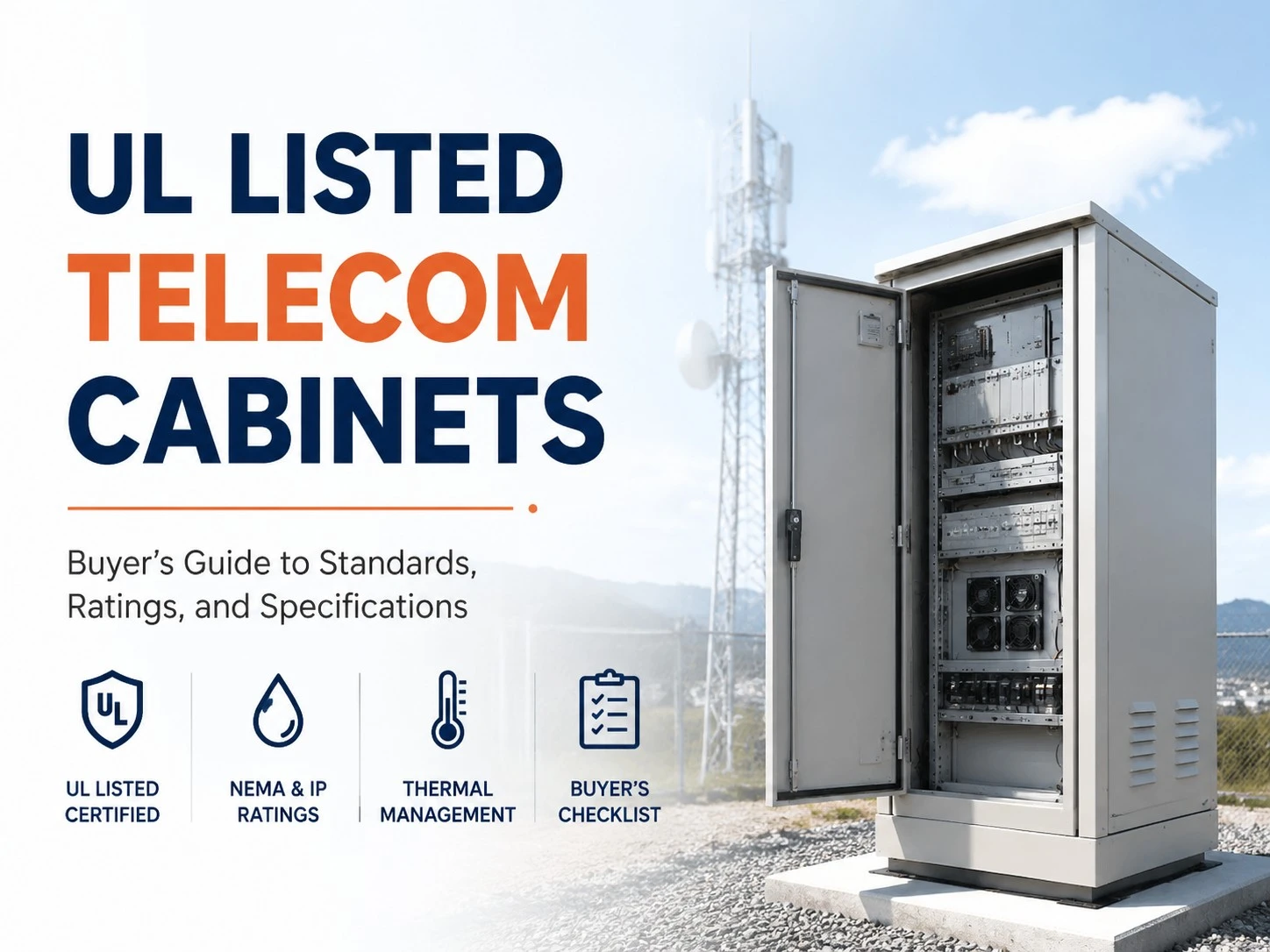
Outdoor electrical enclosures are used in pump stations, solar systems, EV charging, telecom cabinets, lighting control, water treatment, and remote monitoring. They must handle rain, sunlight, dust, temperature changes, and sometimes impact or vandalism.
In city projects, enclosure design may also need to control equipment noise near public areas, roads, or utility sites. This guide to enclosure design for noise reduction in urban installations explains that special application in more detail.
Temporary power projects also need safe, weather-resistant, and easy-to-service enclosure designs. If your project involves mobile power or event power distribution, this article on enclosures for temporary power systems at large events is a useful reference.

Food, Beverage, and Pharmaceutical Plants
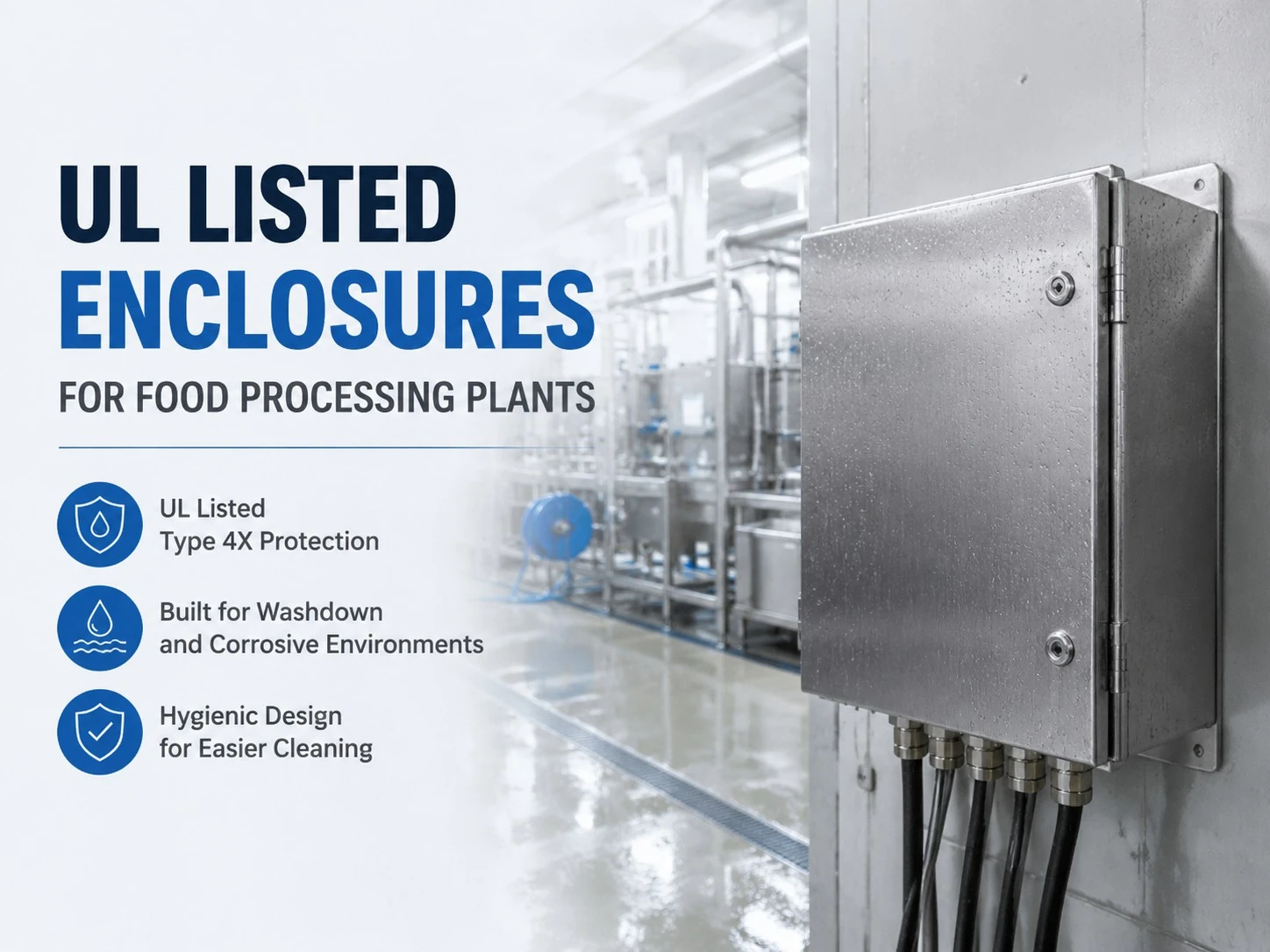
Washdown areas often need stainless steel enclosures with sealed doors, smooth surfaces, and corrosion-resistant construction. Sloped tops and hygienic designs can also help reduce standing water and make cleaning easier.
Chemical, Marine, and Harsh Environments
Chemical plants, coastal sites, marine equipment, and wastewater facilities may expose cabinets to salt air, moisture, chemical vapor, and corrosion. Stainless steel 316 or fiberglass enclosures are often better choices for these demanding conditions.
Some enclosure projects go beyond normal industrial sites and require protection against extreme vibration, temperature change, or special operating conditions. For a more advanced example, see how enclosures in space exploration protect sensitive electronics in demanding environments.
Systèmes de données, de réseau et de surveillance
Industrial network systems use enclosures for computers, servers, routers, switches, communication devices, and monitoring equipment. These projects often need good cable entry, dust protection, ventilation, and room for future upgrades.
Principaux types d'enceintes industrielles
Different projects require different enclosure structures. A compact machine may only need a wall-mounted electrical enclosure, while a large automation system may need a floor-standing cabinet or modular enclosure.
Common types include wall-mounted enclosures, floor-standing enclosures, junction boxes, terminal boxes, control panel enclosures, operator interface enclosures, rack cabinets, washdown enclosures, and custom industrial enclosures.

Industrial Enclosure Materials Compared
The enclosure material affects strength, corrosion resistance, weight, cost, and service life. Instead of choosing only by price, match the material to the real application environment.
| Matériel | Idéal pour | Principal avantage | Buyer Notes |
|---|---|---|---|
| Acier Carbone | Indoor factories and control panels | Solide et rentable | Needs coating for corrosion protection |
| Stainless Steel 304 | Food, beverage, and clean areas | Good corrosion resistance | Higher cost than carbon steel |
| Acier inoxydable 316 | Marine, coastal, and chemical sites | Stronger corrosion resistance | Better for salt air and harsh exposure |
| Aluminium | Lightweight outdoor equipment | Light weight and natural corrosion resistance | May not suit heavy-impact areas |
| Fibre de verre | Chemical and wastewater sites | Non-metallic and corrosion-resistant | Useful where metal corrosion is a concern |
| Polycarbonate | Small controls and junction boxes | Léger et facile à installer | Better for light-duty applications |
Explication des classifications NEMA et IP
NEMA and IP ratings help show how well an enclosure resists dust, water, and environmental exposure. They are useful selection tools, but they are not exact one-to-one equivalents.
NEMA ratings are common in North America and may include protection against corrosion, oil, ice, or hose-directed water. For North American projects, you can review the official Types de boîtiers NEMA to better understand how different ratings are defined.
IP ratings are widely used internationally and mainly describe protection against solids and liquids. For global projects, the official Indices de protection IP IEC page is a useful reference for understanding dust and water protection levels.
Common NEMA ratings include NEMA 1 for basic indoor protection, NEMA 3R for outdoor rain protection, NEMA 4 for hose-directed water, NEMA 4X for water plus corrosion resistance, and NEMA 12 for indoor dust and dripping liquid protection.
Common IP rated enclosures include IP54 and IP55 for basic dust and splash protection, IP65 and IP66 for stronger dust and water protection, IP67 or IP68 for immersion-related needs, and IP69K for high-pressure washdown environments.

Comment choisir le bon boîtier industriel
Start with the working environment. A clean indoor factory, a wet washdown line, and an outdoor pump station do not need the same enclosure design.
Before ordering, check these key points:
- Installation location: indoor, outdoor, washdown, dusty, corrosive, or high-temperature area.
- Protection needs: dust, water, oil, chemicals, impact, UV exposure, or salt air.
- Technical requirements: NEMA rating, IP rating, material, size, cooling, cable entry, and certification.
- Usability needs: door access, mounting method, spare space, labeling, grounding, and future expansion.
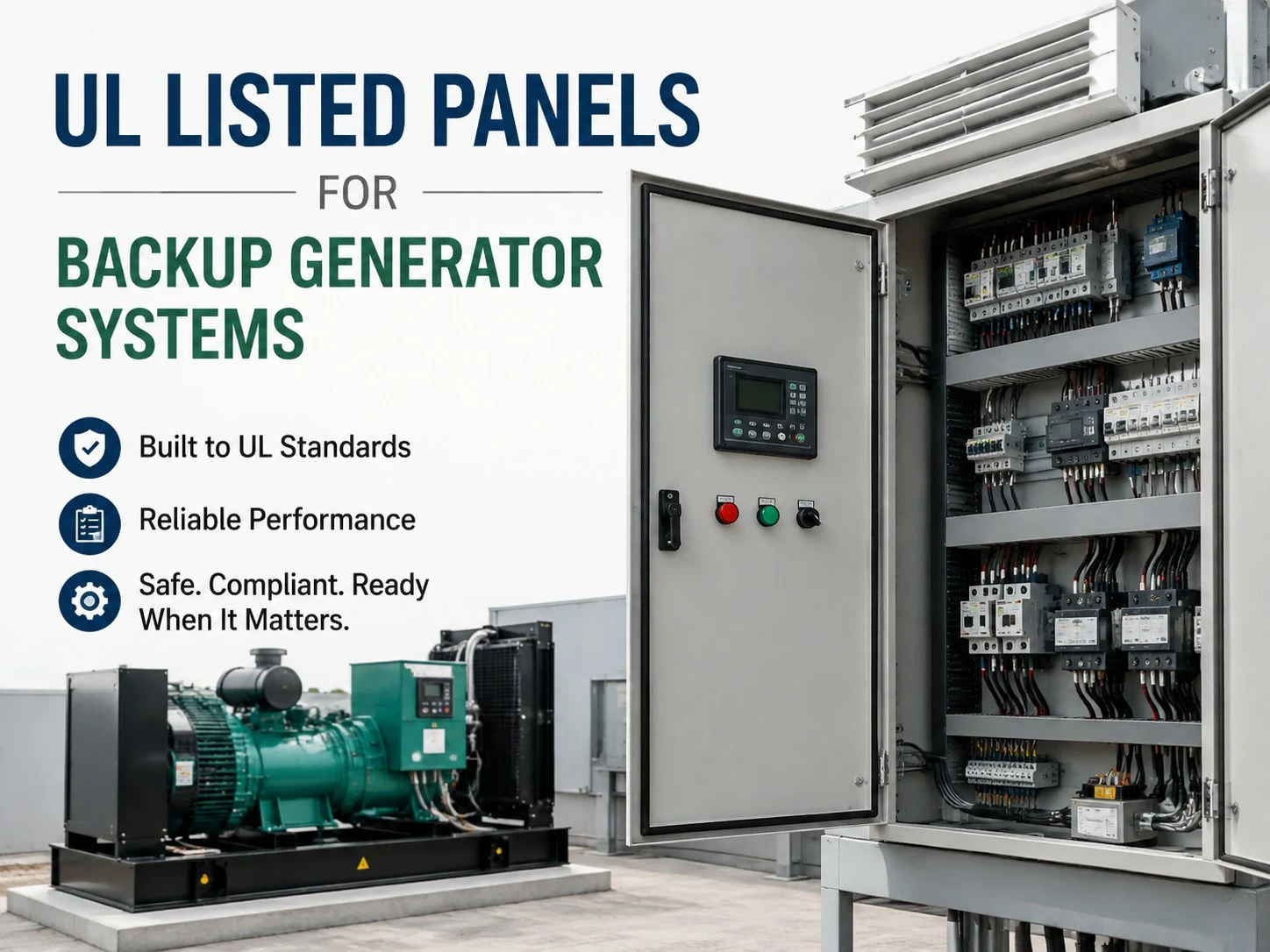
Energy projects often require extra attention to weather exposure, heat, safety, and long-term reliability. For related projects, this guide to selecting enclosures for energy applications can help you compare key selection points.
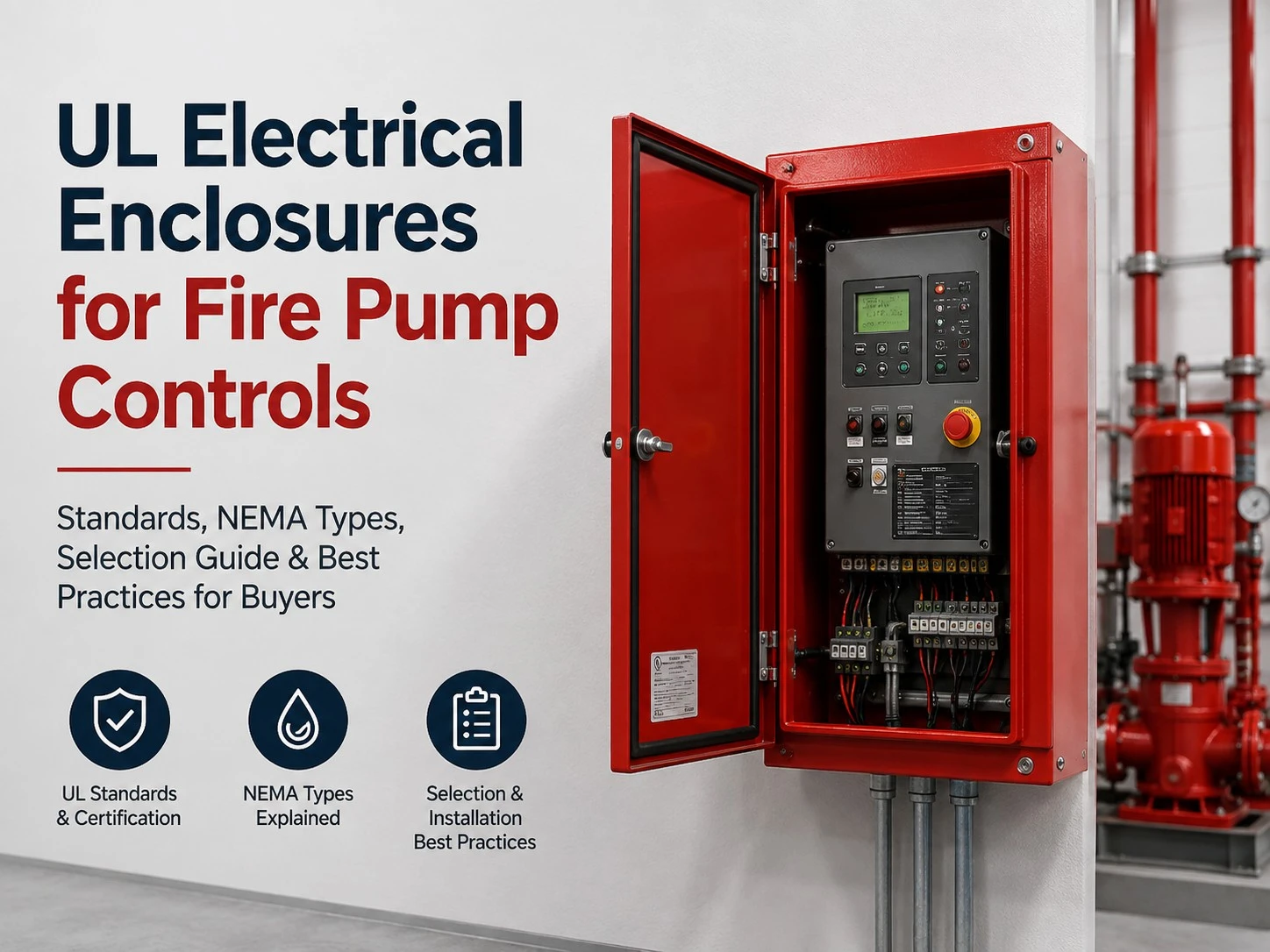
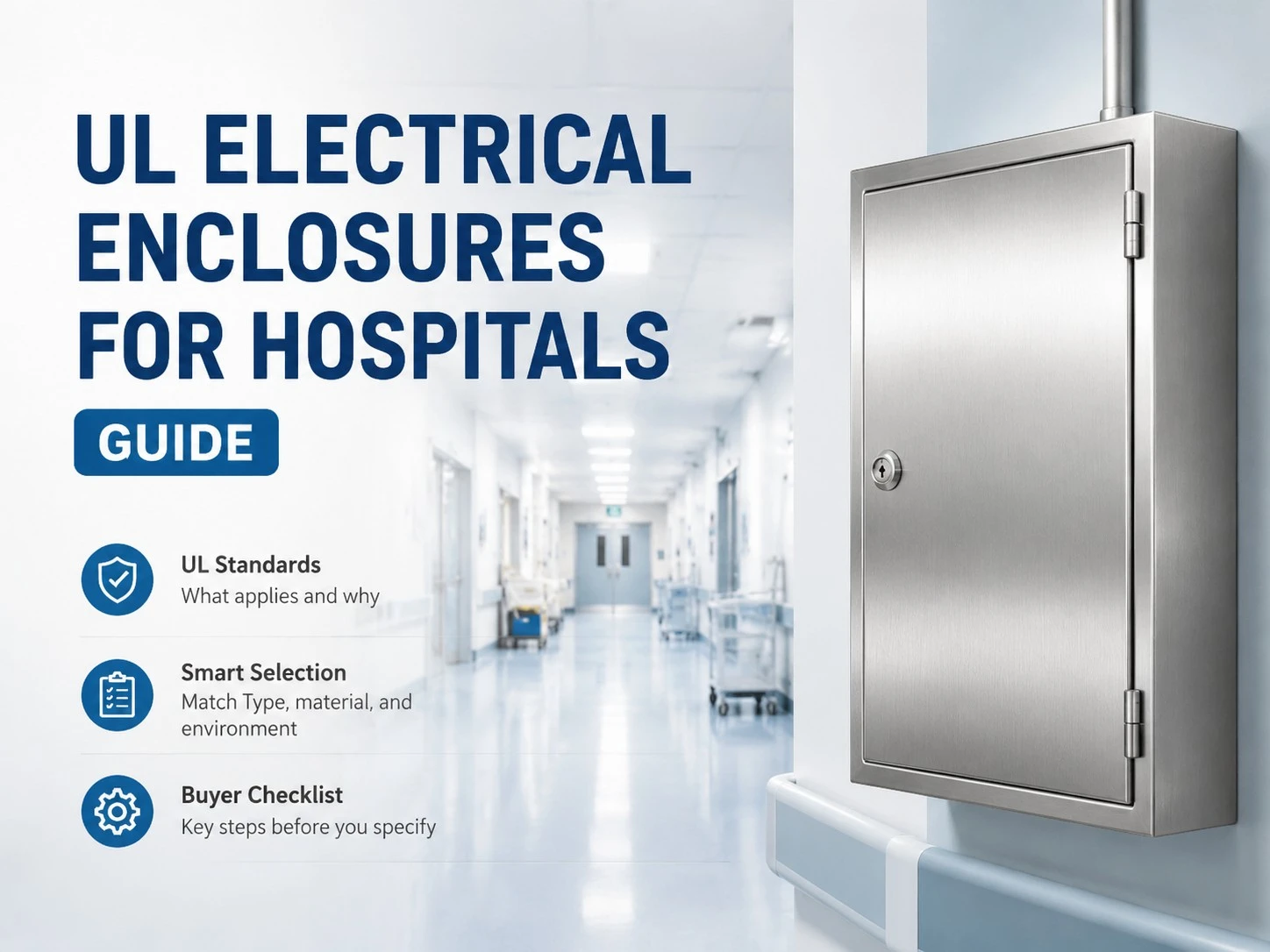
If certification is required, the UL Mark and enclosure testing can help you understand why tested ratings matter for dust, water, and corrosion protection.
A good industrial enclosure should protect equipment now and still allow easy service, safe wiring, and future upgrades.
Thermal Management for Industrial Enclosures
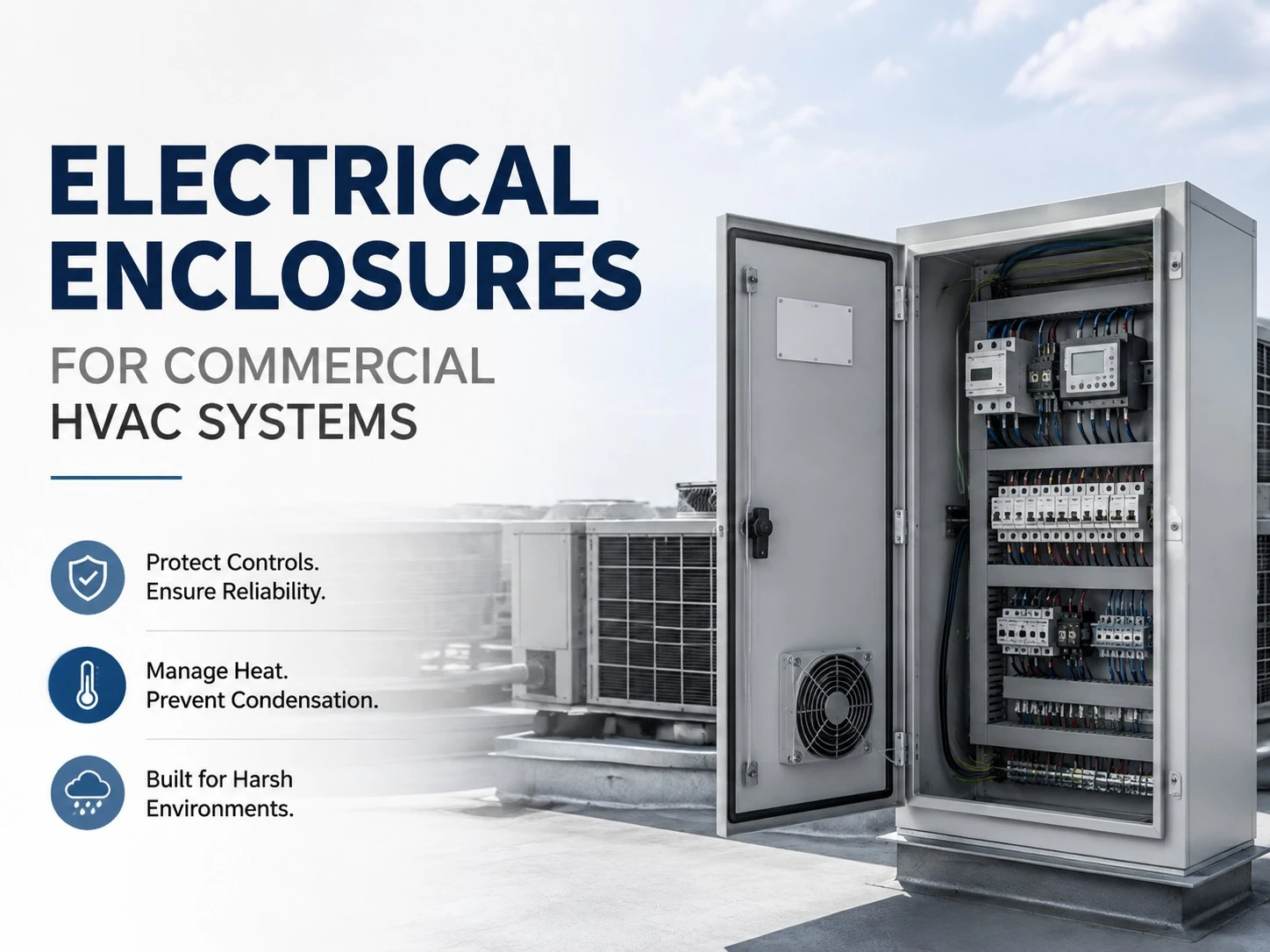
Sealed enclosures can keep out dust and water, but they can also trap heat. If the internal temperature rises too high, PLCs, VFDs, power supplies, and other devices may fail early.
Common thermal management options include fans, filters, vents, heat exchangers, enclosure air conditioners, sun shields, and better internal spacing. Outdoor cabinets may also need protection from direct sunlight.
Plan cooling before production. Adding fans, vents, or air conditioners later can increase cost, delay installation, and require extra cutouts.

Erreurs courantes à éviter
Many enclosure problems come from small selection errors. These mistakes may not appear during purchasing, but they can cause leakage, overheating, corrosion, or difficult maintenance later.
- Choosing only by the lowest price
- Using indoor enclosures outdoors
- Ignoring internal heat buildup
- Selecting the wrong material for corrosive sites
- Choosing the wrong NEMA or IP rating
- Leaving no space for wiring, service, or future expansion
Cable sealing is another common issue. Even a high-rated enclosure can fail if cable glands, gaskets, drainage, or door seals are poorly designed.
Guide de sélection rapide
The table below gives a simple starting point for common industrial enclosure applications. Final selection should still depend on the site condition, component layout, and project requirements.
| Application | Recommended Enclosure Choice |
|---|---|
| Clean indoor factory | Powder-coated steel, NEMA 12 or IP54/IP55 |
| Dusty warehouse | Sealed steel enclosure with dust protection |
| Outdoor pump station | NEMA 3R/4 or IP65/IP66 outdoor enclosure |
| Food washdown line | Stainless steel enclosure, NEMA 4X or IP69K |
| Coastal or chemical site | Stainless steel 316 or fiberglass enclosure |
| Compact machine control | Wall-mounted control panel enclosure |
| Large automation system | Floor-standing or modular electrical cabinet |
| Network and monitoring system | Rack cabinet or custom network enclosure |
Standard vs Custom Industrial Enclosures
Standard industrial enclosures are suitable for simple projects with common sizes, materials, ratings, and mounting needs. They are often faster to order and more cost-effective.
Custom industrial enclosures are better when you need special dimensions, HMI openings, cable entries, mounting plates, ventilation, locks, colors, viewing windows, or project-specific layouts.
For projects that need flexible sizing, material options, mounting plates, cutouts, ventilation, or application-specific layouts, you can also review Eabel’s industrial enclosure solutions as a practical reference for both standard and custom enclosure designs.
For OEM machines, automation projects, and site-specific electrical systems, a custom enclosure can reduce installation time and improve long-term usability.

FAQ sur les boîtiers industriels
Conclusion

Industrial enclosures are essential for protecting electrical controls, wiring, power systems, automation devices, and communication equipment. The right enclosure can improve safety, reduce downtime, protect internal components, and make maintenance easier.
When choosing an industrial enclosure, consider the application, environment, material, NEMA or IP rating, heat load, sealing, internal space, and future expansion needs. A well-selected enclosure is not just a cabinet. It is part of a safer and more reliable industrial system.
If you need custom industrial enclosures, control panel enclosures, wall-mounted boxes, floor-standing cabinets, or project-based enclosure solutions, Contactez-nous to discuss your application and technical requirements. We can help you choose a practical enclosure design for safer and more reliable equipment protection.
Lectures connexes
Explication des différents types d'enveloppes électriques
Normes relatives aux boîtiers électriques expliquées : Guide IP, NEMA et UL
Active vs Passive Enclosure Cooling Guide
Guide de contrôle de la température des boîtiers électriques
Explication des armoires électriques sur mesure : conception, normes et coût



 FR
FR  EN
EN  ES
ES  AR
AR  JA
JA  KO
KO  RU
RU  DE
DE  PT
PT  IT
IT  ZH
ZH  TH
TH  VI
VI  HI
HI  MS
MS 