

Confirm the Approved A/B Feed Designations
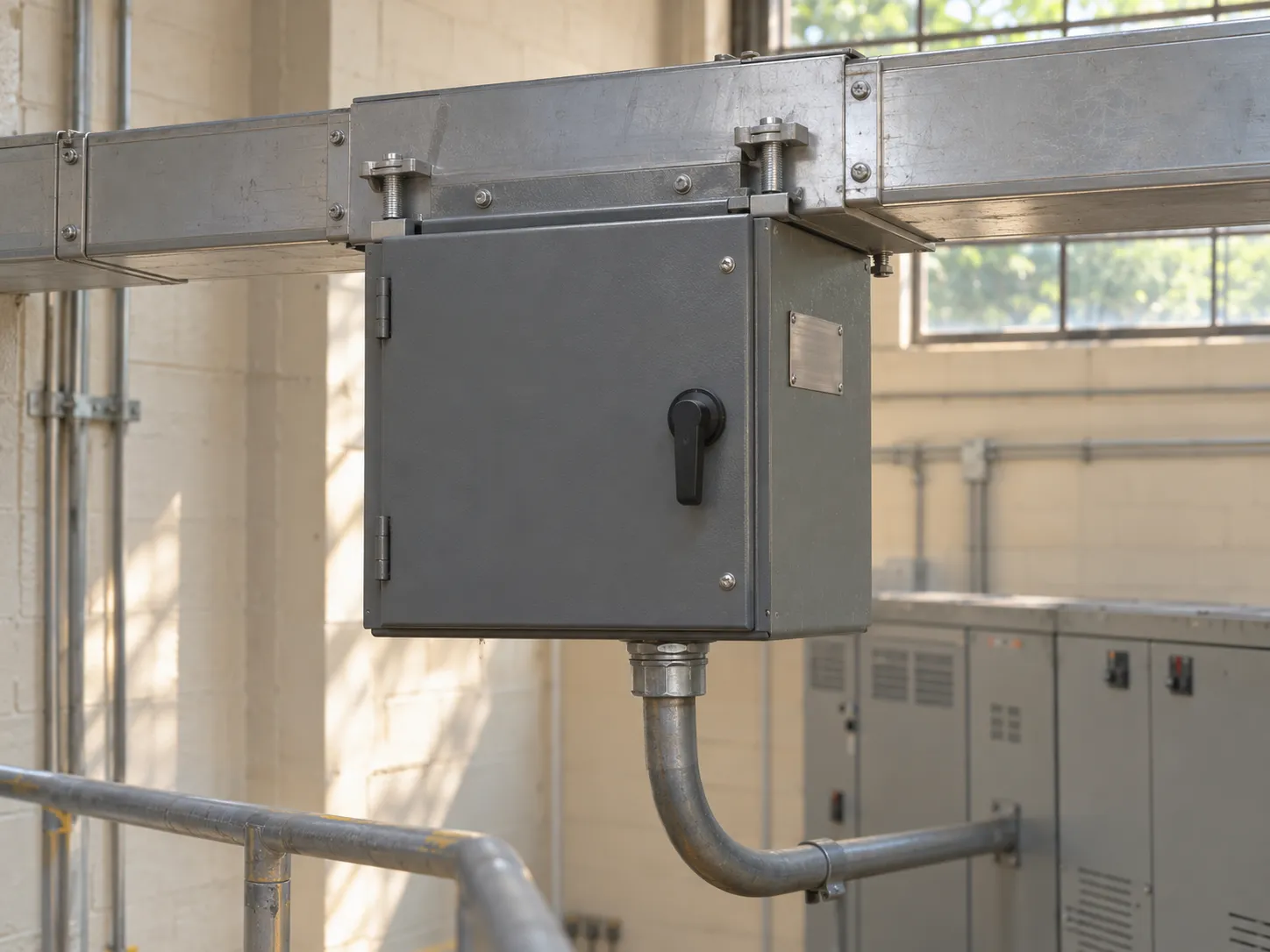
Start with the approved single-line diagram, busway layout, and equipment records. A single-line diagram shows the electrical connections in simplified form. Follow the documented power path from the busway to the rack and use the same A/B names throughout the project.
Feed A and Feed B identify power paths. They are separate from phase names such as A/B/C or L1/L2/L3, and from physical descriptions such as left and right. Two different feed letters do not establish upstream independence or prove a 2N design, in which two complete power systems each support the required load. For an approved enclosure with two inputs or a transfer device, mark each input and output according to the actual design rather than applying a single-feed template.
Keep permanent identity separate from operating status. A maintenance bypass can change supply conditions without changing the site’s permanent path name. Document temporary conditions under the owner’s procedure, and manage lasting changes through the approved naming process.
If the drawing and existing label disagree, have the responsible electrical owner resolve the conflict. An identification label cannot establish that equipment is deenergized. U.S. electrical work practices require separate verification before equipment can be treated as deenergized for work.
Define the Label Text and Identifier Rules
Use these six information groups to build the schedule. They are a selection framework, not a requirement to print every field on every box.
| Information group | Instruction for the physical marking | Information to keep linked in the record |
|---|---|---|
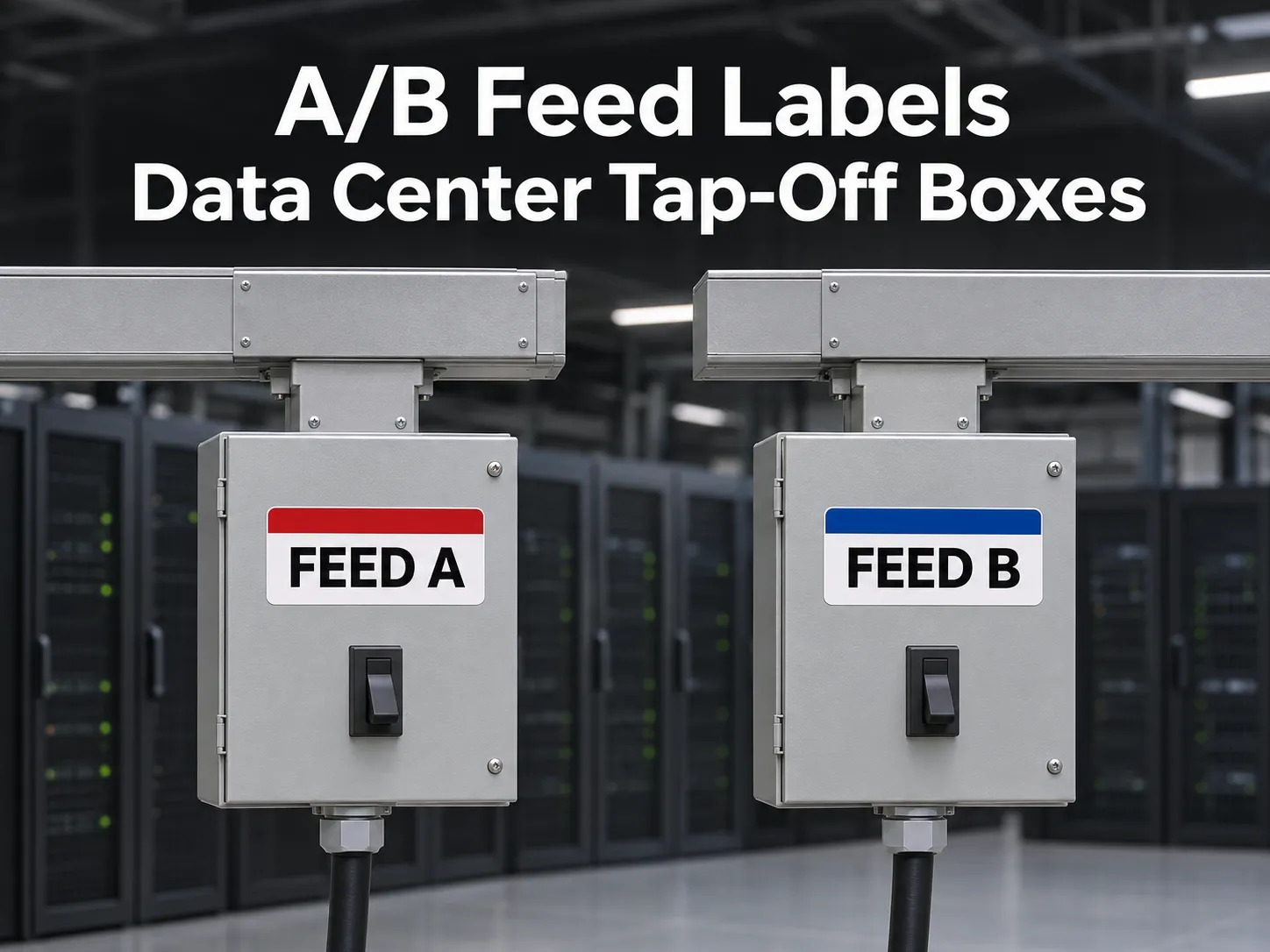
| Feed designation | Use the approved wording, such as FEED A or FEED B. | Approved path reference and drawing revision. |
| Box identity | Use a stable equipment ID if boxes are tracked as assets; include site or room context where needed. | Serial number and the scope within which the ID is unique. |
| Supplying busway | Display the supplying run ID where the site requires it. | Upstream distribution references and current connection. |
| Tap position | Use the approved location reference where positions are tracked. | Position definition, distinct from the movable box’s identity. |
| Circuit or output | Identify separate outputs and their protective devices as the design requires. | Map each branch to its connector and load; keep upstream feeder breaker references separate from local circuit numbers. |
| Served equipment | Include the purpose or destination where required for local identification. | Current racks, rack power distribution units (PDUs), and other loads served. |
A fictional pair could read “FEED A / TOB-00412 / BUS-DH1-R07-A” and “FEED B / TOB-00413 / BUS-DH1-R07-B.” Use the owner’s actual naming format; these examples are not a universal standard.
When a box moves, its stable identity can remain, but its source, position, and load relationships need review. Update any printed service information that changes and record the new assignment. Relabeling does not establish that the box is suitable for another busway system. For continuous-access busway, use the project’s location method rather than assuming fixed numbered slots.
In U.S. workplaces, OSHA’s circuit marking requirements require durable purpose markings at the relevant disconnecting means or overcurrent devices, unless the purpose is evident from their location and arrangement. Electronic records and scan links supplement required physical markings; they do not replace them.

Specify Colors, Placement, and Readability
Choose the Color and Marking Approach
Use the site’s approved color legend and readable feed text. Do not treat red for A and blue for B as a rule for every facility. Record enclosure paint, label background, and text color separately, using the relevant color specification or an approved physical sample. A screen preview is a poor basis for matching painted metal to printed film.
Full enclosure color can support recognition for boxes permanently dedicated to one path. For units approved for reassignment, a neutral finish with a stable equipment ID and replaceable feed label can reduce later repainting and marking changes.
Mark the Installed Viewing Faces
Show label zones on the enclosure drawing. Select the main face and any second viewing face from the installed height, box orientation, nearby obstructions, and service position. Include these zones in the enclosure drawings used for quotation so they are coordinated with handles, displays, and cable entries.
Keep manufacturer nameplates, installation direction marks, and safety information visible. Where a cover or door can be exchanged, retain a reliable identity on the fixed enclosure as well; a correctly printed door on the wrong box is still a mismatch.
Set the Reading Conditions
State where the reader will stand, the intended distance and angle, and the available lighting. Choose character size and label dimensions to satisfy those conditions, then confirm them with a representative applied sample in the intended orientation.
Use strong text-to-background contrast and check for glare. If an identifier must be shortened to fit, obtain an approved abbreviation that still points to one object. Do not allow the supplier to cut off distinguishing characters or reduce every line until it fits.
Specify Label Materials and Attachment
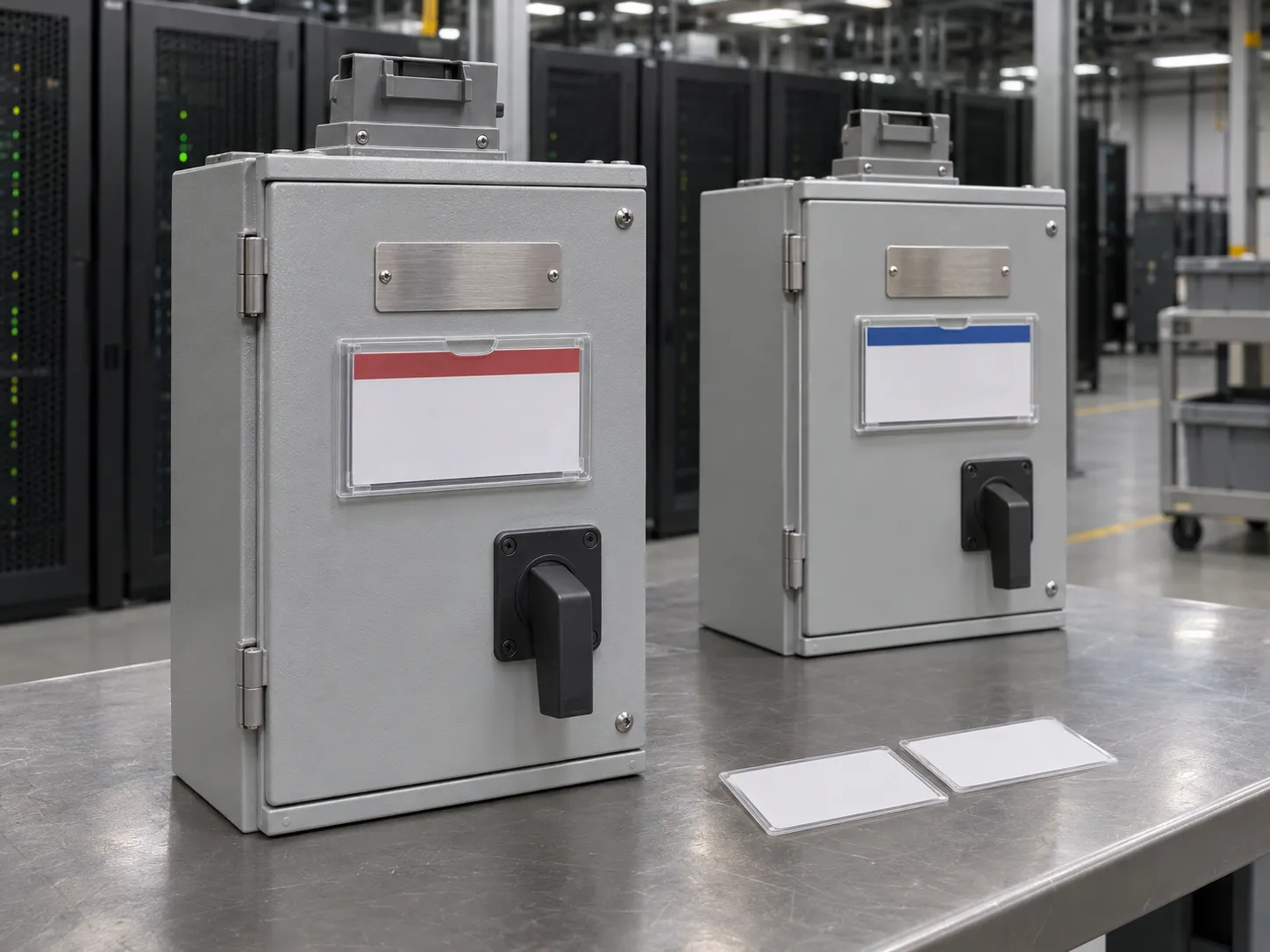
Select the label construction against the actual surface and service conditions. When reviewing E-Abel’s enclosure customization options, specify the coating type and texture or stainless steel finish at the label location, together with expected temperatures and cleaning agents. Evaluate printed film and engraved or metal plates against those conditions. Approve mechanically fixed plate locations and any required holes during enclosure design.
Ask for a product or construction reference, adhesive or mechanical attachment method, printing process, compatible ink or ribbon, and any protective layer. For site identification labels printed in the field, approve the stock and printing system together.
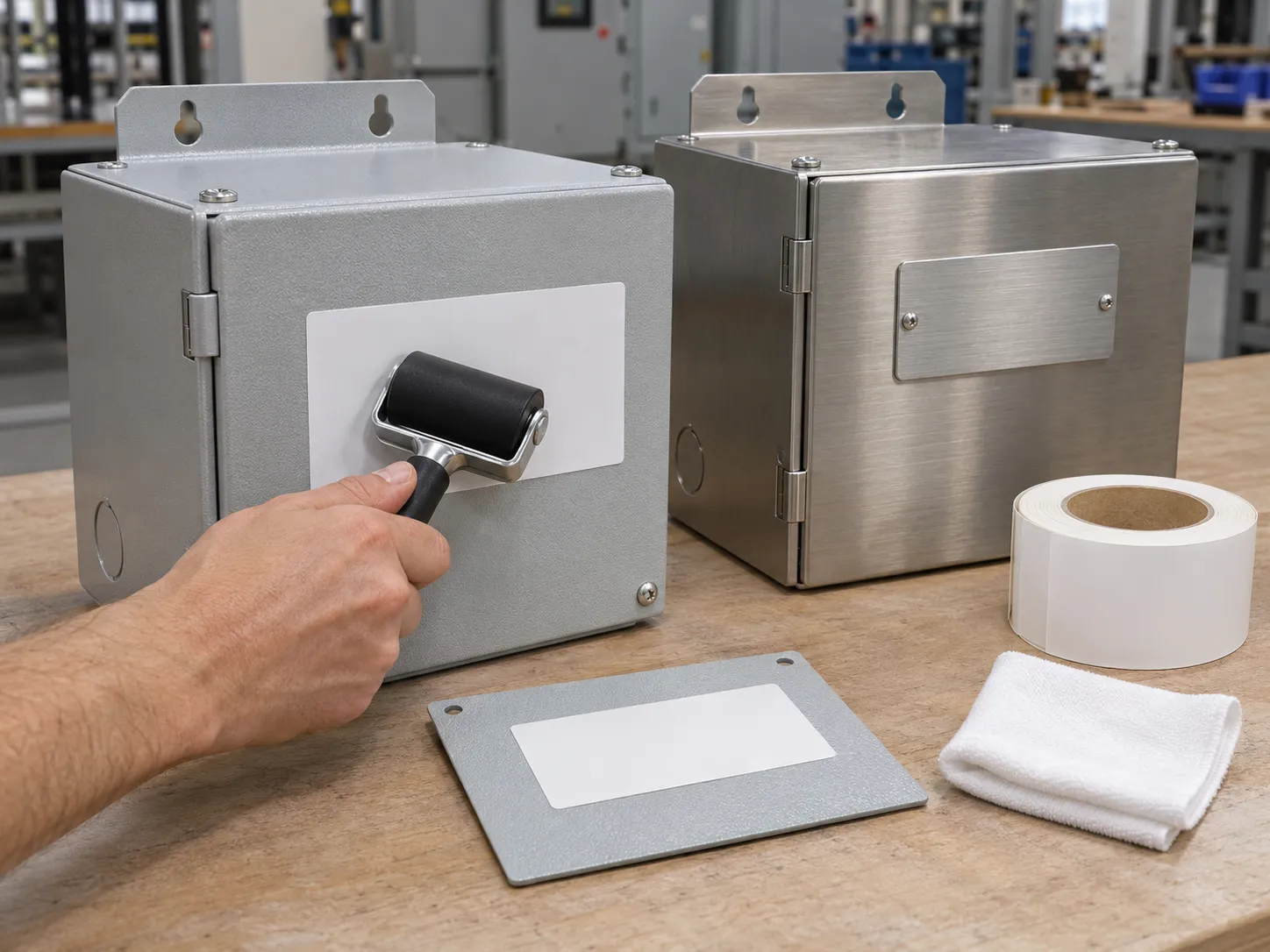
For adhesive labels, specify surface preparation, minimum application temperature, application pressure, and the supplier’s required bonding time before cleaning or chemical exposure. Application temperature and service-temperature limits are separate requirements. Verify adhesion and print resistance on the intended finish under agreed conditions, with rejection criteria for edge lifting, label movement, and unreadable print.
Where the equipment’s marking requirements call for a UL Recognized system, verify its Conditions of Acceptability for the actual surface, temperatures, and exposures. Under UL 969, suitability depends on the end product’s requirements. Recognition of blank label stock alone does not establish recognition of the finished printed label.
Approve the Label Schedule and Delivery Scope
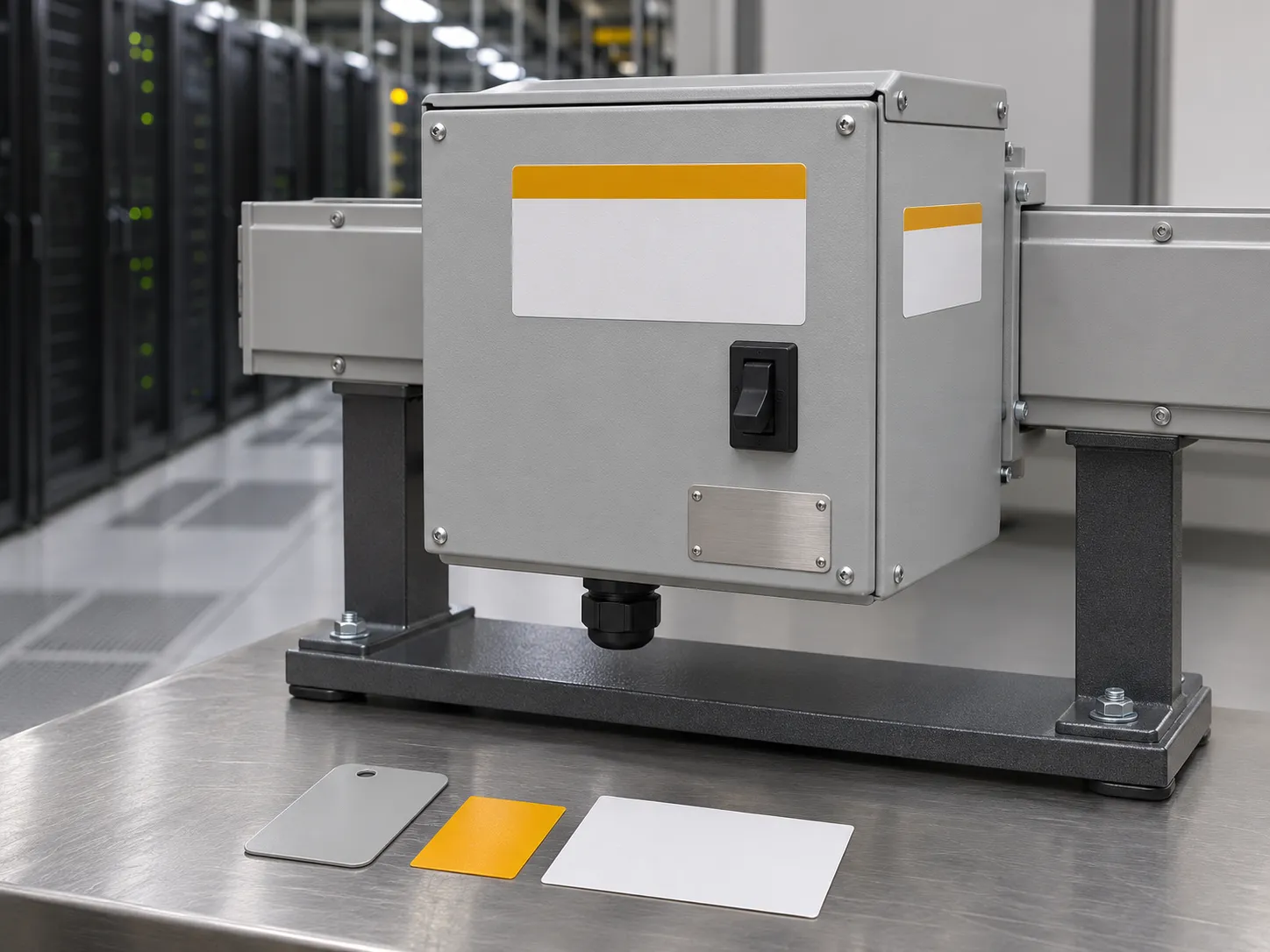
The label schedule links each enclosure to the details needed for production. Record the final text, artwork reference, dimensions and units, minimum character height, mounting face, and reading orientation. Locate each label from a defined edge or reference point on the drawing and state the placement tolerance. Give the schedule a document reference, revision, and named approver so all parties work from the same release.
Name who supplies feed data, who releases the artwork, and who verifies installed assignments. The responsible manufacturer must substantiate product ratings and certification markings. Certification of an empty enclosure does not establish certification of the finished tap-off assembly, and customer approval of artwork does not authorize use of a UL Mark.
Keep project A/B labels separate from required product markings and applicable electrical hazard labels. Have the responsible manufacturer confirm any proposed field printing or application of required product markings under the product’s approved procedure. Assign site hazard labeling to the responsible electrical authority.
Choose factory application, labels packed with each unit, or field printing. State quantities, spare-label requirements, and responsibility for replacements. If final path data is outstanding, an approved staged-delivery plan can release the enclosure first and final project feed labels later. This does not waive markings required for the product as supplied or the site’s identification checks before energization. Keep unassigned spares free of final A/B assignments until those assignments are approved.
Example RFQ Wording
Adapt this clause to the project and attach the referenced documents. The bracketed items need real selections before use.
Provide identification labels in accordance with Label Schedule [reference/revision] and Enclosure Drawing [reference/revision], using the approved legend, construction, and locations. Obtain written approval from [responsible party] before changing text, colors, dimensions, materials, or placement. Submit an applied sample for each specified label and finish combination before batch release.
Supply labels [factory applied/packed with each unit/for field printing] in the scheduled quantities, traceable to the intended enclosures. Follow the approved staged-delivery plan while path data is pending; apply final feed designations only after approval. Preserve manufacturer and safety markings. Include the approved artwork, completed label schedule, and change record with the shipment.
Verify Labels Before Shipment and Site Handover
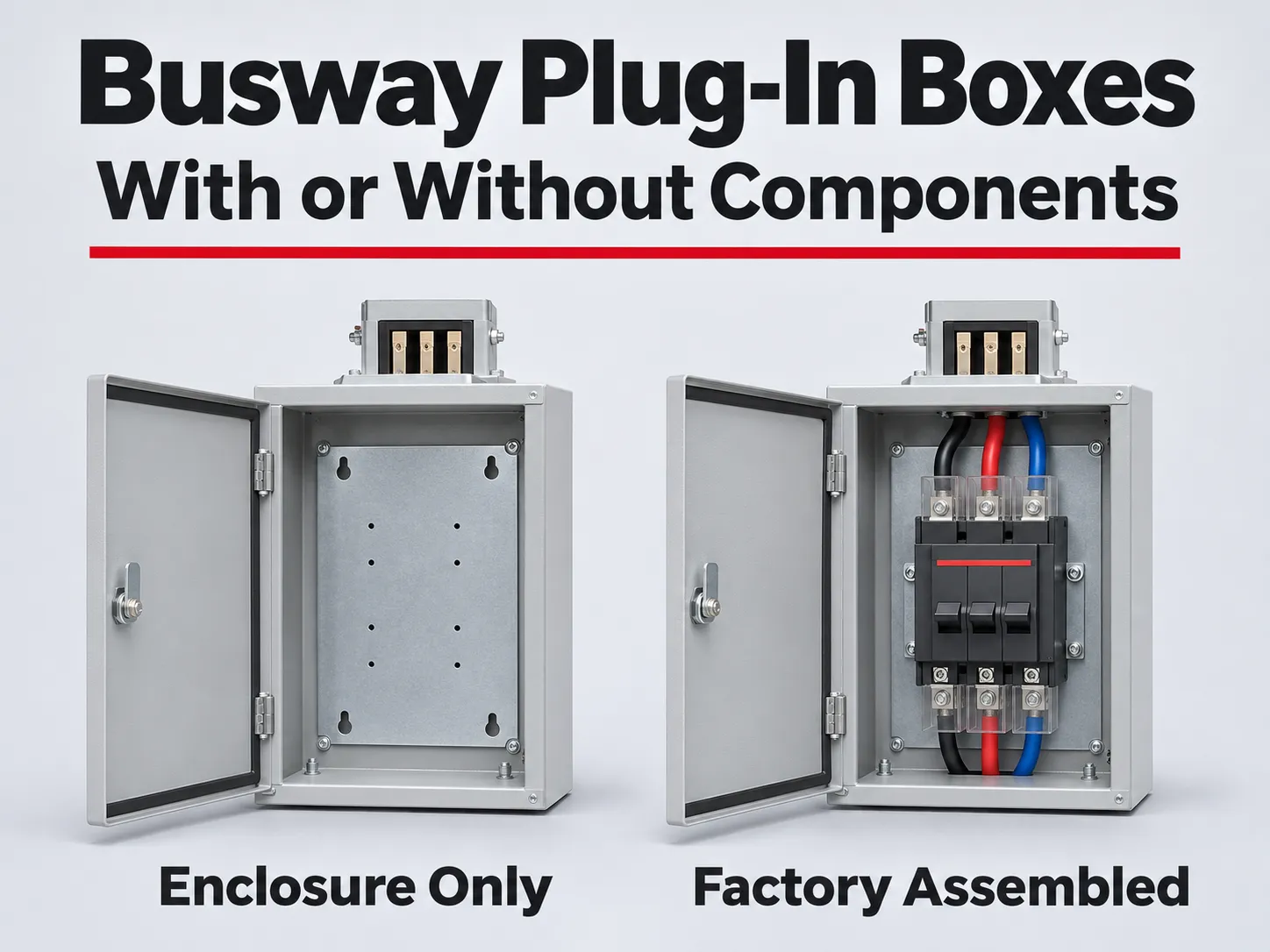
Utilice el tap-off box prototype review to settle sample issues before batch release. Define acceptance evidence for both factory production and site handover.
- Applied sample: Record the approved revision and photograph the sample on the specified finish and viewing faces. Close placement, readability, and attachment issues before releasing the corresponding label configuration.
- Batch and packing: Specify a check of every unit’s A/B text, required unique ID, intended label set, and packing assignment. Watch for copied A labels on both sides of a pair and swapped doors or plates. Use the approved inspection plan for material and general appearance checks.
- Installed assignment: Match the supplying busway, tap-off ID, outgoing circuit, whip or cable label, and intended rack PDU input against the approved power records. Have qualified personnel verify the installed connections under the commissioning plan; a correct box label alone does not confirm that the downstream cable reaches the intended rack PDU. For metered units, also verify that device and circuit names in the monitoring system match the physical box, its measured outputs, and the assigned feed.
- Changes and exceptions: Retire conflicting old service labels through the approved change process and update the linked record. Log unresolved mismatches with an owner and disposition; do not mark the affected unit complete while its identity remains disputed.
FAQs About A/B Feed Labels
Conclusión
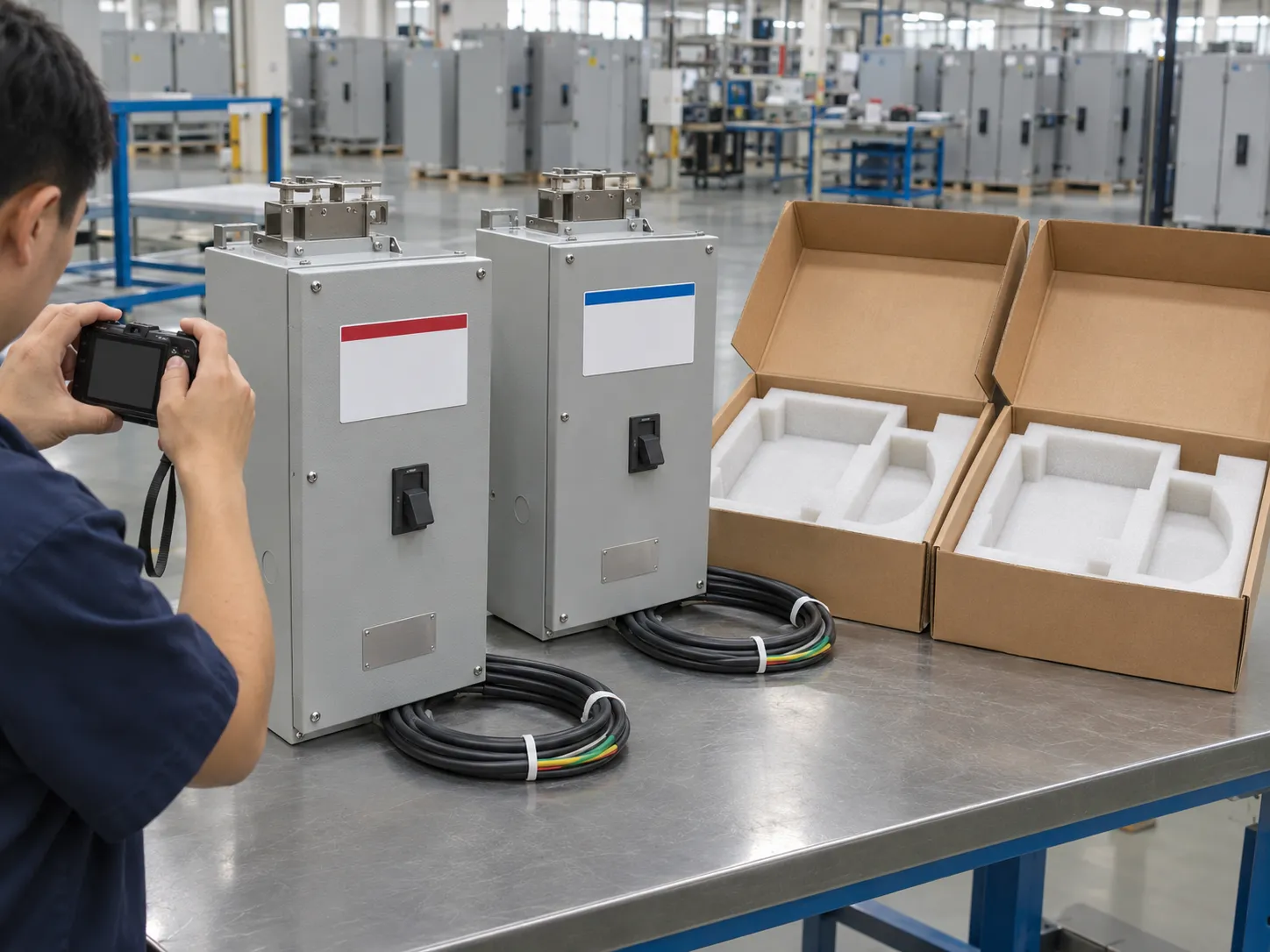
A good A/B feed label specification gives the supplier clear production instructions and the site team a reliable way to identify the finished box. It should also remain workable when assignments change. Resolve missing data before final label release, and keep the approved revision with the delivery record so later updates can be traced.
If you are ordering data center tap-off box enclosures, contact E-Abel to discuss the label layout and enclosure requirements. Share the enclosure drawing, draft label schedule, approved feed legend, surface finish, and quantities. These details let us assess the marking space and clarify what the enclosure order should include, helping you settle the scope before production begins.
Lecturas relacionadas
Envolventes para cajas de derivación: guía de compra
Cómo especificar una caja de derivación a medida para canalización prefabricada
Cajas de derivación para canalizaciones de centros de datos: guía de selección
¿Son intercambiables las cajas de derivación para canalizaciones prefabricadas?
Recortes para interruptores automáticos y tomas de corriente en cajas de derivación





 ES
 EN
 FR
 AR
 JA
 KO
 RU
 DE
 PT
 IT
 ZH
 TH
 VI
 HI
 MS
