

Quick Answer: The Main Difference

The main difference is function. A combiner box collects multiple electrical inputs, usually solar PV strings, and sends them as one output to the inverter or DC distribution point.
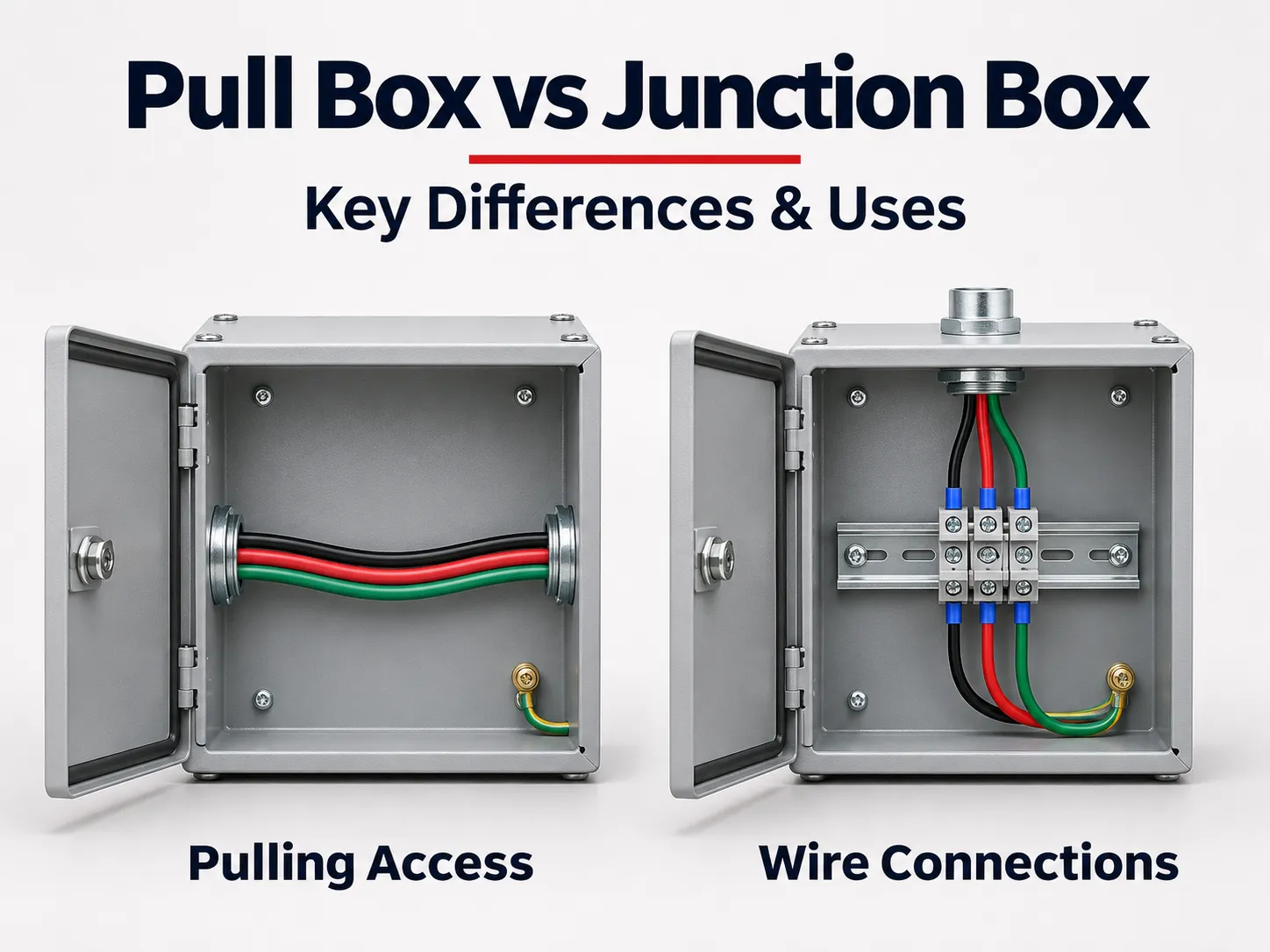
A Anschlussdose is simpler. It houses and protects wiring connections, cable transitions, or splices. It does not usually provide DC string protection, surge protection, or string-level isolation.
Combiner Box vs Junction Box Comparison
| Merkmal | Combiner-Box | Anschlussdose |
|---|---|---|
| Hauptfunktion | Combines multiple inputs into one output | Schützt Drahtverbindungen |
| Typische Verwendung | Solar PV strings and renewable systems | General wiring and cable routing |
| Power combining | Ja | Usually no |
| Eingebauter Schutz | Fuses, breakers, SPD, disconnects | Basic enclosure protection |
| Solar system position | Between PV strings and inverter | Module, cable, or wiring connection point |
| Maintenance value | Helps isolate and test strings | Limited troubleshooting support |
| Kosten | Höhere Vorlaufkosten | Geringere Kosten |
| Am besten für | Multi-string solar systems | Simple wire protection |
What a Combiner Box Does in a Solar System
A solar combiner box collects power from several PV strings and sends one combined output to the inverter. This reduces long cable runs and keeps the DC side of the system easier to manage.
A well-designed PV combiner box may include DC fuses, circuit breakers, surge protection devices, busbars, disconnect switches, and monitoring modules.
These parts help protect the inverter and make fault checking faster. Penn State’s PV electrical BOS guide also notes that combiner boxes combine multiple PV strings, may include fuses, and need outdoor-rated protection. Penn State PV electrical BOS guide.
For commercial rooftops, ground-mounted solar plants, and larger residential systems, a combiner box is more than a wiring enclosure. It is a protection and maintenance point. If you need a deeper selection guide, see this article on how to choose the right solar combiner box.

What a Junction Box Is Used For
A junction box is used to house wire splices, terminals, and cable transitions. It keeps live connections covered and helps protect them from dust, moisture, touch, and mechanical damage.
In solar projects, you may see a junction box on the back of a PV module or at a cable routing point. In building wiring, it is common for lights, outlets, switches, and equipment connections.
A standard junction box does not normally include string fuses, DC breakers, surge protection, or monitoring. It protects the connection area, but it does not manage solar string output. For broader code and safety context, see ESFI’s guide to the NEC. ESFI guide to the NEC.
Can a Junction Box Replace a Combiner Box?
In most multi-string PV systems, no. A junction box should not replace a combiner box when several solar strings need to be combined and protected.
The issue is not only wiring space. A basic junction box usually lacks DC string fuses, surge protection, string isolation, and high-voltage DC design. This can make inspection harder and increase system risk.
If your project needs solar string combining, use a properly rated DC combiner box instead of a simple junction box. Solar PV wiring and overcurrent protection must be sized carefully because voltage, current, circuit length, and device configuration all affect system safety. University of Maryland solar wiring and fusing guide.

When You Need a Combiner Box
You should consider a combiner box when your solar system has multiple PV strings feeding one inverter input or DC circuit.
- The PV system has multiple strings.
- The inverter has limited DC inputs.
- You need string-level overcurrent protection.
- The project is commercial, industrial, or ground-mounted.
- The installation is exposed to outdoor conditions.
- Surge protection or easier maintenance is required.
In these cases, the combiner box helps reduce wiring complexity while improving safety and service access. For custom solar wiring enclosures or project-specific cabinet designs, you can review Eabel’s Lösungen für elektrische Gehäuse to match material, size, rating, and layout needs.
When a Junction Box Is Enough
A junction box is enough when the job is simple wire protection, cable routing, or a basic connection point. It is useful when protection devices are already handled elsewhere.
For example, you may use a junction box for a single cable transition, a splice point, or a conduit entry. It can also work in low-complexity wiring where no PV string combining is needed.
The key is to match the box to the electrical rating, environment, and code requirements. For outdoor solar wiring, check the IP rating, material, cable glands, and UV resistance. Cable entries should also protect conductors from abrasion. OSHA wiring methods standard.

Key Buying Factors Before You Choose
Before choosing between a combiner box and a junction box, start with the system design. Count the PV strings, check inverter inputs, and confirm whether each string needs overcurrent protection.
Important factors include system voltage, current rating, fuse or breaker type, SPD requirement, enclosure material, IP rating, cable entry design, and available space for maintenance.
For 600V, 1000V, or 1500V DC solar systems, do not choose only by box size or price. DC systems need proper ratings because arc risk and fault behavior are different from normal AC wiring.
For outdoor projects, rating selection matters as much as wiring layout. If you are comparing weatherproof protection levels, this Leitfaden zu NEMA- und IP-Schutzarten can help you match the enclosure to the installation environment.
Common Mistakes That Increase Project Risk
A common mistake is using a junction box to combine PV strings because it looks cheaper. This may save money at first, but it can remove important protection from the system.
Other common mistakes include choosing indoor boxes for outdoor solar projects, using the wrong fuse rating, leaving strings unlabeled, allowing water to collect near cable entries, or leaving too little space for inspection.
Surge protection is another point many projects overlook. In PV systems, SPD type, placement, grounding, and cable routing can affect protection performance. NEMA low-voltage surge protective devices guide.
A good solar wiring enclosure should make the system safer, cleaner, and easier to maintain. It should not simply hide cables.
Cost vs Long-Term Value
A junction box is cheaper because its job is simple. It protects wiring connections and helps keep the installation organized.
A combiner box costs more upfront, but it can reduce cable cost, protect the inverter, improve fault isolation, and shorten maintenance time. If you also need to compare upstream combining with downstream power distribution, this distribution box vs combiner box guide can help clarify the system position.
In a multi-string solar system, long-term reliability often matters more than the initial price difference.

FAQs About Combiner Box vs Junction Box
Fazit

A junction box is the right choice for simple wire connections, splices, and cable routing. A combiner box is the better choice when multiple PV strings need to be combined, protected, isolated, and maintained safely.
If you are planning a solar project and are unsure which box, rating, or protection design fits your system, kontaktiere uns. Our team can help you choose a safer and more reliable enclosure solution for your application.
Weiterführende Artikel
Solar Combiner Box Maintenance Checklist
Role of Surge Protection Devices in Solar Combiner Boxes
Solar Combiner Box vs String Combiner Box
So installieren Sie eine Solar-Combiner-Box






 DE
 EN
 ES
 FR
 AR
 JA
 KO
 RU
 PT
 IT
 ZH
 TH
 VI
 HI
 MS
